CoreIPC工业计算解决方案

机器人视觉边缘AI计算机: 用于智能自动化的机器人视觉计算机
执行摘要
A robot vision computer provides the industrial computing foundation for robotic perception, 人工智能图像处理, 物体识别, 视觉引导, 缺陷检测, 定位, 检查, 以及自动化生产环境中的实时决策.
现代机器人系统不再仅依赖于固定的运动路径. 在智能工厂, 机器人越来越需要看到, 分析, 并对周围环境做出反应. 他们可能会识别零件, 定位对象, 检查表面, 指导拣货作业, 验证装配质量, 支持箱拣取, 或与生产线上的机器视觉系统协调.
基于工业计算机或嵌入式计算机构建的机器人视觉边缘AI计算机,可以在机器人附近本地处理相机数据. 它可以运行AI推理模型, 连接工业相机, 与机器人控制器通信, 与 PLC 交换数据, 并将结果发送至MES, 监控与数据采集系统, 或工厂监控系统.
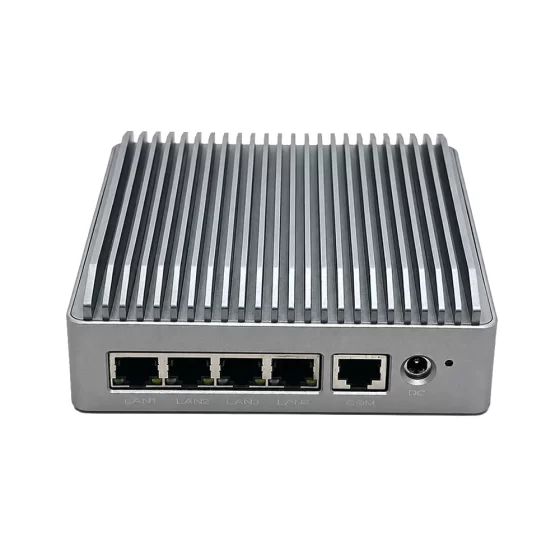
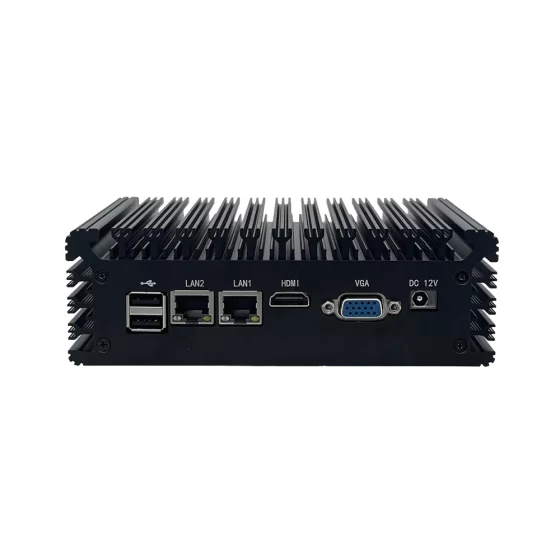
与标准 PC 相比, industrial computers are better suited for robot vision deployment because they support rugged installation, 稳定的热设计, multiple LAN and USB interfaces, 本地存储, 扩展选项, 无风扇设计选项, 和长生命周期可用性.
This article explains how robot vision edge AI computers support intelligent automation, 真实工厂中会出现哪些部署挑战, 解决方案架构如何运作, and which hardware features matter when selecting an industrial computer or embedded computer for robot vision applications.
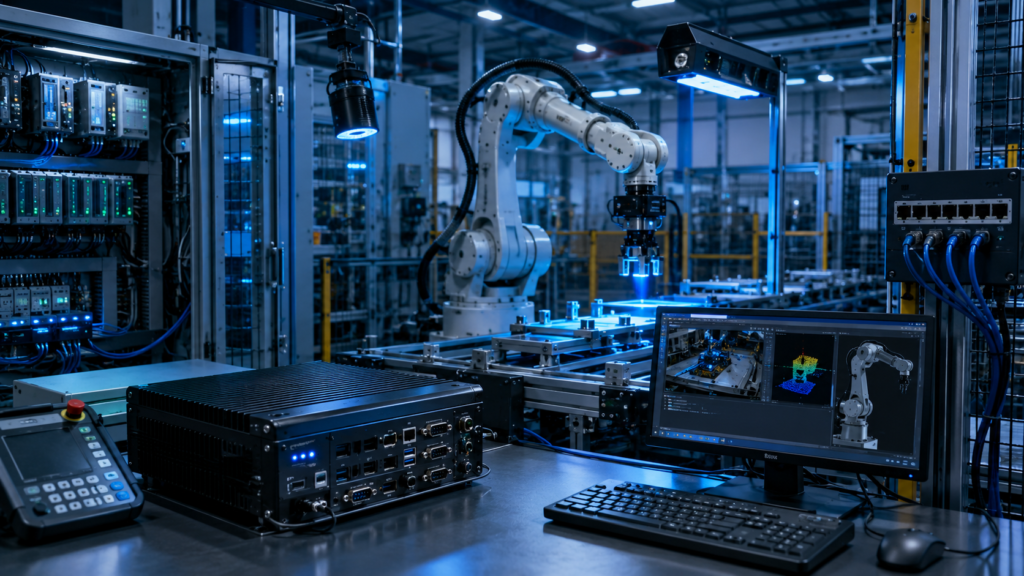
Robot vision computers process camera data locally for robotic picking, 检查, recognition, and guidance.
行业概况
Robots Are Becoming More Vision-Driven
Industrial robots were traditionally programmed to repeat fixed motions.
That model works well when parts are always positioned in the same place and conditions do not change. 然而, modern production environments are more flexible. Parts may arrive in different positions, products may vary by batch, and quality requirements may become more detailed.
Vision systems help robots adapt.
Robot vision can support:
- 物体识别
- 零件定位
- 箱拣选
- Assembly guidance
- 表面检查
- Barcode and label reading
- Pick-and-place verification
- Robotic welding guidance
- 包装检验
- Palletizing and depalletizing
- 缺陷检测
- 安全区意识
A robot vision computer processes visual information and turns it into usable data for robotic control and factory systems.
Edge AI Improves Local Decision-Making
Sending every image to a remote server can increase latency and bandwidth usage.
Robot vision often needs fast response. A robot may need to adjust its position, reject a defective part, or stop an operation within a short time window.
Edge AI computing allows visual data to be processed close to the robot.
The edge computer can run AI inference locally, generate position data, 对缺陷进行分类, and send compact results to robot controllers or PLCs.
This improves response time and reduces dependence on cloud or central server availability.
工业计算是硬件基础
Robot vision computers are often installed near production equipment.
They may be mounted in robot cells, 控制柜, 检查站, assembly lines, welding systems, logistics lines, or packaging machines.
这些环境可能包括振动, 灰尘, 电噪声, 热, limited cabinet space, 并连续运行.
Industrial computers and embedded computers provide the hardware foundation for reliable deployment. 它们支持坚固耐用的设计, 灵活的输入/输出, 相机连接, 贮存, 扩张, 以及平台的长期稳定性.

相机, 3D传感器, 灯光, PLC触发器, 周期, 机器人控制器, and AI workloads affect robot vision deployment.
主要挑战
Processing High-Resolution Camera Data
Robot vision systems often use one or more industrial cameras.
Camera data can be large, especially when using high resolution, 高帧率, or multiple viewpoints.
The computer must process image streams reliably while also handling AI inference, robot communication, 数据记录, 和工厂系统集成.
重要的工作量因素包括:
- 相机数量
- 图像分辨率
- 帧率
- AI模型复杂度
- 检验周期时间
- Robot response time
- 本地存储需求
- 网络带宽
- 软件运行时要求
The platform should be selected based on real camera and AI workload, not only CPU model or port count.
Meeting Real-Time Response Requirements
Robot vision applications often require low latency.
A delay in object positioning or defect detection may reduce production speed or cause incorrect robot movement.
The robot vision computer must process images, run algorithms, and send results quickly.
Latency-sensitive applications may include:
- 箱拣选
- Robotic sorting
- High-speed pick-and-place
- Vision-guided assembly
- Conveyor tracking
- Robotic inspection
- 包装验证
- Welding seam tracking
硬件, 软件, 相机接口, 网络设计, and robot communication must be evaluated together.
Integrating with Robot Controllers and PLCs
A robot vision computer does not work alone.
It must communicate with robot controllers, PLC, 运动系统, 传感器, 安全装置, HMI站, 和工厂软件.
常见的集成要求可能包括:
- Sending object coordinates to robot controllers
- Receiving trigger signals from PLCs
- Reporting inspection results to MES
- Storing image records locally
- Displaying status on HMI
- Sending alarms to SCADA
- Supporting remote diagnostics
- Synchronizing with conveyor systems
Flexible I/O and stable communication are important for practical deployment.
在工业环境中运行
Robot cells can be demanding environments.
The computer may be exposed to vibration, 灰尘, oil mist, 温度变化, 电噪声, 并连续运行.
A standard office PC may not be suitable.
Industrial design helps improve reliability through rugged enclosure options, 无风扇设计, 可靠的存储, 安全安装, and stable power input.
Thermal design is especially important when the system runs AI workloads or GPU acceleration continuously.
Supporting Long Lifecycle Deployment
Robot vision systems may remain in production for years.
Frequent hardware changes can create driver issues, software validation problems, 备件挑战, 和维护复杂性.
Industrial computing platforms with lifecycle planning help system integrators and manufacturers maintain stable vision systems across multiple robot cells and factory sites.

Robot vision computers connect cameras, 人工智能处理, 机器人控制器, PLC, 制造执行系统, 监控与数据采集系统, 和质量体系.
Robot Vision Computer Solution Architecture
Vision Sensor Layer
The vision sensor layer includes the devices that capture visual data.
该层可能包括:
- 工业相机
- 3D相机
- 线扫描相机
- 区域扫描相机
- Depth sensors
- 条码阅读器
- 照明控制器
- 触发传感器
- 编码器
- Presence sensors
These devices provide raw visual and position data for the robot vision system.
The robot vision computer collects and processes this data locally.
边缘AI计算层
The edge AI computing layer is the core of the system.
在这一层, 工业计算机或嵌入式计算机可以:
- Capture image streams
- 运行 AI 推理
- Process 2D or 3D vision data
- Detect objects
- Locate part position
- Classify defects
- 计算机器人坐标
- 存储图像记录
- Generate pass/fail results
- Send results to robot controllers
This layer transforms raw camera data into useful automation decisions.
Robot Control Integration Layer
The robot control layer connects vision results with robot motion.
The robot vision computer may communicate with:
- 机器人控制器
- PLC
- 运动控制器
- 伺服系统
- 输送机控制器
- 安全系统
- 人机界面面板
- 工业交换机
The system may send position data, 检查结果, object classes, orientation values, or alarm events.
Reliable communication is essential for stable robotic automation.
工厂系统集成层
Robot vision data may also be sent to higher-level factory systems.
这些系统可能包括:
- 制造执行系统
- 监控与数据采集系统
- 企业资源计划
- 质量数据库
- 工业物联网平台
- 本地仪表板
- 追溯系统
- 维修平台
- 云监控系统
This allows manufacturers to connect robotic vision results with production records, 质量分析, 和运营可见性.
安全和管理层
Robot vision systems need secure and maintainable deployment.
该层可能包括:
- 网络分段
- 远程诊断
- 用户访问控制
- 本地日志记录
- Image record management
- 配置备份
- 系统健康监控
- 软件更新管理
- Secure remote support
This helps keep the robot vision platform stable across long-term production use.
主要特点
人工智能推理性能
Robot vision often depends on AI models.
The computer may need to run object detection, 分割, 缺陷分类, pose estimation, 光学字符识别, 条码识别, or anomaly detection.
硬件选型应考虑:
- CPU性能
- GPU或AI加速器支持
- 内存容量
- 相机数量
- 图像分辨率
- 型号尺寸
- Inference speed
- 操作系统支持
- AI框架兼容性
- Thermal performance
For demanding applications, the system should be tested with the actual model and production cycle time.
Camera Connectivity
Camera connectivity is one of the most important requirements.
取决于应用, the platform may need:
- GigE LAN
- USB 3.0
- Multiple camera ports
- 高速存储
- 触发输入
- Lighting control connection
- Expansion for additional interfaces
The interface must match the camera system.
For multi-camera robot vision, 带宽规划尤为重要.
多LAN网络设计
Multiple LAN ports help separate traffic.
A robot vision computer may use different networks for:
- 摄像头网络
- Robot controller network
- PLC网络
- 工厂IT网络
- 工业物联网网络
- 远程维护网络
- 管理网络
Network separation improves reliability, 安全, 和交通组织.
It also helps prevent camera data from interfering with robot control communication.
可靠的本地存储
Robot vision systems may need local storage for images, 日志, models, 配置文件, 检查记录, and troubleshooting data.
SSD 或 NVMe 存储通常是首选,因为它比机械驱动器提供快速访问和更好的抗震性.
存储设计应考虑:
- Image retention period
- 检验记录量
- AI model storage
- 日志保留
- 写入耐力
- 备份工作流程
- Failure recovery
Reliable storage is important for traceability and maintenance.
灵活的工业I/O
Robot vision computers may need many types of I/O.
有用的选项可能包括:
- 局域网
- USB
- RS232
- RS485
- 通用输入输出接口
- 数字输入
- 数字输出
- HDMI
- 显示端口
- M.2
- PCIe
- SATA 或 NVMe
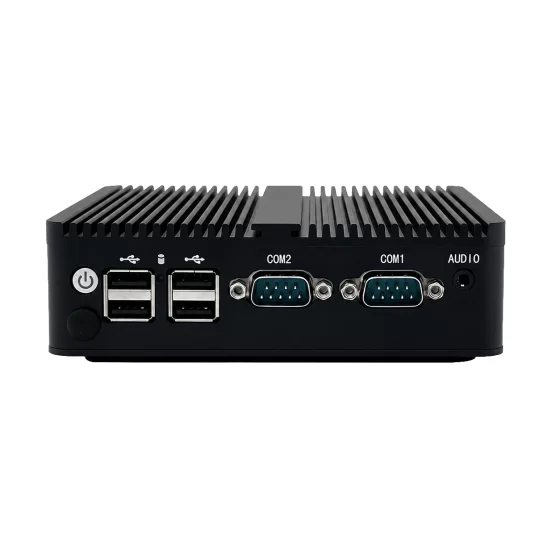
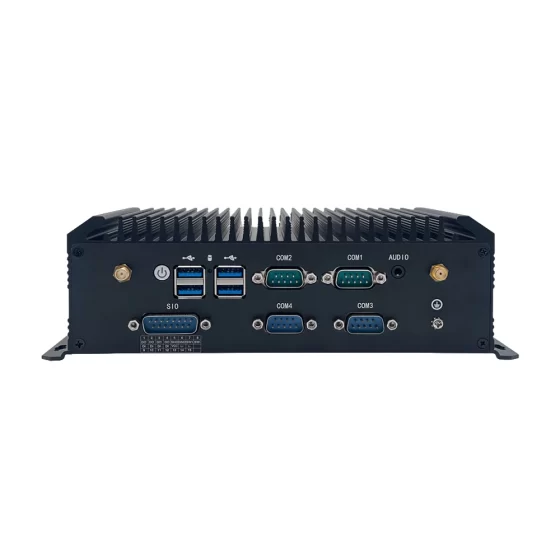
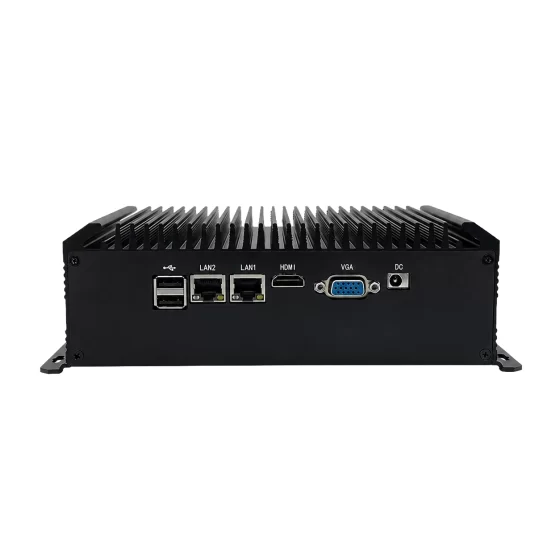
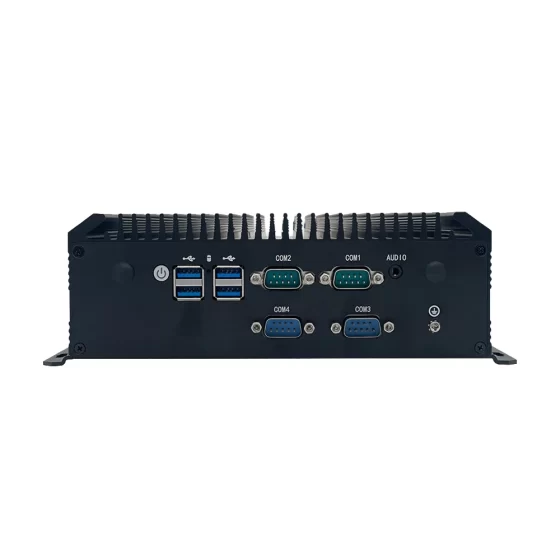
GPIO 和数字 I/O 可支持触发器, 警报, lighting signals, 和机器状态. 串行端口可以支持传统设备. Expansion interfaces can support AI accelerators, extra LAN cards, or storage modules.
坚固耐用的无风扇设计
Robot cells may expose computers to dust, 振动, and heat.
Fanless industrial computers can reduce dust intake and remove one common mechanical failure point.
然而, AI workloads may generate sustained heat.
Thermal design must be reviewed carefully, especially when using high-performance processors, GPU, or accelerators.
The final design should consider enclosure type, 安装位置, 空气流动, 环境温度, and workload duration.
长生命周期和可维护性
Robot vision systems often require software validation.
Changing hardware too frequently may require retesting drivers, 相机 SDK, AI runtimes, and robot communication tools.
Long lifecycle industrial computers help reduce redesign work and simplify spare parts planning.
这对于机器制造商来说很重要, 机器人系统集成商, and manufacturers deploying multiple similar systems.
部署场景
Vision-Guided Pick-and-Place
Robot vision computers can detect object position and orientation for pick-and-place applications.
The system processes images locally and sends coordinates to the robot controller.
This is useful when parts arrive in different positions or orientations.
Bin Picking
Bin picking requires robots to identify objects in random positions.
The robot vision computer may process 3D vision data, estimate object pose, and guide the robot to pick parts from a bin.
AI inference and 3D processing performance are important for stable operation.
Robotic Assembly Guidance
Assembly robots may use vision to align parts, verify position, or check component placement.
The edge AI computer can compare camera images with expected conditions and provide guidance to the robot controller.
This improves assembly accuracy and reduces manual adjustment.
Robotic Quality Inspection
Robots can move cameras around products for flexible inspection.
The robot vision computer can detect defects, 对结果进行分类, 存储图像, and send quality records to MES or quality databases.
This supports traceability and automated quality control.
Packaging and Palletizing
Robot vision can support package recognition, 标签验证, pallet positioning, 和产品计数.
An embedded computer can process visual data near the robot and provide real-time feedback.
This improves logistics and packaging automation.
Welding and Processing Guidance
In welding, 切割, 配发, or surface treatment, vision can help locate edges, seams, or target positions.
The robot vision computer processes images and sends guidance data to the robot or motion controller.
This supports more flexible robotic processing.
AMR and Mobile Robot Vision
Mobile robots may use cameras and sensors for navigation, 障碍物检测, docking, and object recognition.
An embedded computer can process local vision data and communicate with fleet management or control systems.
This supports intelligent warehouse and factory logistics.
OEM Robot Vision System Integration
Robot system integrators can build custom vision computers using industrial computers or embedded boards.
The platform can support camera input, 人工智能推理, robot communication, 本地存储, 远程访问, 和坚固的部署.
This helps create repeatable robot vision solutions for different industries.
商业效益
提高机器人灵活性
Robot vision allows robots to handle variation in part position, 方向, 形状, 和生产流程.
This reduces dependence on fixed fixtures and improves flexibility for modern manufacturing.
更快的本地决策
Edge AI processing enables visual decisions near the robot.
This reduces latency and avoids sending every image to a remote server.
Fast local processing supports real-time inspection, 定位, 排序, and guidance.
更好的质量控制
Robot vision systems can inspect parts during or after robotic operations.
They can detect defects, verify assembly, check labels, and store inspection records.
This improves quality consistency and supports traceability.
Reduced Manual Intervention
Robots with vision can adapt to changing conditions more effectively.
This reduces manual repositioning, 检查, and adjustment work.
It also helps improve production efficiency.
更强的系统集成
A robot vision computer can connect cameras, 机器人, PLC, 传感器, 制造执行系统, 监控与数据采集系统, 和质量体系.
This turns robotic vision from an isolated inspection tool into part of the factory data infrastructure.
可扩展的自动化部署
A standardized robot vision computer platform makes it easier to deploy similar systems across multiple robot cells and production lines.
一致的硬件简化了软件映像, AI model deployment, 驱动程序验证, 备件计划, 和生命周期管理.
为什么选择CoreIPC
CoreIPC为机器视觉提供工业计算平台, 机器人技术, 边缘人工智能, 工业自动化, 工业物联网, 和嵌入式系统集成. For robot vision computer applications, CoreIPC专注于可靠的工业计算机硬件, 嵌入式计算机解决方案, 相机连接, 多 LAN 配置, 灵活的输入/输出, 紧凑的系统设计, 无风扇部署选项, 本地存储能力, 和OEM/ODM定制支持. CoreIPC helps robot system integrators, 机器制造商, 制造商选择符合实际部署需求的计算平台, 包括相机数量, 人工智能工作负载, robot communication, 存储需求, 安装方法, 电源输入, 热条件, 和生命周期规划.
常见问题解答
1. What is a robot vision computer?
A robot vision computer is an industrial computing platform used to process camera and sensor data for robotic applications.
It can run image processing, 人工智能推理, 物体检测, defect inspection, pose estimation, and visual guidance software. The results are sent to robot controllers, PLC, 制造执行系统, 或工厂仪表板.
2. Why use an industrial computer for robot vision?
工业计算机为工厂部署提供坚固的硬件和灵活的连接.
可支持多个LAN口, USB相机, 本地存储, 扩展选项, 工业安装, 稳定的电源输入, 和长生命周期可用性. These features make it suitable for robot cells, 检查站, 包装线, 和机器视觉系统.
3. How is an embedded computer used in robot vision?
An embedded computer can be installed near a robot cell or inside a control cabinet.
It can collect camera data, 运行人工智能模型, calculate object positions, 储存检验记录, and communicate with robot controllers or PLCs. Its compact size makes it useful for space-limited automation equipment.
4. What applications use robot vision computers?
Applications include pick-and-place, 垃圾箱拣选, robotic assembly, 质量检验, welding guidance, 包装验证, 码垛, 标签读取, AMR navigation, and robotic sorting.
The exact hardware depends on camera count, 图像分辨率, 人工智能工作负载, and robot communication requirements.
5. Does robot vision require AI acceleration?
并不总是.
Some simple vision tasks may run on CPU-based industrial computers. More demanding tasks, such as deep learning inspection, 3D pose estimation, multi-camera analysis, or high-speed object detection, may require GPU or AI accelerator support.
6. Why are multiple LAN ports important for robot vision systems?
Multiple LAN ports help separate camera traffic, robot controller communication, PLC网络, 工厂IT, 和远程维护访问.
This improves reliability and prevents high-bandwidth camera streams from interfering with control communication.
7. What hardware features matter for robot vision computers?
重要功能包括足够的 CPU 性能, GPU or AI accelerator support when required, 多个 LAN 端口, USB 3.0, 可靠的记忆, SSD 或 NVMe 存储, 坚固的外壳, 无风扇设计选项, 工业电源输入, 通用输入输出接口, 数字输入/输出, M.2, PCIe, 和显示输出.
The final configuration should match the actual vision workload.
8. Can fanless industrial computers support robot vision?
是的, fanless industrial computers can support many robot vision applications.
然而, AI inference and high-resolution camera processing can create sustained heat. 处理器选择, 外壳设计, 环境温度, 安装方法, and airflow should be validated before deployment.
9. Can robot vision computers connect with MES or SCADA?
是的. Robot vision computers can send inspection results, pass/fail records, image references, 报警事件, and production data to MES, 监控与数据采集系统, 质量数据库, 或工业物联网平台.
This supports traceability and factory-wide visibility.
10. 部署前应该测试什么?
部署前, 该系统应该用真实的相机进行测试, 灯光, 机器人控制器, PLC信号, 人工智能模型, 图像分辨率, production cycle time, 存储工作负载, 和长时间运行的操作.
热稳定性, 通讯延迟, result accuracy, 远程访问工作流程, 恢复程序也应得到验证.
结论
A robot vision computer is a practical foundation for intelligent automation, robotic perception, 边缘AI推理, 视觉引导, defect inspection, 物体识别, 和柔性制造.
By placing an industrial computer or embedded computer near robot cells and vision systems, manufacturers and system integrators can process camera data locally, guide robot motion, inspect products, 存储记录, and connect results with PLCs, 制造执行系统, 监控与数据采集系统, 和工业物联网平台.
The right robot vision computer should be selected according to real deployment requirements, 包括相机数量, 图像分辨率, 帧率, 人工智能工作负载, robot communication, LAN口设计, I/O needs, 存储配置, 安装方法, 电源输入, 热条件, 操作系统支持, 和生命周期规划.
CoreIPC supports robot vision edge AI computer projects with industrial computing platforms designed for practical robot cell, 机器端, 内阁, 和 OEM 部署. 拥有正确的硬件基础, robot system integrators and manufacturers can build reliable, 可扩展, and intelligent vision-guided automation systems.
联系我们
寻找工业计算机, 嵌入式计算机, or edge AI platform for robot vision deployment?
联系 CoreIPC 讨论您的项目需求, 包括相机数量, 人工智能工作负载, robot communication, LAN口配置, I/O needs, 存储设计, 安装方法, 电源输入, 运行环境, 生命周期需求, 和 OEM/ODM 定制选项.