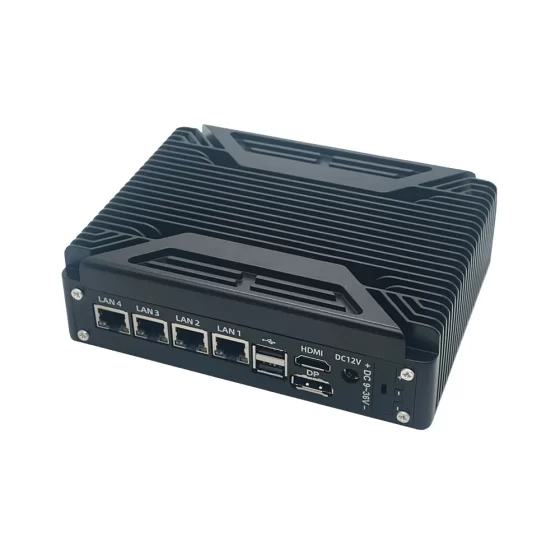
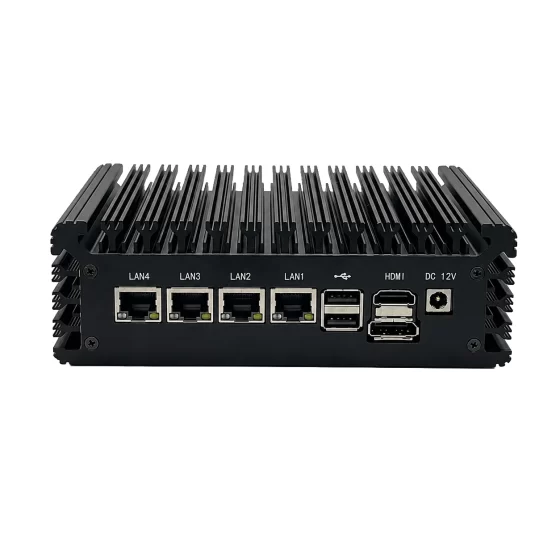
Решения CoreIPC для промышленных вычислений

GPU IPC для глубокого обучения: IPC глубокого обучения для промышленного искусственного интеллекта и машинного зрения
Управляющее резюме
A deep learning IPC provides the industrial computing foundation for AI inference, машинное зрение, обнаружение дефектов, видеоаналитика, роботизированное наведение, and data-driven automation in modern manufacturing environments.
As factories adopt deeper AI models and more camera-based inspection systems, computing requirements are increasing. Traditional industrial computers can support many automation and data collection tasks, but deep learning workloads often require stronger parallel processing, higher memory bandwidth, faster storage, and stable GPU acceleration.
A GPU IPC combines industrial computer reliability with graphics processing capability. It can process high-resolution images, несколько потоков камер, модели глубокого обучения, and real-time AI inference near production equipment.
An embedded computer may also be used when the system needs compact deployment, machine-side installation, or OEM integration. For more demanding AI vision applications, an industrial computer with GPU expansion or edge AI acceleration can provide the performance required for real production workloads.
По сравнению со стандартными коммерческими ПК, industrial GPU IPC platforms are designed for industrial environments. They support rugged installation, стабильная тепловая конструкция, гибкий ввод-вывод, возможность подключения камеры, высокоскоростное хранилище, промышленные сети, и длительный жизненный цикл развертывания.
This article explains how GPU IPC systems support deep learning applications, с какими проблемами сталкиваются производители при развертывании, как работает архитектура решения, and which hardware features are important when selecting an industrial computer or embedded computer for deep learning workloads.
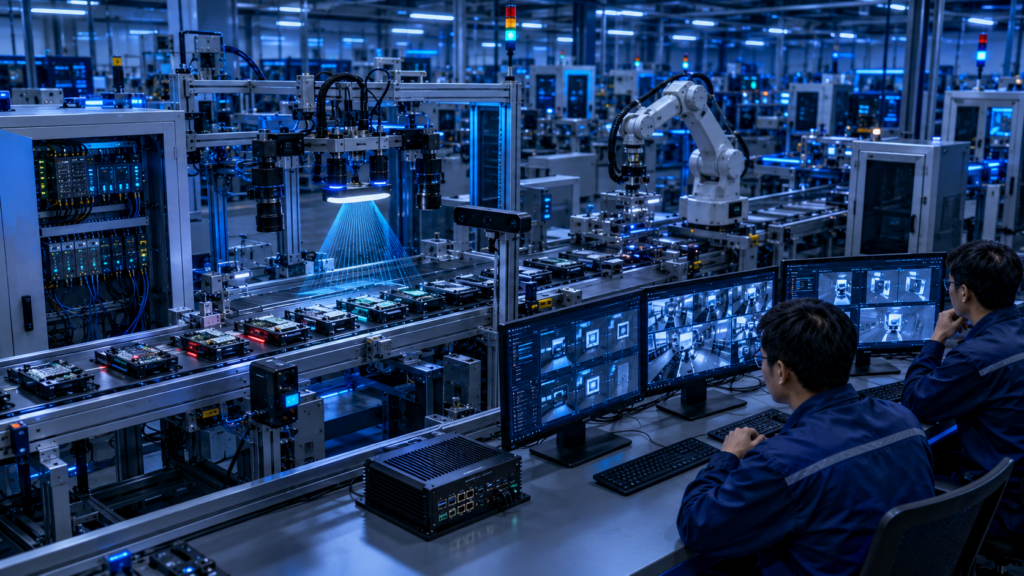
GPU IPC platforms process AI vision and deep learning inference workloads near production equipment.
Обзор отрасли
Deep Learning Is Becoming Practical in Industrial Automation
Deep learning is increasingly used in factory automation and smart manufacturing.
It helps manufacturers analyze images, обнаруживать дефекты, классифицировать объекты, recognize patterns, мониторное оборудование, and process complex industrial data.
Typical deep learning applications include:
- Visual defect detection
- Проверка поверхности
- Semiconductor AOI
- Electronics inspection
- Battery inspection
- Проверка упаковки
- Распознавание штрих-кода и OCR
- Обнаружение объектов
- Robotic guidance
- Видеоаналитика
- Прогностическое обслуживание
- Обнаружение аномалий
These applications require reliable local computing hardware.
A deep learning IPC helps bring AI processing from cloud or laboratory environments into real production systems.
Why GPU Acceleration Matters
Deep learning models often require many parallel calculations.
GPUs are well suited for this type of workload because they can process large amounts of image and matrix data efficiently.
В промышленных применениях, GPU acceleration can help with:
- Faster AI inference
- Многокамерная обработка
- High-resolution image analysis
- Video stream analytics
- Complex defect segmentation
- Обнаружение объектов
- Model validation
- Edge AI deployment
- Real-time visual inspection
Not every application needs a large GPU. Some lightweight models can run on CPU-based industrial computers or embedded AI modules.
Однако, when image resolution, количество камер, сложность модели, or response-time requirements increase, a GPU IPC becomes more important.
Industrial Computing Is Different from Office AI Hardware
A deep learning IPC is not just a desktop PC with a GPU.
Factory environments require stable operation near machines, конвейеры, камеры, роботы, ПЛК, и шкафы управления.
Эти среды могут включать в себя вибрацию., пыль, нагревать, ограниченный поток воздуха, электрический шум, и продолжительное время работы.
Промышленные компьютеры и встраиваемые компьютеры созданы для таких условий..
They provide stronger mechanical design, промышленный ввод-вывод, reliable power input, controlled thermal performance, поддержка длительного жизненного цикла, and flexible mounting for real factory deployment.

Данные нескольких камер, GPU thermal design, рабочая нагрузка хранилища, Связь с ПЛК, and cabinet installation affect deep learning IPC reliability.
Ключевые проблемы
High AI Processing Workload
Deep learning workloads can be demanding.
The required performance depends on camera resolution, количество камер, частота кадров, Размер модели ИИ, inference speed, предварительная обработка, post-processing, and local storage needs.
A system may need to process:
- Изображения высокого разрешения
- Несколько потоков с камер
- Видеоклипы
- Defect segmentation models
- Модели обнаружения объектов
- модели оптического распознавания символов
- Classification models
- Sensor fusion data
- Производственные записи
If the IPC is underpowered, the system may experience delayed inference, пропущенные кадры, missed inspection timing, or unstable production performance.
GPU Thermal Management
GPU acceleration improves AI processing, but it also increases power and heat.
Industrial systems often operate inside cabinets or near production lines where airflow may be limited.
Thermal planning is critical.
Важные факторы включают в себя:
- GPU power consumption
- нагрузка процессора
- Конструкция корпуса
- Воздушный поток в шкафу
- Температура окружающей среды
- Mounting position
- Dust conditions
- Длительная рабочая нагрузка
- Expansion card layout
A GPU IPC must be selected and installed according to real operating conditions, not only peak performance specifications.
Camera Bandwidth and Data Flow
Many deep learning applications are camera-based.
A system may use USB cameras, GigE-камеры, 2.5Камеры GbE, 10Камеры GbE, line scan cameras, 3D-камеры, или специализированные интерфейсы захвата кадров.
Each camera creates data bandwidth requirements.
A multi-camera AI inspection platform must consider:
- Camera interface type
- Количество камер
- Частота кадров
- Разрешение изображения
- Разделение сети
- Расширение PCIe
- Скорость хранения
- Пропускная способность памяти
- Processing pipeline
A powerful GPU cannot solve a camera bottleneck if the system cannot acquire images reliably.
Industrial Device Integration
A deep learning IPC must communicate with factory equipment.
It may need to connect with PLCs, роботы, контроллеры движения, конвейеры, датчики, контроллеры освещения, считыватели штрих-кодов, сигналы тревоги, MES-системы, and SCADA platforms.
Useful industrial interfaces may include:
- локальная сеть
- USB
- RS232
- RS485
- GPIO
- Цифровой вход
- Цифровой выход
- HDMI
- ДисплейПорт
- М.2
- PCIe
Without the right I/O design, AI deployment becomes harder to integrate and maintain.
Long-Term Reliability and Lifecycle
Industrial AI systems often remain in production for many years.
A change in GPU model, водитель, Операционная система, camera SDK, or industrial computer platform can create validation problems.
Manufacturers and machine builders need hardware that can support consistent deployment, планирование запасных частей, software image stability, и долгосрочное обслуживание.
This is why lifecycle planning is important for deep learning IPC projects.

GPU IPC systems connect AI vision cameras, acceleration hardware, оборудование автоматизации, и заводские программные системы.
Deep Learning IPC Solution Architecture
Уровень сбора данных
Уровень сбора данных захватывает изображения, видеопотоки, значения датчиков, and machine data.
Этот слой может включать в себя:
- Промышленные камеры
- 3D-камеры
- Высокоскоростные камеры
- Камеры линейного сканирования
- Frame grabbers
- Контроллеры освещения
- Триггерные датчики
- ПЛК
- Датчики вибрации
- Считыватели штрих-кодов
- Контроллеры роботов
- Производственное оборудование
The quality of this input directly affects deep learning performance.
Stable camera acquisition, accurate triggering, and clean sensor data are required before AI models can produce reliable results.
GPU Industrial Computing Layer
The GPU industrial computing layer is the core of the system.
На этом слое, the industrial computer or embedded computer processes data locally.
It may:
- Получение изображений с камер
- Run deep learning inference
- Perform image preprocessing
- Execute defect detection models
- Run segmentation algorithms
- Process video analytics
- Протоколы проверок магазинов
- Отображение локальных информационных панелей
- Отправка результатов в ПЛК
- Загрузить выбранные данные в заводские системы
This local computing layer reduces latency and allows AI decisions to happen close to production equipment.
AI Software Layer
The AI software layer includes the models, runtimes, водители, and application software.
В зависимости от проекта, оно может включать в себя:
- Deep learning inference runtime
- Программное обеспечение машинного зрения
- SDK камеры
- Драйверы графического процессора
- AI model management tools
- Image preprocessing pipeline
- Defect classification logic
- Программное обеспечение для видеоаналитики
- Local database software
- Industrial communication software
Hardware selection should consider software compatibility from the beginning.
A GPU IPC must support the operating system, Драйверы графического процессора, интерфейсы камеры, and AI frameworks required by the application.
Уровень управления автоматизацией
The automation control layer connects AI results with physical production action.
ПЛК, контроллер робота, конвейерная система, контроллер движения, or reject mechanism may receive output from the deep learning IPC.
Например, after detecting a surface defect, the IPC can send a fail signal to a PLC. The PLC can then activate a reject mechanism.
In robot guidance applications, the IPC may process camera data and send object coordinates to a robot controller.
Уровень интеграции заводских данных
AI results become more valuable when connected with production records.
The deep learning IPC may send selected data to:
- МЧС
- СКАДА
- Качественные базы данных
- WMS
- ERP-система
- Облачные платформы
- Краеведческие системы
- Панели управления производством
Data may include product IDs, категории дефектов, изображения, временные метки, идентификаторы станций, confidence scores, версии модели, и результаты проверки.
Это поддерживает отслеживаемость, анализ качества, и улучшение процессов.
Ключевые особенности
GPU Acceleration for AI Inference
GPU acceleration is one of the most important features of a deep learning IPC.
The right GPU configuration depends on the actual model and production workload.
При выборе следует учитывать:
- Размер модели ИИ
- Required inference speed
- Количество камер
- Разрешение изображения
- Количество видеопотоков
- Batch processing needs
- GPU memory
- Потребляемая мощность
- Driver support
- Тепловой расчет
Для промышленного применения, stable long-running inference is more important than short benchmark results.
High-Speed Camera Connectivity
Deep learning vision systems need reliable camera input.
Полезные аппаратные опции могут включать в себя:
- USB 3.0 порты
- Несколько портов LAN
- 2.5Варианты GbE или 10GbE
- Расширение PCIe
- Поддержка захвата кадров
- Расширение M.2
- Высокоскоростной твердотельный накопитель или хранилище NVMe
- Выходы дисплея
Для многокамерного контроля, network traffic and camera bandwidth should be planned carefully.
Camera networks may need to be separated from factory IT networks to improve stability.
Гибкий промышленный ввод-вывод
A GPU IPC must connect with automation equipment.
Важные параметры ввода-вывода могут включать в себя:
- локальная сеть
- USB
- RS232
- RS485
- GPIO
- Цифровой вход
- Цифровой выход
- HDMI
- ДисплейПорт
- М.2
- PCIe
- SATA или NVMe
Эти интерфейсы поддерживают камеры, датчики, контроллеры освещения, ПЛК, роботы, конвейеры, считыватели штрих-кодов, сигналы тревоги, и местные дисплеи.
Гибкий ввод-вывод сокращает использование внешних преобразователей и повышает надежность развертывания..
Reliable Storage for AI Data
Deep learning systems may generate large amounts of data.
The IPC may need to store:
- Изображения дефектов
- Accepted samples
- Видеоклипы
- Файлы моделей AI
- Training samples
- Журналы вывода
- Inspection records
- Локальные базы данных
- Временные буферы
SSD or NVMe storage is commonly preferred because it supports faster access and better shock resistance than mechanical drives.
For data-heavy AI systems, емкость хранения, устойчивая скорость записи, писать выносливость, backup strategy, и политика хранения должна быть пересмотрена во время проектирования.
Rugged Mechanical and Thermal Design
A deep learning IPC must support industrial installation.
Rugged design helps protect against vibration, напряжение кабеля, mounting impact, и непрерывная работа.
Thermal design is especially important when using GPU acceleration.
System designers should review:
- CPU and GPU heat output
- Fanless or active cooling requirements
- Воздушный поток в шкафу
- Температура окружающей среды
- GPU card clearance
- Dust control
- Power supply capacity
- Прокладка кабеля
Reliable thermal planning helps maintain stable AI performance over long operating periods.
Длительный жизненный цикл и ремонтопригодность
Deep learning systems often require careful software validation.
Драйверы камеры, Драйверы графического процессора, ИИ-фреймворки, операционные системы, and application software must work together.
Frequent hardware changes can increase maintenance cost.
Industrial computing platforms with lifecycle support help machine builders and manufacturers maintain consistent AI systems across multiple machines, линии, и заводские площадки.
Сценарии развертывания
Визуальное обнаружение дефектов с помощью искусственного интеллекта
Visual defect detection is one of the most common deep learning IPC applications.
The system can inspect products for scratches, вмятины, трещины, пятна, загрязнение, недостающие части, and surface abnormalities.
The GPU IPC processes camera images locally and sends inspection results to PLCs or quality systems.
Semiconductor AOI
Semiconductor AOI often requires high-resolution imaging and advanced defect classification.
A deep learning IPC can process wafer images, die images, изображения пакетов, and mark verification data.
It can also connect results with MES, НПЦ, и качественные базы данных.
Проверка электроники и поверхностного монтажа
Electronics manufacturing can use GPU IPC systems for component verification, solder inspection, PCB defect detection, распознавание штрих-кода, and connector inspection.
The system can process images from AOI equipment or production-line cameras and link results with PCB serial numbers.
Проверка производства аккумуляторов
Battery production can use deep learning IPC platforms for electrode surface inspection, контроль сварки вкладки, проверка внешнего вида ячеек, проверка сборки модуля, и проверка упаковки.
The GPU IPC helps process complex defect patterns and connect results with production traceability systems.
Проверка упаковки
Packaging inspection can involve labels, печати, штрих-коды, коды дат, кепки, коробки, мешочки, бутылки, and final package verification.
A deep learning IPC can support AI defect detection and send reject decisions to PLC-controlled equipment.
Robotics and 3D Vision
Robotic applications may need deep learning for object detection, локализация детали, сбор мусора, and quality inspection.
A GPU IPC can process 2D or 3D camera data and send coordinates or classification results to robot controllers.
Видеоаналитика
Industrial video analytics can support safety monitoring, process observation, мониторинг оборудования, and logistics tracking.
A GPU IPC can process multiple video streams locally and upload only selected events or alerts.
Это снижает нагрузку на сеть и улучшает время отклика..
Интеграция OEM-оборудования AI
Machine builders can integrate GPU IPC systems into AI inspection machines, роботизированные системы, сортировочное оборудование, умные шлюзы, or automation platforms.
Вычислительная платформа может обеспечить вывод ИИ, обработка камеры, локальное хранилище, Дисплей ЧМИ, Связь с ПЛК, и вывод заводских данных.
This helps OEMs deliver industrial AI equipment ready for production deployment.
Преимущества для бизнеса
Faster AI Inference
A GPU IPC provides stronger local processing for deep learning workloads.
This helps reduce inference time and supports faster production decisions.
Fast local AI is useful for defect rejection, наведение робота, сортировка, мониторинг, and high-speed inspection.
Improved Inspection Capability
Deep learning can help detect complex visual defects that are difficult to define with fixed rules.
A deep learning IPC provides the computing power needed to run these models near production equipment.
This helps manufacturers improve inspection consistency and reduce manual review workload.
Уменьшенная зависимость от облака
Local GPU processing reduces the need to send all images or video streams to cloud platforms.
The IPC can process data at the edge and upload only selected results, изображения, оповещения, или резюме.
This reduces bandwidth pressure and improves operational resilience.
Более надежная отслеживаемость производства
Результаты ИИ могут быть связаны с идентификаторами продуктов., заказы на работу, категории дефектов, изображения, временные метки, идентификаторы станций, версии модели, и действия оператора.
This creates stronger quality records.
Reliable industrial storage and data integration help support audits, обзор процесса, гарантийное расследование, и анализ первопричин.
Better Integration with Automation
A GPU IPC can connect deep learning results with PLCs, роботы, конвейеры, и заводские системы.
This turns AI analysis into practical production action.
The system can trigger reject mechanisms, направляющие роботы, send alarms, or update quality databases automatically.
Scalable Industrial AI Deployment
A standardized deep learning IPC platform makes it easier to deploy AI across multiple production lines and factories.
Согласованное оборудование упрощает образы программного обеспечения, GPU driver validation, camera SDK management, планирование запасных частей, and maintenance training.
This helps manufacturers move from AI pilot projects to scalable production deployment.
Почему CoreIPC
CoreIPC предоставляет промышленные вычислительные платформы для периферийного искусственного интеллекта, машинное зрение, автоматизация производства, робототехника, и встроенная системная интеграция. For deep learning IPC applications, CoreIPC специализируется на надежном промышленном компьютерном оборудовании., встроенные компьютерные решения, гибкие конфигурации ввода-вывода, компактная конструкция системы, GPU-ready platform planning, и поддержка настройки OEM/ODM. CoreIPC помогает системным интеграторам, машиностроители, и производственные группы выбирают вычислительные платформы, соответствующие реальным требованиям развертывания, including GPU workload, интерфейсы камеры, автоматизация связи, потребности в хранении, способы крепления, потребляемая мощность, тепловой расчет, совместимость программного обеспечения, и планирование жизненного цикла.
Часто задаваемые вопросы
1. What is a deep learning IPC?
A deep learning IPC is an industrial computer designed to run deep learning workloads in industrial environments.
It may include GPU acceleration, high-speed camera connectivity, промышленный ввод-вывод, прочная механическая конструкция, надежное хранение, and factory network support. It is commonly used for AI inspection, видеоаналитика, роботизированное зрение, and industrial edge computing.
2. Why use a GPU IPC for deep learning?
Deep learning models often require parallel processing.
A GPU IPC can accelerate AI inference, обработка изображений, обнаружение объектов, сегментация, and video analytics. This helps the system process more data locally and respond faster in production environments.
3. How is an embedded computer used for deep learning?
An embedded computer can be used for compact AI deployment near machines, камеры, роботы, или шкафы управления.
For lighter workloads, it may run CPU-based AI or embedded AI acceleration. For heavier workloads, a larger industrial computer with GPU support may be required. The selection depends on model complexity, количество камер, и требования ко времени ответа.
4. What applications need a deep learning IPC?
Applications include visual defect detection, полупроводниковый АОИ, проверка электроники, проверка батареи, проверка упаковки, роботизированное наведение, видеоаналитика, логистическая сортировка, профилактическое обслуживание, and smart factory monitoring.
Any application that uses deep learning models near production equipment may benefit from a properly selected industrial GPU IPC.
5. Does every AI vision system need a GPU?
Нет. Some AI vision systems can run on CPU-based industrial computers or compact embedded computers.
A GPU is usually more important when the system uses high-resolution images, несколько камер, complex deep learning models, видеоаналитика, 3Д видение, or short cycle-time requirements. Real model testing should guide hardware selection.
6. What interfaces are important for GPU IPC systems?
Важные интерфейсы могут включать USB 3.0, несколько портов локальной сети, 2.5Нести, 10Нести, PCIe, М.2, RS232, RS485, GPIO, цифровой вход, цифровой выход, HDMI, ДисплейПорт, САТА, и поддержка хранилища NVMe.
Camera interfaces and PCIe expansion are especially important for many deep learning vision applications.
7. Can fanless industrial computers support deep learning?
Fanless industrial computers can support some deep learning workloads, especially lightweight inference and moderate AI applications.
Однако, GPU-based deep learning workloads may generate significant heat. Мощность процессора, GPU power, конструкция корпуса, поток воздуха в шкафу, температура окружающей среды, и метод установки следует проверить перед развертыванием.
8. How does a deep learning IPC connect with PLCs and robots?
A deep learning IPC can communicate with PLCs and robots through Ethernet, последовательная связь, цифровой ввод/вывод, or supported automation software interfaces.
It can receive triggers, обрабатывать изображения, и отправь пропуск, неудача, тревога, позиция, or classification results back to the automation system.
9. Can deep learning IPC systems connect with MES or quality databases?
Да. Industrial computers can upload AI inspection results to MES, качественные базы данных, СКАДА, WMS, ERP-система, или облачные платформы.
Загруженные данные могут включать идентификаторы продуктов., категории дефектов, записи изображений, временные метки, версии модели, идентификаторы станций, и результаты проверки. This supports traceability and quality analysis.
10. What should be tested before deploying a GPU IPC?
Перед развертыванием, систему следует протестировать на реальных камерах, real AI models, actual production images, Драйверы графического процессора, SDK камеры, Связь с ПЛК, рабочая нагрузка хранилища, сетевая архитектура, и длительная эксплуатация.
Термическая стабильность, inference speed, надежность получения кадров, and data upload behavior should also be validated.
Заключение
A deep learning IPC is a practical foundation for industrial AI systems that require GPU acceleration, машинное зрение, видеоаналитика, роботизированное наведение, обнаружение дефектов, and local edge intelligence.
By placing a GPU-ready industrial computer or embedded computer close to cameras, датчики, ПЛК, роботы, конвейеры, и производственные системы, manufacturers can process AI workloads locally, уменьшить задержку, lower cloud dependency, and connect deep learning results with real automation actions.
Правильную платформу следует выбирать в соответствии с реальными требованиями к развертыванию., including AI model complexity, GPU workload, интерфейс камеры, разрешение изображения, Конфигурация ввода/вывода, сетевая архитектура, потребности в хранении, требования к расширению, метод монтажа, потребляемая мощность, термические условия, поддержка операционной системы, и планирование жизненного цикла.
CoreIPC supports deep learning IPC projects with industrial computing platforms designed for practical factory and equipment deployment. С правильной аппаратной основой, производители и машиностроители могут создавать надежные, масштабируемый, and production-ready industrial AI systems.
Связаться с нами
Ищу промышленный компьютер, встроенный компьютер, or GPU IPC for deep learning?
Свяжитесь с CoreIPC, чтобы обсудить требования вашего проекта, включая рабочую нагрузку ИИ, GPU requirements, интерфейс камеры, Конфигурация ввода/вывода, связь с роботом или ПЛК, дизайн хранилища, метод монтажа, потребляемая мощность, операционная среда, потребности жизненного цикла, и варианты настройки OEM/ODM.