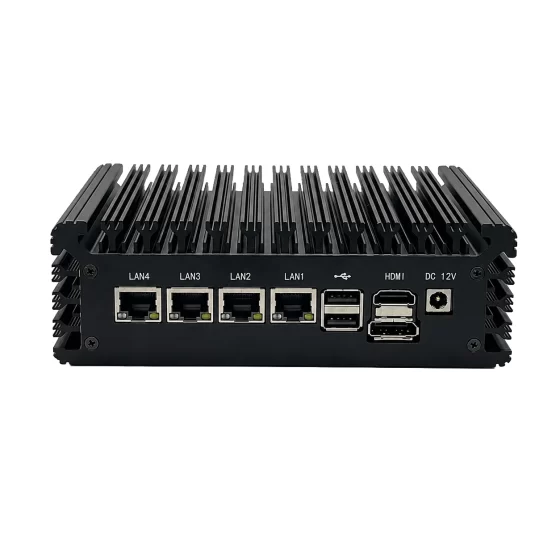
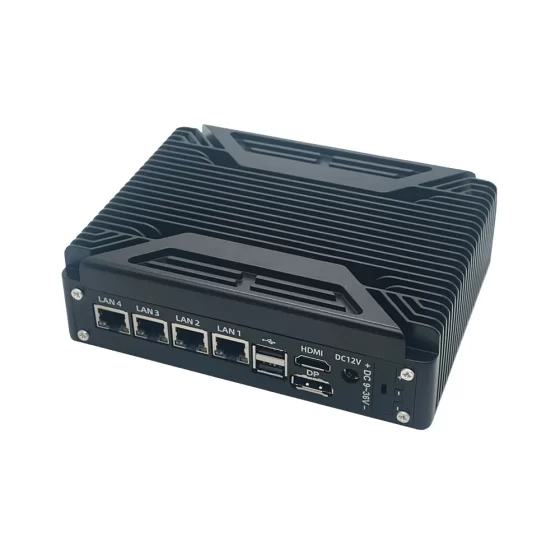
Решения CoreIPC для промышленных вычислений

Промышленный компьютер с искусственным интеллектом для мониторинга: Промышленный AI-мониторинг для работы умного предприятия
Управляющее резюме
Industrial AI monitoring is becoming an important foundation for smart factories, connected machines, профилактическое обслуживание, контроль качества, and real-time production visibility.
Manufacturing environments generate large volumes of data from cameras, датчики, ПЛК, роботы, конвейеры, моторы, метры, и производственное оборудование. If this data is only collected manually or sent to remote systems without local processing, factories may face delayed response, limited visibility, сетевая зависимость, and incomplete operational insight.
An industrial AI computer for monitoring provides local computing power close to machines and production lines. It can collect data from industrial devices, запускать модели вывода ИИ, analyze abnormal patterns, process camera streams, detect equipment issues, and send alerts to operators or factory systems.
An industrial computer or embedded computer can act as the edge monitoring platform. It may connect to machine vision cameras, датчики вибрации, датчики температуры, ПЛК, промышленные шлюзы, счетчики энергии, роботы, and MES or SCADA systems.
По сравнению со стандартными коммерческими ПК, industrial computers are better suited for factory deployment because they support rugged operation, гибкий ввод-вывод, стабильная сеть, варианты безвентиляторного дизайна, надежное хранение, и доступность в течение длительного жизненного цикла.
This article explains how industrial AI monitoring systems work, с какими проблемами внедрения сталкиваются производители, как структурирована архитектура решения, and which hardware features are important when selecting an industrial computer or embedded computer for AI-based monitoring applications.
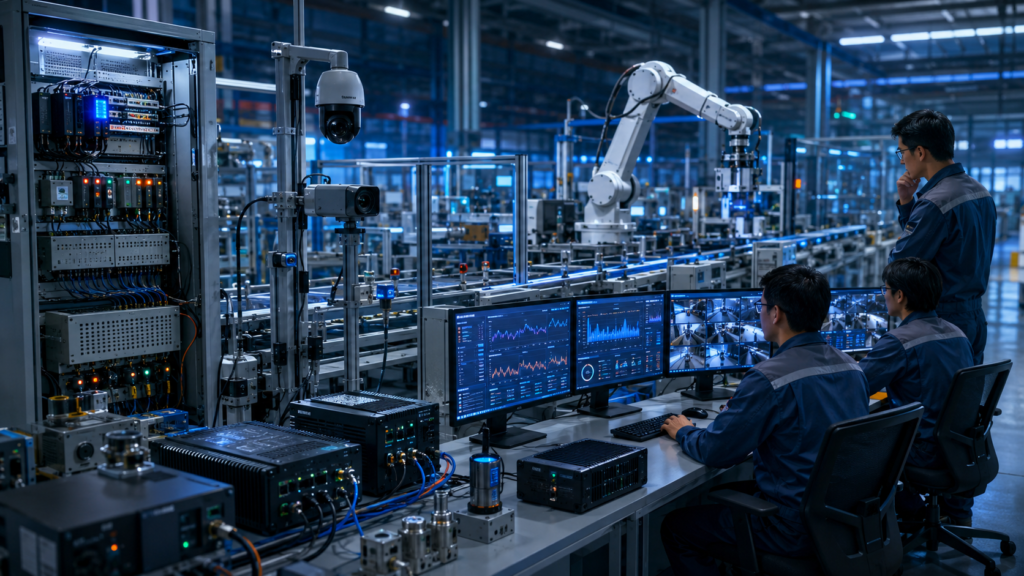
состояние машины, данные датчика, видеопотоки, equipment health, and AI alerts near production equipment.
Обзор отрасли
Factories Need Better Real-Time Visibility
Modern factories are becoming more complex.
Production lines may include multiple machines, роботизированные клетки, инспекционные станции, конвейеры, инженерные системы, and connected software platforms. Operators and engineers need to understand what is happening across these systems in real time.
Traditional monitoring often depends on alarms, manual checks, PLC status signals, or periodic reports. These methods are useful, but they may not provide enough detail for advanced production optimization.
Industrial AI monitoring improves this situation by adding local intelligence near equipment.
It can help monitor:
- Статус машины
- Equipment health
- Visual inspection results
- Process abnormalities
- Production flow
- Использование энергии
- Условия окружающей среды
- Мероприятия по безопасности
- Predictive maintenance signals
- Тенденции качества
The goal is not only to collect data, but to convert data into timely operational decisions.
AI Monitoring Is Moving to the Edge
Cloud platforms can support historical analysis, centralized dashboards, and long-term data storage.
Однако, many monitoring tasks need local response. A machine abnormality, safety event, quality defect, or production blockage may require action within seconds.
Отправка каждого изображения, vibration record, or sensor reading to a cloud server can create latency, давление на полосу пропускания, и зависимость от сети.
An industrial AI computer allows monitoring to happen close to the equipment.
Он может обрабатывать данные локально, send alarms quickly, buffer records during network interruptions, and upload selected results to higher-level systems.
Промышленные вычисления — это основа аппаратного обеспечения
AI monitoring systems require more than software.
They need a stable industrial computing platform that can connect real factory devices, process data continuously, and operate in harsh environments.
Промышленные компьютеры и встроенные компьютеры обеспечивают эту основу..
Они могут поддерживать несколько портов LAN., USB-камеры, последовательные устройства, GPIO signals, SSD-накопитель, промышленная потребляемая мощность, вывод дисплея, and cabinet or machine-side mounting.
This makes them suitable for monitoring machines, производственные линии, коммунальные услуги, логистические системы, and industrial IoT deployments.

Camera streams, сенсорные сети, Связь с ПЛК, давление хранения, сетевой дизайн, and factory conditions affect AI monitoring reliability.
Ключевые проблемы
Diverse Data Sources
Industrial monitoring systems need to collect data from many different devices.
Одно развертывание может включать камеры., датчики вибрации, датчики температуры, ПЛК, моторы, метры, считыватели штрих-кодов, роботы, шлюзы, и производственные базы данных.
Each data source may use different interfaces, protocols, скорость обновления, and data formats.
Common sources include:
- Камеры машинного зрения
- IP-камеры
- PLC status signals
- Датчики вибрации
- Датчики температуры
- Датчики давления
- Датчики тока
- Счетчики энергии
- Считыватели штрих-кодов
- Контроллеры роботов
- Промышленные шлюзы
The industrial AI computer must support flexible connectivity and stable data acquisition.
Требования к оповещениям в реальном времени
Monitoring becomes valuable when abnormal conditions are detected early.
If the system detects equipment vibration, перегрев, production blockage, отсутствует поток продукта, visual abnormality, or unsafe operation, it must send alerts quickly.
Delayed alerts reduce the value of AI monitoring.
Требования реального времени могут появиться в:
- Прогностическое обслуживание
- Мониторинг безопасности
- Machine status monitoring
- Production line monitoring
- Проверка качества
- Energy anomaly detection
- Robotic cell monitoring
- Conveyor flow monitoring
The computing platform must provide stable sustained performance under continuous workload.
AI Workload Variation
Industrial AI monitoring can involve different workloads.
Some systems analyze simple sensor patterns. Others process video streams, machine vision images, or multi-source data from multiple machines.
Workloads may include:
- Обнаружение аномалий
- Классификация изображений
- Обнаружение объектов
- Видеоаналитика
- Модели прогнозного обслуживания
- Sensor data analysis
- Классификация состояния оборудования
- Process trend detection
- OCR or barcode recognition
- Production flow analysis
The hardware should be selected according to real AI model performance and deployment requirements.
Network and Data Management
Monitoring systems often connect shop-floor equipment with MES, СКАДА, облачные платформы, базы данных, информационные панели, и системы обслуживания.
This creates network design challenges.
Some factories need to separate camera networks, машинные сети, ИТ-сети, и облачные подключения. Others need local buffering when the network is unstable.
A practical industrial AI monitoring computer may need multiple LAN ports, локальное хранилище, безопасная связь, and reliable data upload functions.
Долгосрочная заводская надежность
Monitoring systems are often expected to run continuously.
Их можно устанавливать внутри шкафов управления., near machines, возле конвейеров, inside utility rooms, or close to robotic cells.
Эти среды могут включать пыль, вибрация, изменения температуры, электрический шум, и ограниченный поток воздуха.
Industrial-grade hardware is important because monitoring systems lose value if they fail during production.

Industrial AI computers connect sensors, камеры, машины, заводское программное обеспечение, облачные платформы, и мониторинг дашбордов.
Industrial AI Monitoring Solution Architecture
Уровень устройств и датчиков
The device and sensor layer includes the equipment being monitored.
This layer may include production machines, камеры, ПЛК, датчики, моторы, роботы, инженерные системы, метры, и промышленные шлюзы.
It generates the raw data used for monitoring and AI analysis.
Типичные данные могут включать в себя:
- Изображения
- Видеопотоки
- Значения вибрации
- Данные о температуре
- Статус машины
- Alarm signals
- Потребление энергии
- Ток двигателя
- Производство имеет значение
- Сроки процесса
- Equipment operating history
Consistent data acquisition is the foundation of reliable AI monitoring.
Уровень промышленных периферийных вычислений
The industrial edge computing layer is where the industrial AI computer performs local processing.
На этом слое, промышленный компьютер или встроенный компьютер может:
- Сбор данных датчиков
- Process video streams
- Запуск моделей вывода ИИ
- Обнаружение аномальных закономерностей
- Хранить локальные записи
- Буферизация данных во время проблем с сетью
- Trigger alarms
- Отображение локальных информационных панелей
- Send selected results to MES or SCADA
- Поддержка удаленного обслуживания
This local layer helps reduce latency and makes monitoring more resilient.
Слой ИИ-аналитики
The AI analytics layer contains the software logic used to detect abnormal conditions.
В зависимости от приложения, оно может включать в себя:
- Модели прогнозного обслуживания
- Machine vision algorithms
- Video analytics tools
- Обнаружение аномалий датчика
- Production flow analysis
- Анализ тенденций качества
- Анализ энергопотребления
- Логика сигнализации на основе правил
- Среда выполнения вывода ИИ
Промышленный компьютер должен поддерживать требуемую операционную систему., водители, Структура искусственного интеллекта, database tools, и программное обеспечение для промышленной связи.
Automation and Alert Layer
The automation and alert layer connects AI monitoring results with action.
When the system detects a problem, it may send an alert to operators, вызвать тревогу, notify maintenance teams, or send a signal to a PLC or SCADA system.
Примеры включают в себя:
- Machine vibration warning
- Temperature abnormality alarm
- Conveyor blockage alert
- Missing product flow detection
- Camera-based safety event
- Energy usage anomaly
- Robot cell abnormal status
- Process deviation warning
This layer helps convert monitoring data into operational response.
Уровень интеграции заводского программного обеспечения
Industrial AI monitoring systems usually connect to higher-level platforms.
The industrial AI computer may send selected data to:
- МЧС
- СКАДА
- ERP-система
- Качественные базы данных
- Платформы обслуживания
- Облачные панели мониторинга
- Промышленные IoT-платформы
- Краеведческие системы
- Информационные панели мониторинга производства
Вместо загрузки всех необработанных данных, the system can upload alarms, резюме, записи событий, выбранные изображения, and trend data.
This reduces network load while keeping factory teams informed.
Ключевые особенности
Stable AI Processing Performance
An industrial AI computer for monitoring must provide stable performance during continuous operation.
The required configuration depends on the number of data sources, Сложность модели ИИ, количество видеопотоков, sensor frequency, and response time requirements.
При выборе следует учитывать:
- Производительность процессора
- Поддержка графического процессора или ускорителя искусственного интеллекта
- Объем памяти
- Скорость хранения
- Пропускная способность сети
- Совместимость с инфраструктурой искусственного интеллекта
- Поддержка операционной системы
- Тепловой расчет
- Долгосрочная стабильность
For lightweight monitoring, встроенного компьютера может быть достаточно. For multi-camera AI monitoring, a stronger edge AI computer or industrial PC may be required.
Несколько сетевых интерфейсов
AI monitoring systems often need multiple network connections.
Одна сеть может соединять камеры. Another may connect PLCs or machine devices. A separate network may connect MES, СКАДА, облачные системы, or remote maintenance tools.
Несколько портов LAN могут поддерживать:
- Camera network separation
- Машинная сетевая связь
- Заводское ИТ-подключение
- Cloud data upload
- Удаленное обслуживание
- Cybersecurity segmentation
- Multi-line monitoring
Good network planning improves system reliability and data organization.
Гибкий промышленный ввод-вывод
The monitoring computer must connect with real industrial equipment.
Важные параметры ввода-вывода могут включать в себя:
- локальная сеть
- USB
- RS232
- RS485
- GPIO
- Цифровой вход
- Цифровой выход
- HDMI
- ДисплейПорт
- М.2
- PCIe
- SATA или NVMe хранилище
These interfaces can support sensors, камеры, ПЛК, шлюзы, метры, считыватели штрих-кодов, сигналы тревоги, and local operator displays.
Flexible I/O reduces the need for external adapters and improves deployment reliability.
Локальное хранилище и буферизация данных
Monitoring systems may need to store data locally.
The computer may store sensor history, записи тревог, видеоклипы, image evidence, Файлы моделей AI, информационные панели, локальные базы данных, и временные буферы.
Обычно предпочтение отдается твердотельным накопителям или хранилищам NVMe, поскольку они обеспечивают быстрый доступ и лучшую ударопрочность, чем механические накопители..
При проектировании хранилища следует учитывать:
- Срок хранения данных
- Размер локальной базы данных
- Image or video storage needs
- Напишите выносливость
- Стратегия резервного копирования
- Поведение при прерывании сети
- Частота загрузки
Reliable storage helps protect monitoring data and supports traceability.
Прочная и безвентиляторная конструкция
Industrial AI monitoring computers often operate near machines.
Fanless computers reduce dust intake and remove one common mechanical failure point. Прочные корпуса помогают защитить систему от вибрации., воздействие установки, и напряжение кабеля.
Однако, Рабочие нагрузки ИИ могут выделять значительное количество тепла.
For high-performance monitoring systems, тепловой расчет должен быть тщательно проверен. Рабочая нагрузка процессора, Использование графического процессора или ускорителя, поток воздуха в шкафу, температура окружающей среды, and mounting location all affect long-term stability.
Длительный жизненный цикл и ремонтопригодность
Monitoring platforms often become part of long-term factory infrastructure.
Frequent changes in hardware models, водители, интерфейсы, или варианты расширения могут создать проблемы с проверкой и обслуживанием.
Промышленные вычислительные платформы с планированием жизненного цикла помогают производителям и системным интеграторам поддерживать согласованное развертывание на нескольких линиях., машины, и заводские площадки.
This is especially important for large-scale industrial AI monitoring rollouts.
Сценарии развертывания
Predictive Maintenance Monitoring
Predictive maintenance is one of the main industrial AI monitoring applications.
The system collects data from vibration sensors, датчики температуры, моторы, насосы, компрессоры, и контроллеры станков.
The industrial AI computer analyzes patterns locally and generates alerts when abnormal behavior appears.
This helps maintenance teams identify potential equipment issues earlier.
Machine Vision Monitoring
Industrial AI monitoring can use cameras to observe production lines, machine areas, and product flow.
The computer may detect missing products, дефекты поверхности, неправильное позиционирование, повреждение упаковки, or abnormal process conditions.
This supports quality control and production visibility.
Video-Based Process Monitoring
Factories may use video analytics to monitor production flow, safety areas, machine operation, and conveyor movement.
The industrial computer processes video streams locally and sends only selected alerts or event records to higher-level systems.
This reduces bandwidth load and improves response time.
Энергетический мониторинг
Industrial AI monitoring can help analyze energy usage.
The system may collect data from meters, силовые устройства, компрессоры, системы отопления, вентиляции и кондиционирования, и производственное оборудование.
AI models can detect unusual consumption patterns or equipment inefficiency.
This supports energy management and operational cost control.
Robotic Cell Monitoring
Robotic cells may need monitoring for motion status, object handling, cycle timing, зоны безопасности, and abnormal operation.
An industrial AI computer can process camera data, robot status, and sensor signals.
This helps engineers detect abnormal robot behavior and improve automation reliability.
Conveyor and Logistics Monitoring
Conveyors and logistics systems can be monitored for blockages, package flow, barcode read failures, sorting errors, or abnormal movement.
The industrial computer can process camera and sensor data near the conveyor line.
This supports faster exception handling in warehouses and production logistics.
Экологический мониторинг
Industrial facilities may monitor temperature, влажность, качество воздуха, давление, вибрация, or other environmental factors.
Встроенный компьютер может собирать данные датчиков, провести локальный анализ, and send alerts to facility or production systems.
Это помогает защитить оборудование, материалы, and production processes.
OEM Monitoring System Integration
Machine builders can integrate industrial AI computers into equipment monitoring systems.
The computing platform can provide data acquisition, AI analysis, локальное хранилище, Дисплей ЧМИ, выход тревоги, и возможность подключения к заводской системе.
This helps OEMs deliver smarter equipment with built-in monitoring capability.
Преимущества для бизнеса
Earlier Detection of Abnormal Conditions
Industrial AI monitoring helps detect abnormal equipment or process behavior earlier.
By analyzing sensor data, изображения, видеопотоки, and machine signals locally, the system can identify issues before they become serious failures.
This supports faster response and better production control.
Снижение риска простоя
Monitoring systems can help maintenance teams act before equipment problems stop production.
Прогнозирующие оповещения, анализ тенденций, and local anomaly detection can support planned maintenance instead of reactive repair.
Reliable industrial computing hardware helps keep monitoring active during long production cycles.
Улучшенная видимость производства
AI monitoring gives operators and engineers better visibility into machine status, production flow, quality conditions, and utility performance.
This helps teams understand what is happening on the shop floor without relying only on manual checks or delayed reports.
Better visibility supports more informed decision-making.
Lower Network Dependency
Local processing reduces dependency on cloud or remote servers.
The industrial AI computer can process data near the equipment, генерировать локальные оповещения, and buffer records when network connections are unavailable.
This improves resilience and helps monitoring continue during temporary network issues.
Более надежная отслеживаемость данных
Monitoring data can be linked with machine IDs, временные метки, значения датчиков, записи тревог, изображения, видеоклипы, и производственные мероприятия.
This creates stronger traceability for maintenance investigation, анализ качества, обзор процесса, и улучшение операционной деятельности.
Reliable local storage helps ensure that important records are not lost.
Масштабируемое развертывание умной фабрики
A standardized industrial AI monitoring platform can be deployed across multiple machines, производственные линии, и заводские площадки.
Согласованное оборудование упрощает образы программного обеспечения, управление водителем, планирование запасных частей, обучение техническому обслуживанию, и долгосрочная поддержка.
This helps manufacturers scale AI monitoring from pilot projects to broader smart factory deployments.
Почему CoreIPC
CoreIPC предоставляет промышленные вычислительные платформы для периферийного искусственного интеллекта, машинное зрение, промышленный Интернет вещей, автоматизация производства, и встроенная системная интеграция. For industrial AI monitoring applications, CoreIPC специализируется на надежном промышленном компьютерном оборудовании., встроенные компьютерные решения, гибкие конфигурации ввода-вывода, компактная конструкция системы, и поддержка настройки OEM/ODM. CoreIPC помогает системным интеграторам, машиностроители, и производственные группы выбирают вычислительные платформы, соответствующие реальным требованиям развертывания, включая рабочую нагрузку ИИ, сенсорные интерфейсы, возможность подключения камеры, сетевой дизайн, потребности в хранении, способы крепления, потребляемая мощность, термические условия, и планирование жизненного цикла.
Часто задаваемые вопросы
1. What is industrial AI monitoring?
Industrial AI monitoring uses AI models, датчики, камеры, industrial data, and edge computing hardware to monitor machines, производственные линии, коммунальные услуги, and factory processes.
Он может обнаруживать аномальные закономерности, генерировать оповещения, поддержка профилактического обслуживания, analyze video streams, monitor quality conditions, and connect results with MES, СКАДА, или промышленные IoT-платформы.
2. Why use an industrial computer for AI monitoring?
An industrial computer provides the local processing and connectivity needed for monitoring systems deployed near machines.
It can collect data from sensors, камеры, ПЛК, шлюзы, и метры. Он может выполнять вывод AI, хранить локальные записи, send alerts, and upload selected data to factory systems. Industrial design makes it more reliable than office PCs in production environments.
3. How is an embedded computer used in industrial AI monitoring?
An embedded computer can be installed inside control cabinets, машинные корпуса, умные шлюзы, системы контроля, или OEM-оборудование.
Он может собирать машинные данные, запустить локальный анализ ИИ, store alarm records, connect to sensors and PLCs, and send monitoring results to dashboards or maintenance systems. Its compact size is useful for distributed monitoring deployments.
4. What can industrial AI monitoring detect?
Industrial AI monitoring can detect vibration abnormalities, перегрев, unusual energy consumption, machine status changes, production blockage, отсутствует поток продукта, visual defects, safety events, sensor anomalies, and process deviations.
The exact capability depends on the connected devices, модели искусственного интеллекта, качество данных, system design, и реальное производственное тестирование.
5. What interfaces are important for industrial AI monitoring computers?
Важные интерфейсы могут включать несколько портов LAN., USB 3.0, RS232, RS485, GPIO, цифровой вход, цифровой выход, HDMI, ДисплейПорт, М.2, PCIe, САТА, и поддержка хранилища NVMe.
Эти интерфейсы поддерживают камеры, датчики, ПЛК, шлюзы, метры, сигналы тревоги, локальные дисплеи, и заводские сети.
6. Does an AI monitoring computer need a GPU?
Some AI monitoring systems need GPU or AI accelerator support, especially for video analytics, многокамерный осмотр, and complex deep learning workloads.
Other systems may run on CPU-based industrial computers if the workload is sensor-based or uses lightweight models. Hardware should be selected after testing real AI models and data sources.
7. Can fanless industrial computers support AI monitoring?
Fanless industrial computers can support many AI monitoring applications, especially moderate sensor analytics, сбор данных, and single-camera monitoring.
Однако, high-performance video analytics or multi-camera AI workloads may generate more heat. нагрузка процессора, использование ускорителя, поток воздуха в корпусе, температура окружающей среды, и метод установки следует проверить перед развертыванием.
8. How does industrial AI monitoring support predictive maintenance?
The system collects data such as vibration, температура, текущий, давление, и состояние машины.
AI models can analyze patterns and detect abnormal behavior before failure occurs. The industrial computer can generate local alerts and upload records to maintenance platforms, helping teams plan service before downtime becomes serious.
9. Can industrial AI monitoring connect with MES or SCADA systems?
Да. Industrial computers can send monitoring data, сигналы тревоги, состояние машины, trend records, and event summaries to MES, СКАДА, информационные панели, или промышленные IoT-платформы.
This helps connect machine-side monitoring with higher-level production and maintenance workflows.
10. Что следует протестировать перед развертыванием?
Перед развертыванием, the system should be tested with real sensors, камеры, ПЛК, модели искусственного интеллекта, сетевые подключения, рабочая нагрузка хранилища, локальные информационные панели, и длительная эксплуатация.
Термическая стабильность, буферизация данных, время будильника, поведение при прерывании сети, and maintenance access should also be validated. Это помогает снизить риск во время развертывания производства..
Заключение
Industrial AI monitoring is a practical foundation for predictive maintenance, machine vision monitoring, видеоаналитика, энергетический анализ, production visibility, and smart factory operations.
Разместив промышленный компьютер или встроенный компьютер рядом с камерами., датчики, ПЛК, роботы, метры, и производственное оборудование, производители могут обрабатывать данные локально, detect abnormal conditions earlier, уменьшить зависимость от сети, and improve operational response.
Правильную платформу следует выбирать в соответствии с реальными требованиями к развертыванию., включая рабочую нагрузку ИИ, сенсорные интерфейсы, возможность подключения камеры, Конфигурация ввода/вывода, сетевая архитектура, потребности в хранении, метод монтажа, потребляемая мощность, термические условия, поддержка операционной системы, и планирование жизненного цикла.
CoreIPC supports industrial AI monitoring projects with industrial computing platforms designed for practical factory and equipment deployment. С правильной аппаратной основой, производители и машиностроители могут создавать надежные, масштабируемый, and data-driven monitoring systems for smart industrial operations.
Связаться с нами
Ищу промышленный компьютер, встроенный компьютер, or edge AI platform for industrial AI monitoring?
Свяжитесь с CoreIPC, чтобы обсудить требования вашего проекта, включая рабочую нагрузку ИИ, интерфейс датчика, подключение камеры, сетевая архитектура, Конфигурация ввода/вывода, дизайн хранилища, автоматизация связи, метод монтажа, потребляемая мощность, операционная среда, потребности жизненного цикла, и варианты настройки OEM/ODM.