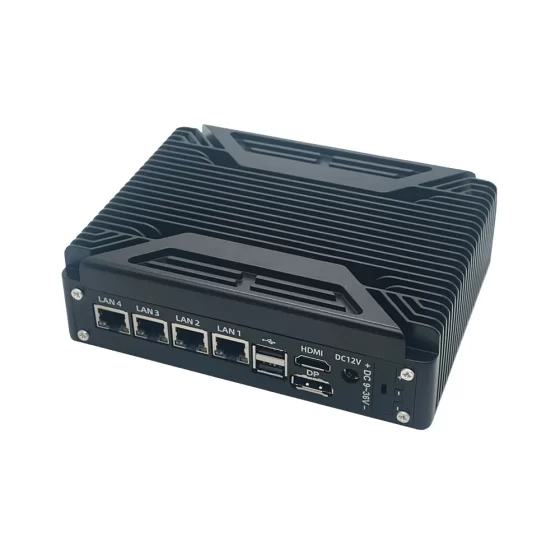
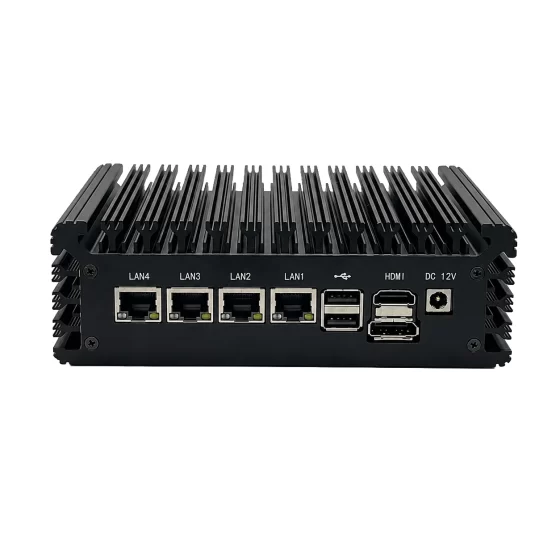
CoreIPC Industrial Computing-Lösungen

KI-Computing-Plattform für Automatisierung: KI-Computing-Automatisierung für intelligente Industriesysteme
Zusammenfassung
An AI computing automation platform provides the industrial computing foundation for machine vision, Robotik, vorausschauende Wartung, Prozessüberwachung, Fehlererkennung, and intelligent factory control.
As manufacturing systems become more connected and data-driven, factories need computing platforms that can process AI workloads close to production equipment. Sending all camera images, Sensordaten, PLC records, and machine events to a remote cloud system can create latency, Bandbreitendruck, and operational dependency on network availability.
AI computing automation allows industrial computers and embedded computers to perform local AI inference, Datenverarbeitung in Echtzeit, machine-side decision support, and automation system integration. These platforms can connect cameras, Sensoren, SPS, Roboter, Motion-Controller, Barcode-Lesegeräte, Industrie-Gateways, und Fabriksoftwaresysteme.
An industrial computer can act as the local AI processing node for production lines, Inspektionsstationen, Roboterzellen, Verpackungssysteme, logistics sorting systems, and smart manufacturing equipment. An embedded computer can provide similar capabilities in a compact form factor for machine builders and space-limited automation systems.
Im Vergleich zu handelsüblichen PCs, Industriecomputer bieten eine höhere Zuverlässigkeit, flexible I/O, Robustes mechanisches Design, lüfterlose Optionen, stabile thermische leistung, Industrielle Vernetzung, und langen Lebenszyklus-Support.
This article explains how AI computing automation works, vor welchen Bereitstellungsherausforderungen Hersteller stehen, wie die Lösungsarchitektur aufgebaut ist, and which hardware features are important when selecting an industrial computer or embedded computer for AI-enabled automation systems.
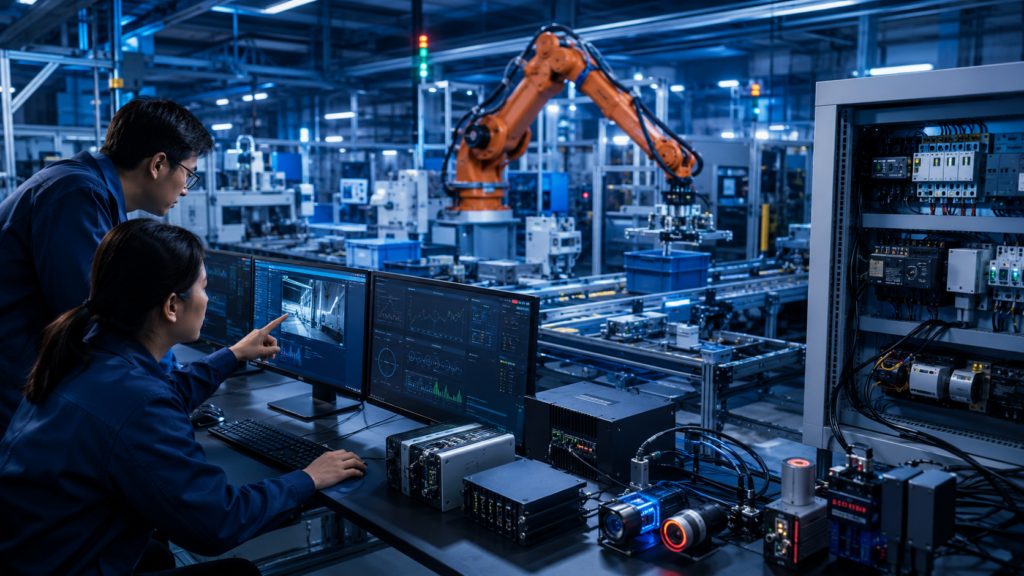
Industrial computers process AI inference, maschinelles Sehen, Sensordaten, and machine events near production equipment.
Branchenüberblick
Automation Is Moving from Rule-Based Control to Intelligent Decision-Making
Traditional automation systems are often based on fixed logic.
SPS, Sensoren, Motoren, Relais, Förderer, and machine controllers perform defined actions according to programmed rules. This approach is reliable and widely used, but it has limitations when production environments become more complex.
Modern factories increasingly need systems that can recognize images, Mängel klassifizieren, Erkennen Sie abnormale Muster, monitor equipment behavior, and adapt to variable production conditions.
AI computing automation helps bridge this gap.
It brings AI inference, Bildverarbeitung, sensor analysis, and local decision support into the automation layer.
AI Is Becoming Practical on the Factory Floor
AI is no longer limited to research labs or cloud analytics platforms.
In industriellen Umgebungen, AI is increasingly used for practical production tasks such as:
- Visual defect detection
- Product classification
- Überprüfung der Montage
- Barcode- und OCR-Erkennung
- Roboterführung
- Vorausschauende Wartung
- Sicherheitsüberwachung
- Erkennung von Prozessanomalien
- Sorting and routing control
- Analyse des Energieverbrauchs
- Production quality monitoring
These applications require reliable local computing hardware.
The AI platform must operate near machines, process data quickly, and communicate with automation equipment in a stable way.
Industrial Computing Is the Foundation
An AI automation system depends on more than AI software.
It needs a stable hardware platform that can connect industrial devices, run AI workloads, Daten verwalten, and operate continuously in real factory environments.
Industriecomputer und eingebettete Computer bilden diese Grundlage.
Sie können Kameraschnittstellen unterstützen, industrielle I/O, mehrere LAN-Ports, serielle Kommunikation, SSD-Speicher, Ausgabe anzeigen, Erweiterungsschnittstellen, und robuste Montage.
This makes them suitable for AI-enabled production lines, OEM machines, Robotersysteme, industrial IoT nodes, and factory edge computing platforms.

Multi-Kamera-Daten, Sensornetzwerke, SPS-Kommunikation, Robotik, Speicherdruck, and cabinet deployment affect AI automation reliability.
Wichtigste Herausforderungen
Matching AI Workloads with Real Production Needs
AI workloads vary widely across automation systems.
A simple barcode recognition station may only need moderate CPU performance. A multi-camera defect detection line may require stronger CPU, GPU, Erinnerung, Lagerung, und Netzwerkbandbreite.
Common AI automation workloads include:
- Objekterkennung
- Bildklassifizierung
- Fehlersegmentierung
- OCR-Erkennung
- Anomalieerkennung
- Vorausschauende Wartung
- Robot vision
- Sensorfusion
- Videoanalyse
- Process data analysis
The industrial computer must be selected according to the actual workload, nicht nur allgemeine Spezifikationen.
Real-Time Response Requirements
Automation systems often require fast response.
If AI processing is delayed, the system may fail to reject a defective product, guide a robot, stop an abnormal process, or trigger an alarm in time.
Echtzeitanforderungen können in auftreten:
- Sichtprüfung
- Sortierung per Förderband
- Robot picking
- Verpackungsüberprüfung
- High-speed camera systems
- Sicherheitsüberwachung
- Production line alarms
- Machine fault detection
An AI computing automation platform must provide stable sustained performance during continuous operation.
Industrial Device Integration
AI platforms must connect with real equipment.
A factory automation system may include PLCs, Sensoren, Roboter, Motion-Controller, Kameras, Beleuchtungssteuerungen, Barcode-Lesegeräte, Gateways, Industrieschalter, und lokale Datenbanken.
The AI computer may need to receive trigger signals, Bilder verarbeiten, send results to PLCs, Hochladen von Datensätzen in MES, and display information on an HMI.
Important integration requirements may include:
- LAN
- USB
- RS232
- RS485
- GPIO
- Digitaler Eingang
- Digitaler Ausgang
- HDMI
- DisplayPort
- M.2
- PCIe
Without the right I/O design, AI automation projects become harder to deploy and maintain.
Datenbandbreite und Speicherdruck
AI automation systems can generate large amounts of data.
Hochauflösende Kameras, 3D-Sensoren, Videostreams, SPS-Protokolle, Defektbilder, Modelldateien, and production records can place pressure on both storage and network systems.
The industrial computer may need to handle:
- Kameradatenströme
- Temporary image buffering
- AI inference outputs
- Lokale Datenbanken
- Defect image storage
- Sensorhistorie
- Produktionsprotokolle
- Model files
- MES or cloud uploads
Speichergeschwindigkeit, Kapazität, and write endurance should be considered early in the system design.
Reliability in Factory Environments
Factory environments are not the same as office environments.
AI automation computers may be installed near machines, in Schaltschränken, an Produktionslinien, inside inspection systems, or next to robotic cells.
An diesen Stellen kann es zu Vibrationen kommen, Staub, Temperaturschwankungen, elektrisches Rauschen, begrenzter Luftstrom, Kabelbewegung, und Dauerbetrieb.
Industrial-grade hardware helps reduce the risk of downtime, unstable performance, and maintenance problems.

Industrial computers connect AI workloads, Automatisierungsgeräte, lokale Datenbanken, Cloud-Systeme, und Fabriksoftwareplattformen.
AI Computing Automation Solution Architecture
Geräte- und Datenerfassungsschicht
The device layer includes all production equipment and data sources connected to the AI computing platform.
Diese Schicht kann umfassen:
- Industriekameras
- 3D-Kameras
- Hochgeschwindigkeitskameras
- SPS
- Sensoren
- Motion-Controller
- Roboter
- Barcode-Lesegeräte
- Beleuchtungssteuerungen
- Testausrüstung
- Industrielle Gateways
- Energiezähler
Diese Geräte generieren die für die KI-Inferenz erforderlichen Rohdaten, Überwachung, Qualitätsprüfung, und Automatisierungssteuerung.
Industrielle KI-Computing-Schicht
The industrial AI computing layer is the core of the system.
Auf dieser Ebene, the industrial computer or embedded computer performs local processing.
It may:
- Acquire images from cameras
- Führen Sie KI-Inferenzmodelle aus
- Sensordaten analysieren
- Process PLC records
- Erkennen Sie Mängel oder Anomalien
- Calculate robot guidance data
- Store inspection results
- Send alarms or control signals
- Zeigen Sie lokale Dashboards an
- Laden Sie ausgewählte Daten in Fabriksysteme hoch
This local edge layer allows AI decisions to happen close to production equipment.
Ebene der Automatisierungssteuerung
The automation control layer connects AI results with physical equipment action.
Eine SPS, Robotersteuerung, Förderbandsteuerung, or motion controller may trigger data capture and receive results from the AI computer.
Zum Beispiel, after an AI vision model detects a defect, Der Industriecomputer kann ein Fehlersignal an die SPS senden. The PLC can then activate a reject mechanism or route the product for rework.
In robotic applications, the AI computer may calculate object position and send coordinates to a robot controller.
Factory-Software-Integrationsschicht
AI automation systems need to connect with higher-level factory software.
The industrial computer may send results to:
- MES
- SCADA
- ERP
- Qualitätsdatenbanken
- Produktions-Dashboards
- Cloud-Plattformen
- Wartungssysteme
- Industrielle IoT-Plattformen
Anstatt alle Rohdaten zu senden, the AI platform can process data locally and upload selected results, Zusammenfassungen, Alarm, or exception records.
This reduces bandwidth pressure and improves system efficiency.
User Interface and Maintenance Layer
Betreiber und Ingenieure benötigen eine praktische Schnittstelle zur Überwachung und Wartung.
The AI computer may connect to a monitor, Touch-Screen, HMI-Panel, or local workstation.
Die Schnittstelle kann angezeigt werden:
- Live camera views
- AI detection results
- Maschinenstatus
- Alarmmeldungen
- Die Produktion zählt
- Defektbilder
- Sensortrends
- Modellstatus
- Netzwerkstatus
- Systemprotokolle
A clear interface helps engineers maintain the AI system and respond quickly to production issues.
Hauptmerkmale
KI-Inferenzleistung
AI computing automation requires stable inference performance.
The right hardware depends on model complexity, Anzahl der Kameras, Sensorfrequenz, Zykluszeit, and required response speed.
Die Auswahl sollte berücksichtigt werden:
- CPU-Leistung
- GPU- oder KI-Beschleunigerunterstützung
- Speicherkapazität
- Speichergeschwindigkeit
- PCIe-Erweiterung
- M.2-Erweiterung
- Stromverbrauch
- Thermisches Design
- Betriebssystemunterstützung
- Kompatibilität mit KI-Frameworks
Für leichte Arbeitslasten, Ein eingebetteter Computer kann ausreichen. For multi-camera vision or deep learning inference, an edge AI computer or industrial PC with acceleration may be required.
Mehrere Netzwerkschnittstellen
Industrial AI systems often need multiple network connections.
Ein Netzwerk kann Kameras verbinden. Another may connect PLCs or machine controllers. Ein separates Netzwerk kann MES verbinden, SCADA, oder Cloud-Systeme.
Mehrere LAN-Ports können unterstützt werden:
- Kamera-Verkehrstrennung
- Maschinennetzwerkkommunikation
- Werks-IT-Anbindung
- Fernwartung
- Data upload
- Sicherheitssegmentierung
- Mehrzeilige Bereitstellung
Network architecture should be planned before deployment to avoid traffic conflicts.
Flexible industrielle I/O
The AI computer must connect with real automation devices.
Zu den wichtigen E/A-Optionen können gehören:
- LAN
- USB
- RS232
- RS485
- GPIO
- Digitaler Eingang
- Digitaler Ausgang
- HDMI
- DisplayPort
- M.2
- PCIe
- SATA- oder NVMe-Speicher
Flexible I/O reduces external converter usage and improves system reliability.
It also gives machine builders more freedom when integrating AI computing into different equipment platforms.
Robustes und lüfterloses Design
Industrial automation systems often operate continuously.
Lüfterlose Computer reduzieren die Staubaufnahme und beseitigen eine häufige mechanische Fehlerquelle. Robuste Gehäuse schützen vor Vibrationen, Kabelspannung, und Schrankeinbaubedingungen.
Jedoch, KI-Workloads können erhebliche Hitze erzeugen.
For high-performance systems, Das thermische Design sollte sorgfältig geprüft werden. Prozessorleistung, GPU usage, Gehäusedesign, Umgebungstemperatur, Luftstrom, and mounting position all affect long-term stability.
Zuverlässige Speicherung und Datenpufferung
AI automation platforms may need local storage for images, Protokolle, Modelldateien, Sensordaten, Mängelaufzeichnungen, und temporäre Puffer.
SSD- oder NVMe-Speicher werden häufig bevorzugt, da sie einen schnelleren Zugriff und eine bessere Stoßfestigkeit als mechanische Laufwerke bieten.
Für datenintensive Anwendungen, the system design should review:
- Storage capacity
- Sustained write speed
- Schreiben Sie Ausdauer
- Backup-Strategie
- Retention policy
- Lokaler Pufferbedarf
- Datenbank-Arbeitslast
- Verhalten bei Netzwerkunterbrechungen
Reliable storage design helps prevent data loss and supports traceability.
Lange Lebensdauer und Wartbarkeit
Automation systems may remain in production for many years.
Häufige Änderungen bei Computermodellen, Fahrer, Schnittstellen, oder Erweiterungsoptionen können den Validierungsaufwand und die Wartungskosten erhöhen.
Industrielle Computerplattformen mit Lebenszyklusplanung helfen Herstellern und OEM-Gerätebauern, konsistente Systeme über mehrere Linien hinweg aufrechtzuerhalten, Fabriken, und Gerätegenerationen.
This is especially important for scalable AI deployment.

AI computing platforms improve machine vision, vorausschauende Wartung, robot monitoring, Rückverfolgbarkeit der Produktion, and data-driven automation.
Bereitstellungsszenarien
KI-Inspektion für maschinelles Sehen
AI machine vision is one of the most common automation applications.
An industrial computer can process images from cameras, Fehlererkennungsmodelle ausführen, and send pass or fail results to PLCs or quality systems.
Zu den Anwendungen kann die Prüfung elektronischer Geräte gehören, Batterieinspektion, Verpackungsinspektion, Lebensmittelkontrolle, pharma inspection, und Halbleiter-AOI.
Robotic Guidance and Picking
Robots can use AI vision to identify objects, locate parts, and adjust movement.
The AI computing platform can process camera images or 3D sensor data and send position information to robot controllers.
This supports bin picking, part handling, assembly verification, Sortierung, und flexible Fertigung.
Vorausschauende Wartung
AI automation platforms can analyze equipment data from vibration sensors, Temperatursensoren, current sensors, Motoren, Pumps, und Maschinensteuerungen.
The industrial computer can detect abnormal patterns and generate local alerts before equipment failure becomes more serious.
This helps maintenance teams improve machine availability.
Überwachung der Produktionslinie
AI can monitor production flow, product presence, Maschinenstatus, and abnormal conditions.
The computing platform can process camera images, Sensordaten, and PLC information to detect bottlenecks, fehlende Teile, line stoppages, oder Prozessabweichungen.
This supports real-time production visibility.
Packaging Automation
Packaging systems can use AI computing for label verification, Barcode-Erkennung, seal inspection, cap inspection, carton checking, and final package validation.
The industrial computer processes images locally and sends results to PLCs, Ablehnungsmechanismen, MES, or WMS systems.
This reduces packaging errors and improves traceability.
Logistics Sorting
Logistics automation can use AI and vision to identify parcels, read barcodes, Etiketten überprüfen, detect package abnormalities, and guide sorting mechanisms.
In Scantunneln kann ein eingebetteter Computer installiert werden, Sortierausrüstung, or conveyor control cabinets.
This supports faster and more accurate warehouse automation.
Industrielle IoT-Datenverarbeitung
Industrial IoT systems collect data from machines, Sensoren, Meter, SPS, und Tore.
An AI computing automation platform can aggregate this data, Verarbeiten Sie es lokal, Anomalien erkennen, and send structured results to dashboards, MES, SCADA, oder Cloud-Plattformen.
This creates a practical bridge between shop-floor equipment and digital manufacturing software.
OEM-Maschinenintegration
Machine builders can integrate AI computers into inspection machines, Robotersysteme, Intelligente Gateways, Sortierausrüstung, und automatisierte Produktionsanlagen.
Die Computerplattform kann KI-Inferenz liefern, Bildverarbeitung, HMI-Anzeige, SPS-Kommunikation, lokaler Speicher, und Werksdatenausgabe.
This helps OEMs deliver intelligent equipment for smart manufacturing applications.
Geschäftsvorteile
Schnellere lokale Entscheidungsfindung
AI computing automation brings processing close to the production equipment.
This reduces latency and allows faster decisions for inspection, Sortierung, Roboterführung, Alarm, und Prozessüberwachung.
Fast local response is important when production systems must act within short cycle times.
Reduzierte Cloud-Abhängigkeit
Factories do not always need to send every image, Videostream, oder Sensoraufzeichnung in die Cloud.
An industrial computer can process data locally and upload only useful results, such as alarms, Mängelaufzeichnungen, Zusammenfassungen, oder ausgewählte Bilder.
This reduces bandwidth load and improves production resilience.
Improved Automation Flexibility
AI computing allows automation systems to handle more complex and variable conditions.
Instead of relying only on fixed rules, systems can use visual recognition, Anomalieerkennung, and intelligent classification.
This helps factories automate tasks that are difficult to solve with traditional logic alone.
Stärkere Rückverfolgbarkeit der Produktion
AI automation data can be linked with product IDs, Arbeitsaufträge, Inspektionsergebnisse, Maschinenstatus, Zeitstempel, Stations-IDs, and defect images.
Dies schafft eine bessere Rückverfolgbarkeit für die Qualitätsanalyse, Prozessverbesserung, Kundenaudits, und Produktionsverantwortung.
Reliable industrial hardware helps ensure that this data is collected and transferred consistently.
Better Equipment Utilization
AI computing platforms can analyze machine data and detect abnormal conditions earlier.
Predictive maintenance and process monitoring can help reduce unexpected downtime and support better maintenance planning.
This helps manufacturers improve equipment availability and production efficiency.
Skalierbare Smart-Manufacturing-Bereitstellung
A standardized AI computing platform makes it easier to deploy automation intelligence across multiple machines, Linien, und Fabriken.
Konsistente Hardware vereinfacht Software-Images, Fahrerverwaltung, Ersatzteilplanung, Wartungsschulung, und Lebenszyklusunterstützung.
This helps manufacturers move from small AI pilots to scalable production systems.
Warum CoreIPC
CoreIPC bietet industrielle Computerplattformen für Edge-KI, maschinelles Sehen, Industrielle Automatisierung, Robotik, und eingebettete Systemintegration. For AI computing automation applications, CoreIPC konzentriert sich auf zuverlässige industrielle Computerhardware, Embedded-Computer-Lösungen, flexible I/O-Konfigurationen, kompaktes Systemdesign, und OEM/ODM-Anpassungsunterstützung. CoreIPC hilft Systemintegratoren, Maschinenbauer, und Fertigungsteams wählen Computerplattformen aus, die den tatsächlichen Bereitstellungsanforderungen entsprechen, einschließlich KI-Arbeitsaufwand, Kameraschnittstellen, Netzwerkdesign, Automatisierungskommunikation, Speicherbedarf, Montagemethoden, Leistungsaufnahme, thermische Bedingungen, und Lebenszyklusplanung.
Häufig gestellte Fragen
1. What is an AI computing platform for automation?
An AI computing platform for automation is an industrial computer or embedded computer used to run AI workloads near machines and production equipment.
Es kann Kamerabilder verarbeiten, Sensordaten, PLC records, and machine events. It may also run AI inference models, Mängel erkennen, guide robots, trigger alarms, und laden Sie ausgewählte Daten in das MES hoch, SCADA, oder Cloud-Plattformen.
2. Why use an industrial computer for AI computing automation?
Ein Industriecomputer ist für den Werkseinsatz konzipiert.
It supports continuous operation, robuste Montage, industrielle I/O, multiple network interfaces, Kamera-Konnektivität, zuverlässige Lagerung, und lange Verfügbarkeit über den gesamten Lebenszyklus. These features make it more suitable than a standard office PC for AI automation systems installed near machines, Förderer, Roboter, und Schaltschränke.
3. How is an embedded computer used in automation AI systems?
In Inspektionsmaschinen kann ein eingebetteter Computer installiert werden, Roboterzellen, Intelligente Gateways, Verpackungssysteme, Sortierausrüstung, or production cabinets.
Es kann KI-Inferenz ausführen, Bilder verarbeiten, mit SPS kommunizieren, lokale Ergebnisse anzeigen, and send data to factory software. Its compact design makes it useful for OEM equipment and space-limited installations.
4. What AI workloads can automation computers support?
AI automation computers can support visual inspection, Fehlererkennung, OCR, Barcode-Erkennung, Roboterführung, vorausschauende Wartung, Anomalieerkennung, Produktionsüberwachung, Videoanalyse, und industrielle IoT-Datenverarbeitung.
Die genaue Arbeitslast hängt von der CPU-Leistung ab, GPU- oder KI-Beschleunigerunterstützung, Speicherkapazität, Speichergeschwindigkeit, Kamerabandbreite, und Softwarekompatibilität.
5. Does an AI automation platform need a GPU?
Einige KI-Workloads benötigen GPU- oder KI-Beschleunigerunterstützung, especially for high-resolution machine vision, Multikamera-Inspektion, Videoanalyse, oder komplexe Deep-Learning-Modelle.
Other applications may run on CPU-based industrial computers if the model is lightweight and the cycle time is moderate. Hardware should be selected based on real model testing and production requirements.
6. What interfaces are important for AI computing automation?
Wichtige Schnittstellen können mehrere LAN-Ports sein, USB 3.0, RS232, RS485, GPIO, digitaler Eingang, digitaler Ausgang, HDMI, DisplayPort, M.2, PCIe, SATA, und NVMe-Speicherunterstützung.
Diese Schnittstellen unterstützen Kameras, Sensoren, SPS, Roboter, Beleuchtungssteuerungen, Barcode-Lesegeräte, Industrie-Gateways, Speichergeräte, und lokale Displays.
7. Can fanless industrial computers support AI automation?
Fanless industrial computers can support many AI automation workloads, especially moderate vision, Datenerfassung, and edge processing tasks.
Jedoch, high-performance AI inference may generate significant heat. CPU-Leistung, GPU or accelerator usage, Gehäusedesign, Luftzirkulation im Schrank, Umgebungstemperatur, und Montagemethode sollten vor der endgültigen Hardware-Auswahl überprüft werden.
8. How does AI computing automation connect with PLCs?
The AI computer can connect with PLCs through Ethernet, serielle Kommunikation, digitale I/O, or supported automation software interfaces.
A PLC may trigger image capture or send machine status to the AI computer. Nach der Bearbeitung, Der KI-Computer kann den Pass zurückgeben, scheitern, Alarm, Position, or classification results to the PLC for production action.
9. Can AI automation systems connect with MES or SCADA?
Ja. Industriecomputer können KI-Ergebnisse senden, Produktionsdaten, Alarm, Inspektionsprotokolle, and equipment status to MES, SCADA, Qualitätsdatenbanken, oder Dashboards.
This connects machine-side intelligence with higher-level manufacturing systems. It also supports traceability, Produktionsüberwachung, und Prozessverbesserung.
10. What should be tested before deploying an AI automation computer?
Vor der Bereitstellung, Das System sollte mit echten Kameras getestet werden, Sensoren, SPS, KI-Modelle, Produktionszykluszeiten, Speicherauslastung, Netzwerkarchitektur, und langlebigen Betrieb.
Thermische Stabilität, I/O reliability, lokale Pufferung, Daten-Upload, und der Wartungszugang sollte ebenfalls validiert werden. Dies trägt dazu bei, das Risiko während der Produktionseinführung zu reduzieren.
Abschluss
An AI computing automation platform is a practical foundation for bringing machine vision, KI-Schlussfolgerung, sensor analytics, Roboterführung, vorausschauende Wartung, and industrial IoT processing closer to production equipment.
By using an industrial computer or embedded computer near cameras, Sensoren, SPS, Roboter, Förderer, und Produktionssysteme, Hersteller können Daten lokal verarbeiten, Latenz reduzieren, improve automation flexibility, and strengthen factory traceability.
Die richtige Plattform sollte entsprechend den tatsächlichen Bereitstellungsanforderungen ausgewählt werden, einschließlich KI-Arbeitsaufwand, Kameraschnittstelle, I/O-Konfiguration, Netzwerkdesign, Speicherbedarf, Erweiterungsbedarf, Montagemethode, Leistungsaufnahme, thermische Bedingungen, Betriebssystemunterstützung, und Lebenszyklusplanung.
CoreIPC supports AI computing automation projects with industrial computing platforms designed for practical factory and equipment deployment. Mit der richtigen Hardware-Grundlage, Hersteller und Maschinenbauer können zuverlässig bauen, skalierbar, and data-driven automation systems for smart manufacturing.
Kontaktieren Sie uns
Auf der Suche nach einem Industriecomputer, eingebetteter Computer, or edge AI platform for AI computing automation?
Kontaktieren Sie CoreIPC, um Ihre Projektanforderungen zu besprechen, einschließlich KI-Arbeitsaufwand, Kameraschnittstelle, Netzwerkarchitektur, I/O-Konfiguration, Speicherdesign, Automatisierungskommunikation, Montagemethode, Leistungsaufnahme, Betriebsumgebung, Lebenszyklusanforderungen, und OEM/ODM-Anpassungsoptionen.