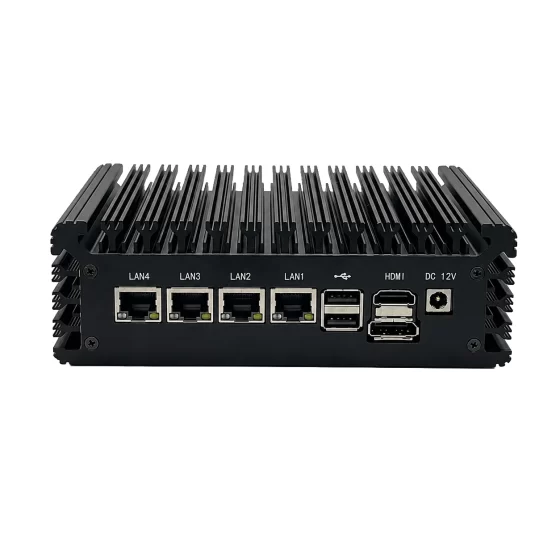
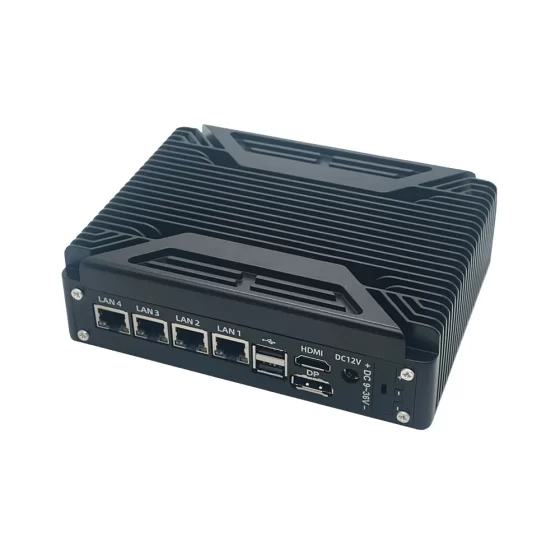
CoreIPC Industrial Computing-Lösungen

Edge AI für Smart Cities: Edge AI Smart City Computing für die städtische Infrastruktur
Zusammenfassung
Edge AI smart city systems provide the local computing foundation for intelligent transportation, public infrastructure monitoring, urban video analytics, Umweltsensorik, smart lighting, utility monitoring, and connected city operations.
Modern cities generate large volumes of data from cameras, Sensoren, traffic systems, access points, Beleuchtungssteuerungen, Energiezähler, public facilities, and communication networks. If all raw data is sent directly to centralized cloud platforms, city operators may face high bandwidth usage, delayed response, data storage pressure, und Abhängigkeit von der Netzwerkverfügbarkeit.
An industrial computer or embedded computer deployed at the edge can process data closer to the source. It can analyze camera streams, Sensordaten sammeln, Führen Sie KI-Inferenzmodelle aus, Generieren Sie lokale Warnungen, Pufferdatensätze, and send selected information to city management platforms, traffic systems, command centers, oder Cloud-Dashboards.
Im Vergleich zu handelsüblichen PCs, industrial computers are better suited for smart city edge deployment because they support rugged installation, wide I/O flexibility, stabile Vernetzung, lüfterlose Designoptionen, zuverlässige Lagerung, und lange Verfügbarkeit über den gesamten Lebenszyklus.
This article explains how edge AI smart city computing works, what deployment challenges appear in urban environments, wie die Lösungsarchitektur aufgebaut ist, and which hardware features matter when selecting an industrial computer or embedded computer for smart city applications.
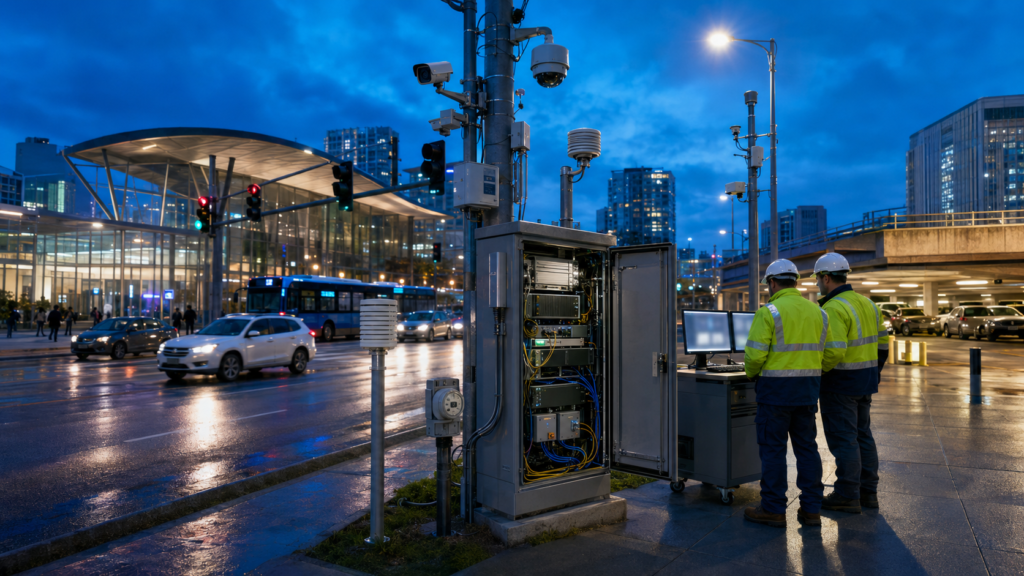
Edge AI Smart City Deployment
Branchenüberblick
Cities Are Becoming More Data-Driven
Smart city projects depend on connected infrastructure.
Traffic intersections, public buildings, parking areas, Versorgungssysteme, logistics zones, transit stations, Beleuchtungssysteme, and environmental monitoring points can all generate useful operational data.
This data can support:
- Traffic flow monitoring
- Roadside video analytics
- Smart parking
- Public safety monitoring
- Environmental sensing
- Smart lighting control
- Energy monitoring
- Facility Management
- Waste collection optimization
- Infrastructure condition monitoring
- Emergency response support
Jedoch, collecting data is only the first step.
Cities need practical systems that can process data quickly, reduce unnecessary transmission, and support local decision-making.
Why Edge AI Is Important for Smart Cities
Centralized cloud platforms are useful for long-term analysis, multi-site dashboards, and citywide management.
Jedoch, many smart city applications benefit from local processing.
A traffic camera may need to detect congestion or abnormal road conditions quickly. A public facility may need local environmental alerts. A remote infrastructure site may need continuous monitoring even when network connections are unstable.
Edge AI helps by processing data close to cameras, Sensoren, and urban equipment.
Instead of uploading every frame or raw sensor value, the system can send processed events, Zusammenfassungen, Warnungen, und ausgewählte Datensätze.
Industrial Computing ist die Hardware-Grundlage
Smart city edge devices may be installed in outdoor cabinets, Straßenrandsysteme, Verkehrsknotenpunkte, public buildings, Hauswirtschaftsräume, parking areas, and distributed monitoring sites.
Diese Umgebungen können Staub enthalten, Temperaturschwankungen, Vibration, elektrisches Rauschen, instabile Macht, limited maintenance access, und Dauerbetrieb.
Industrial computers and embedded computers provide a more suitable hardware foundation than standard office PCs.
They support industrial networking, robuste Gehäuse, lokaler Speicher, flexible I/O, wireless expansion options, und Bereitstellung über einen langen Lebenszyklus.

Smart City Edge AI Deployment Challenges
Wichtigste Herausforderungen
Distributed Deployment Across Many Sites
Smart city systems are usually distributed.
A project may include many intersections, monitoring stations, parking areas, utility cabinets, transit nodes, und abgelegene Einrichtungen.
Each location may have different space, Leistung, network, und Umweltbedingungen.
This creates requirements for compact hardware, stabile Montage, Fernwartung, and consistent platform design.
A standardized industrial computer platform can help simplify deployment across many sites.
Large Video and Sensor Data Volumes
Many smart city applications involve video.
Traffic cameras, security cameras, parking cameras, and infrastructure monitoring cameras can generate heavy data streams.
Sensor systems can also generate continuous data from air quality devices, weather stations, Energiezähler, Vibrationssensoren, Wassersysteme, and lighting controllers.
The edge AI computer may need to handle:
- Multiple camera streams
- Erfassung von Sensordaten
- KI-Schlussfolgerung
- Local event storage
- Netzwerk-Upload
- Dashboard communication
- Lokale Pufferung
- Überwachung des Systemzustands
Hardware must be selected according to real camera count, KI-Arbeitsbelastung, storage policy, and network design.
Low-Latency Local Response
Some smart city applications require fast local response.
Examples include traffic event detection, roadside alerts, access monitoring, equipment abnormality detection, or utility system alarms.
If data must travel to a remote server before analysis, Die Antwort kann sich verzögern.
Edge AI smart city systems reduce latency by processing data locally and sending only useful results to higher-level platforms.
This makes the system more practical for time-sensitive urban infrastructure applications.
Network Reliability and Bandwidth Control
Smart city deployments may rely on fiber, cellular, private networks, or mixed communication methods.
Network availability can vary by location.
The edge computer should support local data buffering so that records are not lost during temporary network interruptions.
Bandwidth control is also important.
Uploading every raw video stream from many locations can be expensive and inefficient. Local AI analysis helps reduce data transfer by uploading event clips, metadata, Warnungen, and summaries.
Security and Data Governance
Smart city systems may handle sensitive infrastructure and operational data.
System design should consider access control, Netzwerksegmentierung, data retention, remote maintenance rules, and secure data transfer.
The edge AI computer may sit between camera networks, Sensornetzwerke, city platforms, und Cloud-Systeme.
Mehrere LAN-Ports, controlled connectivity, and secure deployment practices help support better network organization and data governance.

Edge AI Smart City Architecture
Edge AI Smart City Solution Architecture
Geräte- und Sensorschicht
The device and sensor layer includes the urban infrastructure devices that generate data.
Diese Schicht kann umfassen:
- Traffic cameras
- IP-Kameras
- Industriekameras
- Umweltsensoren
- Energiezähler
- Smart lighting controllers
- Parking sensors
- Zugangskontrollgeräte
- Weather sensors
- Straßenausrüstung
- Utility monitoring devices
- Communication gateways
These devices provide the raw data needed for local AI processing and city management.
Edge AI Computing-Schicht
The edge AI computing layer is where the industrial computer or embedded computer performs local processing.
Auf dieser Ebene, Das System kann:
- Receive camera streams
- Sammeln Sie Sensordaten
- Führen Sie KI-Inferenzmodelle aus
- Detect traffic or facility events
- Process environmental data
- Speichern Sie lokale Datensätze
- Pufferdaten bei Netzwerkproblemen
- Generieren Sie Benachrichtigungen
- Lokalen Status anzeigen
- Send selected data to city platforms
This layer reduces latency and helps smart city systems remain operational even when network conditions vary.
AI Analytics-Ebene
The AI analytics layer contains the software models and logic used to interpret data.
Abhängig von der Anwendung, es kann beinhalten:
- Objekterkennung
- Vehicle counting
- Congestion analysis
- Parking space detection
- Environmental anomaly detection
- Equipment status monitoring
- Videoanalyse
- Analyse des Energieverbrauchs
- Ereignisklassifizierung
- Rule-based alert logic
Der Industrierechner muss das erforderliche Betriebssystem unterstützen, KI-Laufzeit, camera software, communication tools, and data management applications.
Communication and Platform Layer
The edge AI system connects local infrastructure with citywide software platforms.
Es kann ausgewählte Daten an senden:
- Smart city platforms
- Verkehrsmanagementsysteme
- Öffentliche Sicherheitssysteme
- Facility management platforms
- Energiemanagementsysteme
- Cloud-Dashboards
- Local command centers
- Wartungsplattformen
- Industrielle IoT-Systeme
Anstatt alle Rohdaten zu senden, the system can upload alerts, verarbeitete Werte, ausgewählte Bilder, Videoclips, statistics, and status records.
Maintenance and Remote Management Layer
Smart city devices are often distributed across many locations.
Maintenance teams need practical visibility into system status.
The edge AI computer may support:
- Local health monitoring
- Storage status reporting
- Network status reporting
- Camera connection status
- Remote software updates
- Protokollsammlung
- Alarmüberprüfung
- Local dashboard access
This helps reduce field maintenance workload and supports scalable operation.
Hauptmerkmale
KI-Inferenzleistung
Smart city edge AI workloads vary widely.
A small environmental monitoring node may need moderate CPU performance. A multi-camera roadside analytics system may require stronger processing, GPU-Beschleunigung, or AI accelerator support.
Die Auswahl sollte berücksichtigt werden:
- Anzahl der Kameras
- Video resolution
- Bildrate
- Komplexität des KI-Modells
- Häufigkeit der Sensoraktualisierung
- Speicherauslastung
- Network upload frequency
- Local dashboard needs
- Betriebssystemunterstützung
The platform should be selected based on actual workload and deployment conditions.
Mehrere Netzwerkschnittstellen
Smart city edge systems often need several network connections.
Multiple LAN ports can help separate:
- Kameranetzwerk
- Sensornetzwerk
- Local maintenance network
- City platform connection
- Cloud-Upload
- Fernzugriffsnetzwerk
Network separation can improve traffic management and reduce unnecessary exposure between systems.
For roadside and cabinet deployments, stable networking is one of the most important hardware requirements.
Flexible industrielle I/O
Smart city applications may connect to many device types.
Zu den nützlichen E/A-Optionen können gehören:
- LAN
- USB
- RS232
- RS485
- GPIO
- Digitaler Eingang
- Digitaler Ausgang
- HDMI
- DisplayPort
- M.2
- PCIe
- SATA- oder NVMe-Speicher
Diese Schnittstellen können Kameras unterstützen, Sensoren, Meter, Controller, Gateways, zeigt an, alarm devices, and wireless modules.
Flexible I/O reduces the need for external converters and makes deployment more reliable.
Lokale Speicherung und Datenpufferung
Edge AI smart city systems may need local storage.
Der Computer kann speichern:
- Event images
- Videoclips
- Sensorhistorie
- KI-Modelldateien
- Alarmprotokolle
- Systemprotokolle
- Lokale Datenbanken
- Temporary upload buffers
SSD- oder NVMe-Speicher werden häufig bevorzugt, da sie einen schnellen Zugriff und eine bessere Stoßfestigkeit als mechanische Laufwerke bieten.
Beim Speicherdesign sollte die Aufbewahrungsfrist berücksichtigt werden, schreibe Ausdauer, Sicherungsmethode, und Netzwerkunterbrechungsverhalten.
Robustes und lüfterloses Design
Smart city edge computers may be installed in cabinets, equipment rooms, Kästen am Straßenrand, Transportmöglichkeiten, und Infrastrukturstandorte.
Fanless design helps reduce dust intake and remove one common mechanical failure point.
Robuste Gehäuse schützen das System vor Vibrationen, Kabelspannung, and field installation conditions.
Das thermische Design sollte sorgfältig geprüft werden, especially for outdoor cabinets, high-temperature areas, or AI workloads using accelerators.
Lange Lebensdauer und Wartbarkeit
Smart city infrastructure projects often run for many years.
Häufige Hardwareänderungen können zu Problemen bei der Softwarevalidierung führen, maintenance problems, und Ersatzteilherausforderungen.
Industrial computing platforms with lifecycle planning help system integrators and city operators maintain consistent deployments across many sites.
This is especially important for large-scale smart city and infrastructure projects.

Smart City Edge AI Operations
Bereitstellungsszenarien
Intelligent Traffic Monitoring
Traffic monitoring is one of the most common edge AI smart city applications.
An edge AI computer can process camera streams near intersections, roads, or transport corridors.
It may support vehicle counting, congestion detection, lane monitoring, traffic event detection, and local alert generation.
Processed data can be sent to traffic management platforms or command centers.
Smart Parking Systems
Smart parking systems use cameras or sensors to detect space occupancy, vehicle entry, and parking flow.
An embedded computer can process parking data locally and send selected information to parking management platforms.
This supports better parking visibility and reduces unnecessary data transfer.
Public Facility Monitoring
Public buildings, Stationen, campuses, and service facilities may use edge AI for operational monitoring.
The system can analyze video, Umweltsensoren, access data, and facility equipment status.
Industrial computers provide local processing and reliable data handling for distributed facility management.
Umweltüberwachung
Cities can use edge computing to monitor air quality, Temperatur, Luftfeuchtigkeit, Lärm, water conditions, and other environmental factors.
Ein eingebetteter Computer kann Sensordaten sammeln, run local anomaly detection, Aufzeichnungen speichern, and upload summaries to environmental dashboards.
This supports distributed environmental awareness.
Smart Lighting and Energy Management
Smart lighting systems can use edge computers to collect data from lighting controllers, Energiezähler, und Umweltsensoren.
The system may support local control logic, energy usage analysis, Fehlererkennung, und Berichterstattung.
This helps city operators improve energy efficiency and maintenance response.
Transportation Hub Monitoring
Transportation hubs such as stations, depots, logistics terminals, and parking facilities may use edge AI for video analytics, flow monitoring, access awareness, and equipment status monitoring.
Industrial computers can process local data and send selected events to management platforms.
This supports safer and more efficient operations.
Überwachung der Versorgungsinfrastruktur
Utility sites may include water systems, power distribution equipment, Pumpstationen, communication cabinets, or facility equipment.
Edge AI computers can collect sensor data, monitor equipment conditions, Benachrichtigungen generieren, and buffer records locally.
This helps support remote infrastructure operation.
OEM Smart City Equipment Integration
System integrators and equipment builders can integrate industrial computers or embedded boards into smart city devices.
Examples include roadside AI boxes, traffic analytics gateways, environmental monitoring systems, smart lighting controllers, Parksysteme, and infrastructure monitoring appliances.
Die Computerplattform kann KI-Inferenz liefern, Gerätekonnektivität, lokaler Speicher, and platform communication.
Geschäftsvorteile
Schnellere lokale Entscheidungsfindung
Edge AI processes data close to city infrastructure.
This reduces the delay between event capture and response.
Fast local processing is useful for traffic events, infrastructure alarms, facility monitoring, and environmental alerts.
Reduced Bandwidth Usage
Smart city systems can generate large amounts of raw video and sensor data.
Edge AI computers can analyze data locally and upload only selected information.
This may include alerts, statistics, metadata, event clips, and summary records.
Reducing raw data transmission makes large-scale deployment more efficient.
Better Operational Resilience
Local edge processing reduces dependence on continuous cloud connectivity.
If the network is interrupted, the edge computer can continue local analysis, Aufzeichnungen speichern, and buffer upload data.
This improves resilience for distributed city infrastructure.
Improved Infrastructure Visibility
Edge AI smart city systems help operators see what is happening across roads, Einrichtungen, Dienstprogramme, parking areas, und öffentliche Infrastruktur.
By converting raw data into useful events and summaries, city teams can respond faster and manage assets more effectively.
Stronger Data Control
Processing data locally can help reduce the amount of raw data leaving the site.
This supports better data control and allows system designers to define what is stored, what is uploaded, who can access it, and how long records are retained.
Scalable Smart City Deployment
A standardized edge AI computing platform makes it easier to deploy smart city applications across many locations.
Konsistente Hardware vereinfacht Software-Images, Fahrervalidierung, Ersatzteilplanung, Wartungsschulung, und Lebenszyklusunterstützung.
This helps system integrators scale from pilot projects to broader citywide deployment.
Warum CoreIPC
CoreIPC bietet industrielle Computerplattformen für Edge-KI, Industrielles IoT, intelligenter Transport, maschinelles Sehen, und eingebettete Systemintegration. For edge AI smart city applications, CoreIPC konzentriert sich auf zuverlässige industrielle Computerhardware, Embedded-Computer-Lösungen, flexible I/O-Konfigurationen, multi-network deployment, kompaktes Systemdesign, und OEM/ODM-Anpassungsunterstützung. CoreIPC hilft Systemintegratoren, infrastructure solution providers, and equipment builders select computing platforms that match real deployment requirements, einschließlich Kameraanzahl, KI-Arbeitsbelastung, Sensorschnittstellen, Netzwerkdesign, Speicherbedarf, Montagemethoden, Leistungsaufnahme, thermische Bedingungen, und Lebenszyklusplanung.
Häufig gestellte Fragen
1. What is edge AI for smart cities?
Edge AI for smart cities uses local computing hardware to process data from cameras, Sensoren, Meter, and urban infrastructure near the data source.
Instead of sending all raw data to a remote server, the edge computer analyzes data locally and sends selected results, Warnungen, Ereignisaufzeichnungen, or summaries to city platforms.
2. Why use an industrial computer for smart city edge AI?
An industrial computer is better suited for smart city deployment because it supports rugged installation, Dauerbetrieb, mehrere Netzwerkanschlüsse, flexible I/O, zuverlässige Lagerung, und lange Verfügbarkeit über den gesamten Lebenszyklus.
These features are important for roadside cabinets, Verkehrsknotenpunkte, public facilities, utility sites, and distributed infrastructure deployments.
3. How is an embedded computer used in smart city systems?
An embedded computer can be installed inside roadside equipment, Parksysteme, Umweltüberwachungsstationen, Beleuchtungssteuerungen, utility cabinets, or smart city gateways.
Es kann lokale Daten sammeln, KI-Inferenz ausführen, Aufzeichnungen speichern, and upload selected information to smart city platforms.
4. What smart city applications can edge AI support?
Edge AI can support traffic monitoring, smart parking, Umweltsensorik, public facility monitoring, smart lighting, utility monitoring, transportation hub monitoring, Videoanalyse, and infrastructure condition awareness.
The exact application depends on the connected devices, AI model, Netzwerkdesign, and site requirements.
5. Does smart city edge AI need a GPU?
Some applications may need GPU or AI accelerator support, especially for multi-camera video analytics or complex AI models.
Andere Anwendungen, such as sensor monitoring or lightweight event detection, kann auf CPU-basierten eingebetteten Computern ausgeführt werden. Hardware should be selected based on actual workload testing.
6. What interfaces are important for smart city edge computers?
Wichtige Schnittstellen können mehrere LAN-Ports sein, USB, RS232, RS485, GPIO, digitaler Eingang, digitaler Ausgang, HDMI, DisplayPort, M.2, PCIe, SATA, und NVMe-Speicherunterstützung.
Diese Schnittstellen helfen beim Anschluss von Kameras, Sensoren, Meter, Beleuchtungssteuerungen, Gateways, zeigt an, and communication modules.
7. Can fanless industrial computers support smart city edge AI?
Fanless industrial computers can support many smart city edge AI applications because they reduce dust intake and remove one mechanical failure point.
Jedoch, AI video analytics or outdoor cabinet deployment may create thermal challenges. Prozessorauslastung, Beschleunigereinsatz, Gehäuseluftstrom, Umgebungstemperatur, and mounting method should be reviewed carefully.
8. How does edge AI reduce smart city bandwidth usage?
The edge computer processes camera and sensor data locally.
It uploads only useful information such as alerts, metadata, event clips, statistics, or summaries. This reduces the need to send all raw video or sensor data to central platforms.
9. Can edge AI smart city systems connect with cloud platforms?
Ja. Industrial computers can send selected data to cloud dashboards, smart city platforms, traffic systems, facility management platforms, oder Wartungssysteme.
They can also buffer data locally during network interruptions and upload records when the connection recovers.
10. Was sollte vor der Bereitstellung getestet werden??
Vor der Bereitstellung, Das System sollte mit echten Kameras getestet werden, Sensoren, Netzwerkverbindungen, KI-Modelle, Speicherauslastung, lokale Dashboards, und langlebigen Betrieb.
Thermische Stabilität, Datenpufferung, Upload-Verhalten, Fernwartungszugriff, and environmental conditions should also be validated.
Abschluss
Edge AI smart city computing is a practical foundation for intelligent transportation, smart parking, Umweltüberwachung, public facility management, smart lighting, utility monitoring, and distributed urban infrastructure intelligence.
Indem Sie einen Industriecomputer oder einen eingebetteten Computer in der Nähe von Kameras platzieren, Sensoren, Meter, Controller, and infrastructure devices, cities can process data locally, reduce bandwidth usage, Reaktionszeit verbessern, and support better operational visibility.
The right edge AI smart city platform should be selected according to real deployment requirements, einschließlich Kameraanzahl, KI-Arbeitsbelastung, Sensorschnittstellen, Netzwerkarchitektur, I/O-Konfiguration, lokalen Speicherbedarf, Montagemethode, Leistungsaufnahme, thermische Bedingungen, Betriebssystemunterstützung, und Lebenszyklusplanung.
CoreIPC supports edge AI smart city projects with industrial computing platforms designed for practical infrastructure and field deployment. Mit der richtigen Hardware-Grundlage, system integrators and equipment builders can build reliable, skalierbar, and data-driven smart city solutions.
Kontaktieren Sie uns
Auf der Suche nach einem Industriecomputer, eingebetteter Computer, or edge AI platform for smart city applications?
Kontaktieren Sie CoreIPC, um Ihre Projektanforderungen zu besprechen, einschließlich Kameraanzahl, KI-Arbeitsbelastung, Sensorschnittstelle, Netzwerkarchitektur, Speicherdesign, I/O-Konfiguration, Montagemethode, Leistungsaufnahme, Betriebsumgebung, Lebenszyklusanforderungen, und OEM/ODM-Anpassungsoptionen.