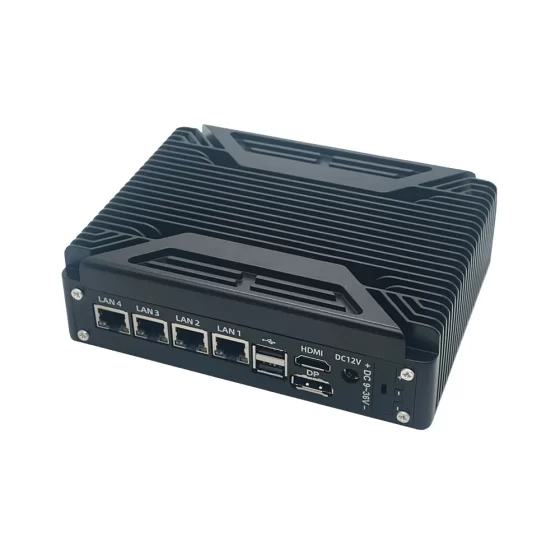
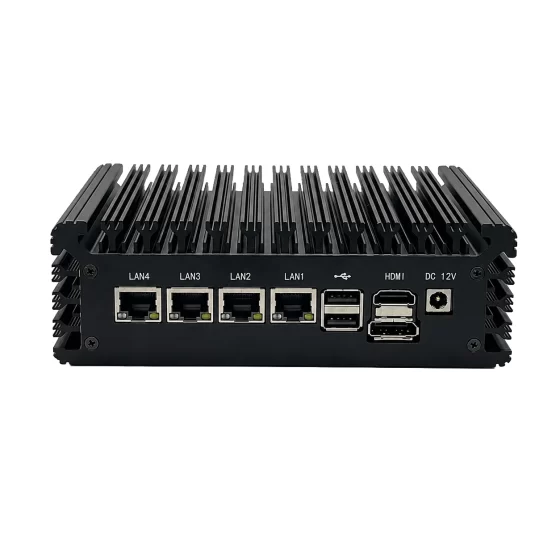
CoreIPC Industrial Computing-Lösungen

Edge AI Gateway für IIoT: Edge AI Gateway für industrielle IoT-Datenintelligenz
Zusammenfassung
Ein Edge-KI-Gateway bietet die lokale Computergrundlage für die industrielle IoT-Datenerfassung, Protokollintegration, KI-Schlussfolgerung, Maschinenüberwachung, vorausschauende Wartung, und Fabrikdatenkonnektivität.
In modernen Industrieumgebungen, Maschinen, Sensoren, SPS, Roboter, Meter, Kameras, und Produktionssysteme erzeugen große Datenmengen. Wenn alle Daten direkt an die Cloud oder zentrale Server gesendet werden, In Fabriken kann es zu Latenzzeiten kommen, Bandbreitendruck, instabile Netzwerkabhängigkeit, und begrenzte Echtzeitreaktion.
Ein Edge-KI-Gateway löst dieses Problem, indem es industrielle Rechenleistung in der Nähe von Maschinen und Geräten platziert. Es kann Daten von Industrieanlagen sammeln, Verarbeiten Sie es lokal, Führen Sie KI-Modelle aus, Erkennen Sie abnormale Muster, Pufferdatensätze, und ausgewählte Daten an MES senden, SCADA, Cloud-Plattformen, oder industrielle IoT-Systeme.
Als Edge-KI-Gateway kann ein Industriecomputer oder ein eingebetteter Computer fungieren. Es kann eine Verbindung zu SPSen herstellen, Sensoren, Kameras, Roboter, Meter, Barcode-Lesegeräte, Industrieschalter, und Fabriknetzwerke. Es kann auch lokale Dashboards unterstützen, Alarmlogik, Protokollkonvertierung, Datenfilterung, und sichere Edge-to-Cloud-Kommunikation.
Im Vergleich zu handelsüblichen PCs, Industriecomputer eignen sich aufgrund ihres robusten Designs besser für den IIoT-Gateway-Einsatz, flexible I/O, stabile Vernetzung, lüfterlose Optionen, zuverlässige Lagerung, Industriemontage, und langen Lebenszyklus-Support.
In diesem Artikel wird erläutert, wie Edge-KI-Gateways die IIoT-Bereitstellung unterstützen, welche Herausforderungen in realen industriellen Umgebungen auftreten, wie die Lösungsarchitektur funktioniert, und welche Hardware-Features bei der Auswahl eines Industriecomputers oder Embedded-Computers für Edge-KI-Gateway-Anwendungen wichtig sind.
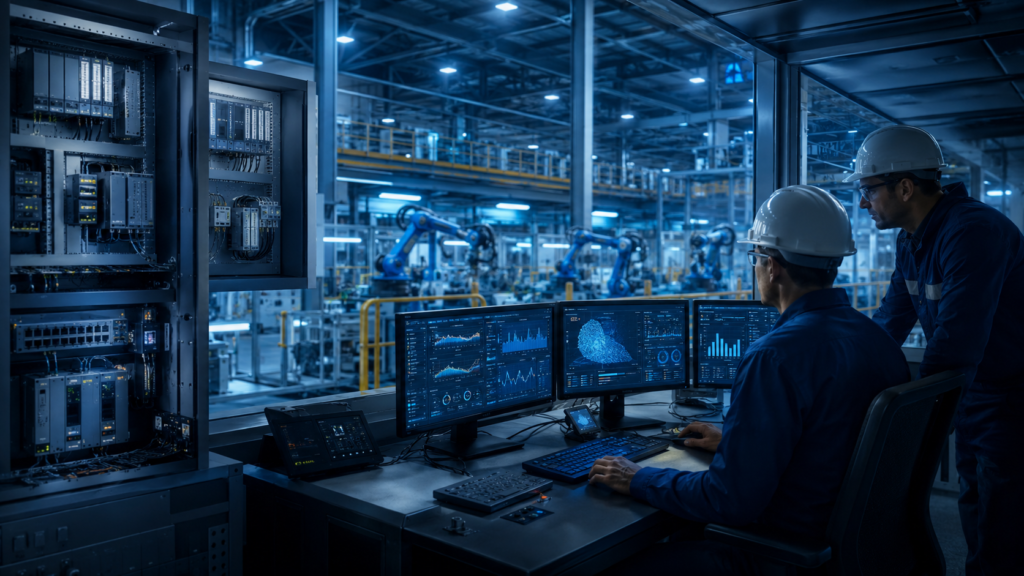
Edge-KI-Gateways sammeln Maschinendaten, Prozess-IIoT-Analysen, und unterstützen Sie die lokale Aufklärung in der Nähe von Produktionsanlagen.
Branchenüberblick
IIoT erfordert mehr als nur Gerätekonnektivität
Industrielles IoT vernetzt Maschinen, Sensoren, Produktionsausrüstung, und Softwaresysteme.
Jedoch, Das bloße Anschließen von Geräten reicht nicht aus. Fabriken müssen nützliche Daten sammeln, verarbeiten es zuverlässig, Erkennen Sie abnormale Zustände, und liefern die richtigen Informationen an das richtige System.
Eine praktische IIoT-Bereitstellung muss möglicherweise unterstützt werden:
- SPS-Datenerfassung
- Sensordatenerfassung
- Maschinenzustandsüberwachung
- Kamerabasierte Inspektionsdaten
- Integration von Energiezählern
- Protokollkonvertierung
- Lokale Datenpufferung
- Erkennung von KI-Anomalien
- Edge-to-Cloud-Übertragung
- MES- und SCADA-Integration
Ein Edge-KI-Gateway hilft dabei, die Lücke zwischen Industrieanlagen und digitalen Fertigungsplattformen zu schließen.
Warum KI auf die Gateway-Ebene verlagert wird
Herkömmliche Gateways konzentrieren sich normalerweise auf die Datenerfassung und Protokollkonvertierung.
Moderne Fabriken benötigen zunehmend mehr Intelligenz am Rande. Anstatt alle Rohdaten weiterzuleiten, Ein Edge-KI-Gateway kann Daten lokal analysieren und nur nützliche Ergebnisse senden.
KI auf der Gateway-Ebene kann unterstützend wirken:
- Vorausschauende Wartung
- Erkennung von Sensoranomalien
- Unterstützung bei der Sichtprüfung
- Analyse des Energieverbrauchs
- Klassifizierung des Gerätestatus
- Überwachung des Produktionsflusses
- Alarmfilterung
- Erkennung von Prozessabweichungen
- Entscheidungsunterstützung vor Ort
Dies verbessert die Reaktionszeit und reduziert unnötige Cloud- oder Server-Arbeitslast.
Industrial Computing ist die Gateway Foundation
Ein Edge-KI-Gateway muss in realen Fabrikumgebungen funktionieren.
Der Einbau in einen Schaltschrank ist möglich, in der Nähe einer Produktionslinie, neben einer Maschine, in einem Energiemonitoringsystem, oder in OEM-Geräten.
An diesen Stellen kann es zu Vibrationen kommen, Staub, Temperaturschwankungen, elektrisches Rauschen, begrenzter Luftstrom, und kontinuierliche Betriebspläne.
Industriecomputer und eingebettete Computer bilden die Hardware-Grundlage für diese Bedingungen. Sie unterstützen industrielle I/O, mehrere LAN-Ports, serielle Kommunikation, lokaler Speicher, zuverlässiges Energiedesign, und robuste Montage.

Gemischte Geräte, serielle Netzwerke, Sensordaten, LAN-Verkehr, Kamera-Streams, Datenpufferung, und Netzwerksegmentierung wirken sich auf die Bereitstellung von IIoT-Gateways aus.
Wichtigste Herausforderungen
Verschiedene industrielle Geräteanschlüsse
IIoT-Systeme müssen viele Arten von Industriegeräten verbinden.
Möglicherweise muss ein einzelnes Gateway mit SPS kommunizieren, Sensoren, Meter, Kameras, Roboter, Barcode-Lesegeräte, Motion-Controller, und ältere Maschinen.
Unterschiedliche Geräte können unterschiedliche Schnittstellen und Protokolle verwenden.
Zu den allgemeinen Verbindungsanforderungen gehören::
- Ethernet
- RS232
- RS485
- USB
- GPIO
- Digitaler Eingang
- Digitaler Ausgang
- Mehrere LAN-Ports
- Drahtlose Erweiterung
- Lokale Anzeigeausgabe
Das Edge-KI-Gateway muss genügend Flexibilität bieten, um sowohl moderne als auch ältere Geräte zu unterstützen.
Komplexität von Protokollen und Datenformaten
Industrielle Geräte nutzen häufig unterschiedliche Kommunikationsmethoden und Datenformate.
Eine Fabrik kann neuere Ethernet-basierte Geräte und ältere seriell-basierte Maschinen im selben Produktionsbereich umfassen. Einige Systeme geben möglicherweise strukturierte Daten aus, während andere möglicherweise eine Protokollkonvertierung oder eine benutzerdefinierte Analyse erfordern.
Das Gateway muss möglicherweise Daten sammeln und normalisieren, bevor es sie an MES sendet, SCADA, Cloud-Plattformen, oder Datenbanken.
Dadurch entstehen Anforderungen an die Softwarekompatibilität, stabile Konnektivität, und lokale Rechenleistung.
Anforderungen an die lokale KI-Verarbeitung
Die KI-Arbeitslasten in IIoT-Systemen variieren stark.
Einige Gateways führen nur eine einfache Anomalieerkennung für Sensordaten durch. Andere verarbeiten Kamerabilder, Videostreams, Vibrationssignale, Maschinenprotokolle, oder Industriedaten aus mehreren Quellen.
Zu den Arbeitsbelastungsfaktoren können gehören:
- Anzahl der angeschlossenen Geräte
- Häufigkeit der Sensoraktualisierung
- Komplexität des KI-Modells
- Kameraauflösung
- Anzahl der Videostreams
- Arbeitslast der lokalen Datenbank
- Anforderungen an die Datenpufferung
- Häufigkeit des Cloud-Uploads
Die Hardware muss entsprechend der tatsächlichen Edge-KI-Arbeitslast ausgewählt werden, nicht nur grundlegende Gateway-Spezifikationen.
Netzwerkzuverlässigkeit und Datenpufferung
Die Netzwerkbedingungen im Werk sind nicht immer perfekt.
Ein Gateway muss möglicherweise auch dann weiterhin Daten sammeln, wenn eine Verbindung zu Cloud-Plattformen besteht, MES, oder Unternehmenssysteme ist vorübergehend nicht verfügbar.
Lokale Pufferung ist wichtig, da sie dazu beiträgt, Datenverluste bei Netzwerkunterbrechungen zu verhindern.
Das Edge-KI-Gateway sollte zuverlässige Speicherung unterstützen, lokale Warteschlangen, und kontrollierter Daten-Upload, wenn die Verbindung wiederhergestellt wird.
Cybersicherheit und Netzwerksegmentierung
IIoT-Gateways sitzen häufig zwischen Maschinennetzwerken und IT-Netzwerken.
Daher ist das Netzwerkdesign wichtig.
Möglicherweise müssen Fabriken getrennt werden:
- Maschinennetzwerk
- Kameranetzwerk
- SPS-Netzwerk
- Fabrik-IT-Netzwerk
- Fernwartungsnetzwerk
- Cloud-Verbindung
Mehrere LAN-Ports und eine sorgfältige Netzwerkarchitektur können dabei helfen, den Datenverkehr zu organisieren und unnötige Belastungen zwischen Systemen zu reduzieren.

Edge-KI-Gateways verbinden Industriegeräte, lokale Analysen, Fabriksoftware, Cloud-Überwachungssysteme, und IIoT-Dashboards.
Edge AI Gateway-Lösungsarchitektur
Geräte- und Sensorschicht
Die Geräte- und Sensorschicht umfasst alle angeschlossenen Industriegeräte.
Diese Schicht kann umfassen:
- SPS
- Sensoren
- Motoren
- Roboter
- Kameras
- Energiezähler
- Barcode-Lesegeräte
- Testinstrumente
- Motion-Controller
- Maschinensteuerungen
- Industrielle Schalter
- Ältere serielle Geräte
Diese Geräte erzeugen Rohdaten zur Überwachung, Analyse, Automatisierung, und Berichterstattung.
Ein zuverlässiges Gateway muss konsistent Daten von dieser Schicht sammeln.
Industrielle Edge-Gateway-Schicht
Auf der industriellen Edge-Gateway-Schicht übernimmt das Edge-KI-Gateway die lokale Datenverarbeitung.
Auf dieser Ebene, B. der Industriecomputer oder der eingebettete Computer:
- Sammeln Sie SPS- und Sensordaten
- Konvertieren Sie Industrieprotokolle
- Verarbeiten Sie lokale Datenströme
- Führen Sie KI-Inferenzmodelle aus
- Speichern Sie temporäre Aufzeichnungen
- Pufferdaten bei Netzwerkproblemen
- Filtern Sie ungewöhnliche Ereignisse
- Alarme generieren
- Lokalen Status anzeigen
- Ausgewählte Daten an Fabriksysteme senden
Diese Ebene trägt dazu bei, rohe Gerätedaten in nützliche industrielle Intelligenz umzuwandeln.
AI Analytics-Ebene
Die KI-Analyseschicht enthält die lokale Intelligenz, die auf dem Gateway läuft.
Abhängig von der Anwendung, es kann beinhalten:
- Modelle zur Anomalieerkennung
- Predictive-Maintenance-Modelle
- Bildanalysetools
- Videoanalysesoftware
- Sensorfusionslogik
- Analyse des Energieverbrauchs
- Überwachung des Produktionsflusses
- Regelbasierte Ereignisfilterung
- KI-Inferenzlaufzeit
Der Industrierechner muss das erforderliche Betriebssystem unterstützen, Fahrer, KI-Software, Industrielle Kommunikationswerkzeuge, und Datenbankfunktionen.
Factory-Software-Integrationsschicht
Das Edge-KI-Gateway verbindet maschinenseitige Daten mit Fabriksoftwaresystemen.
Es kann ausgewählte Daten an senden:
- MES
- SCADA
- ERP
- Cloud-Plattformen
- Qualitätsdatenbanken
- Wartungssysteme
- Industrielle IoT-Dashboards
- Lokalhistorische Systeme
- Produktionsüberwachungsplattformen
Anstatt alle Rohdaten zu senden, Das Gateway kann Alarme hochladen, Zusammenfassungen, verarbeitete Werte, Trends, und Ausnahmedatensätze.
Dadurch wird die IIoT-Bereitstellung effizienter und verwaltbarer.
Lokale Schnittstelle und Wartungsschicht
Betreiber und Ingenieure benötigen häufig lokalen Zugriff auf das Gateway.
Das System kann an einen Monitor angeschlossen werden, Touch-Screen, HMI-Panel, oder Service-Laptop.
Die lokale Schnittstelle kann anzeigen:
- Geräteverbindungsstatus
- Datenerfassungsstatus
- AI-Alarmstatus
- Netzwerkstatus
- Speicherstatus
- Gateway-Zustand
- Upload-Status
- Fehlerprotokolle
- Lokale Dashboard-Ansichten
Eine praktische Schnittstelle hilft Ingenieuren, das System zu warten und Probleme schneller zu beheben.
Hauptmerkmale
Multiprotokoll-Konnektivität
Ein Edge-KI-Gateway muss sich mit verschiedenen Industriegeräten verbinden.
Hardwareflexibilität ist wichtig, da Fabriken oft gemischte Gerätegenerationen enthalten.
Zu den nützlichen E/A-Optionen können gehören:
- Mehrere LAN-Ports
- RS232
- RS485
- USB
- GPIO
- Digitaler Eingang
- Digitaler Ausgang
- M.2-Erweiterung
- PCIe-Erweiterung
- HDMI oder DisplayPort
- Unterstützung für drahtlose Module
Diese Schnittstellen helfen dem Gateway bei der Kommunikation mit SPSen, Sensoren, Meter, Kameras, Barcode-Lesegeräte, und industrielle Netzwerke.
Lokale KI-Rechenleistung
Das Gateway sollte genügend Rechenleistung für lokale KI-Workloads bereitstellen.
Die Auswahl sollte berücksichtigt werden:
- CPU-Leistung
- Speicherkapazität
- Anforderungen an GPU oder KI-Beschleuniger
- Sensordatenvolumen
- Arbeitsbelastung der Kamera
- Komplexität des KI-Modells
- Anforderungen an lokale Datenbanken
- Speichergeschwindigkeit
- Betriebssystemunterstützung
Für leichte Sensoranalytik, Ein kompakter eingebetteter Computer kann ausreichen. Für kamerabasierte KI oder Multi-Source-Analysen, Möglicherweise ist ein stärkerer Edge-KI-Computer erforderlich.
Mehrere LAN-Ports zur Netzwerktrennung
Mehrere LAN-Ports sind besonders wertvoll in IIoT-Gateway-Anwendungen.
Sie ermöglichen dem System, verschiedene Verkehrstypen zu trennen.
Zum Beispiel:
- Ein LAN-Port für SPS
- Ein LAN-Port für Sensoren oder Gateways
- Ein LAN-Port für das IT-Netzwerk der Fabrik
- Ein LAN-Port für Cloud- oder Fernzugriff
- Ein LAN-Anschluss für Kamerasysteme
Dies verbessert die Netzwerkorganisation, reduziert Verkehrskonflikte, und unterstützt eine bessere Sicherheitsplanung.
Zuverlässiger lokaler Speicher
Edge-KI-Gateways benötigen häufig lokalen Speicher.
Das Gateway kann Sensordatensätze speichern, Alarmprotokolle, KI-Modelldateien, lokale Datenbanken, temporäre Puffer, Bilder, Videoclips, und Upload-Warteschlangen.
SSD- oder NVMe-Speicher werden häufig bevorzugt, da sie einen schnelleren Zugriff und eine bessere Stoßfestigkeit als mechanische Laufwerke bieten.
Das Speicherdesign sollte berücksichtigt werden:
- Aufbewahrungsfrist der Daten
- Puffergröße
- Schreiben Sie Ausdauer
- Sicherungsmethode
- Arbeitslast der lokalen Datenbank
- Verhalten bei Netzwerkunterbrechungen
- Upload-Häufigkeit
Eine zuverlässige Speicherung hilft, Datenverluste zu verhindern und unterstützt die Rückverfolgbarkeit.
Robustes und lüfterloses Design
Edge-KI-Gateways werden häufig in der Nähe von Maschinen oder in Schaltschränken eingesetzt.
Das lüfterlose Design kann die Staubansaugung reduzieren und eine häufige mechanische Fehlerquelle beseitigen. Robuste Gehäuse schützen das System vor Vibrationen, Kabelspannung, und Auswirkungen auf die Installation.
Jedoch, KI-Workloads können Hitze erzeugen.
Das thermische Design sollte anhand der Prozessorleistung überprüft werden, Verwendung von KI-Beschleunigern, Umgebungstemperatur, Luftzirkulation im Schrank, und Montageposition.
Lange Lebensdauer und Wartbarkeit
IIoT-Gateway-Systeme bleiben möglicherweise viele Jahre in Produktion.
Häufige Hardwareänderungen können zu Problemen bei der Softwarevalidierung führen, Probleme mit der Treiberkompatibilität, und Ersatzteilschwierigkeiten.
Industrielle Computerplattformen mit Lebenszyklusplanung helfen Herstellern und Systemintegratoren, konsistente IIoT-Bereitstellungen auf mehreren Maschinen aufrechtzuerhalten, Linien, und Fabrikgelände.
Dies ist besonders wichtig für skalierbare digitale Transformationsprojekte.

Edge-KI-Gateways verbessern die Maschinenüberwachung, vorausschauende Wartung, Energieanalyse, Produktionsresilienz, und intelligente Fabriksichtbarkeit.
Bereitstellungsszenarien
Maschinendatenerfassung
Die Erfassung von Maschinendaten ist eine der häufigsten Edge-KI-Gateway-Anwendungen.
Das Gateway sammelt Daten von SPSen, Maschinensteuerungen, Sensoren, und Meter.
Es kann Daten lokal verarbeiten, Aufzeichnungen speichern, und senden ausgewählte Informationen an MES, SCADA, oder industrielle IoT-Plattformen.
Dies hilft Fabriken, den Maschinenstatus und die Produktionsleistung zu verstehen.
Vorausschauende Wartung
Edge-KI-Gateways können die vorausschauende Wartung unterstützen, indem sie Daten von Vibrationssensoren analysieren, Temperatursensoren, Motoren, Pumps, Kompressoren, und Maschinensteuerungen.
Das Gateway kann eine lokale Anomalieerkennung durchführen und Warnungen generieren, wenn ungewöhnliche Muster auftreten.
Dies hilft Wartungsteams, zu reagieren, bevor Geräteausfälle schwerwiegend werden.
Energieüberwachung
Fabriken können Edge-KI-Gateways verwenden, um Energiezählerdaten zu sammeln und zu analysieren.
Das Gateway kann eine Verbindung zu Stromzählern herstellen, Versorgungssysteme, Kompressoren, HVAC-Ausrüstung, und Produktionsmaschinen.
KI-Analysen können dabei helfen, ungewöhnliche Energieverbräuche zu erkennen, Ineffizienz der Ausrüstung, oder abnormale Betriebsmuster.
Dies unterstützt das Energiemanagement und die Kostenoptimierung.
Integration von Bildverarbeitungsdaten
Einige IIoT-Bereitstellungen umfassen kamerabasierte Daten.
Das Gateway kann Industriekameras anschließen oder Ergebnisse von Bildverarbeitungssystemen empfangen. Es kann ausgewählte Bilder verarbeiten, Inspektionsdaten speichern, und Qualitätsaufzeichnungen in Fabriksysteme hochladen.
Dies unterstützt die Rückverfolgbarkeit der visuellen Inspektion und die Integration von Produktionsdaten.
Fernüberwachung von Geräten
OEM-Maschinenbauer können Edge-KI-Gateways verwenden, um den Maschinenstatus an Kundenstandorten zu überwachen.
Das Gateway kann Maschinendaten sammeln, Prozessalarme vor Ort, und senden Sie ausgewählte Statusinformationen an Wartungsplattformen.
Dies hilft Anlagenbauern, ihre Kunden effizienter zu unterstützen und gleichzeitig unnötige Rohdatenübertragungen zu reduzieren.
Intelligente Überwachung der Produktionslinie
Ein Edge-KI-Gateway kann Daten von mehreren Geräten in einer Produktionslinie sammeln.
Es kann Sensorwerte kombinieren, Maschinenstatus, Kameraereignisse, und SPS-Aufzeichnungen zur Erkennung abnormaler Produktionsbedingungen.
Dies unterstützt eine bessere Sichtbarkeit der Linie und eine schnellere Fehlerbehebung.
Umweltüberwachung
In industriellen Umgebungen kann eine Überwachung der Temperatur erforderlich sein, Luftfeuchtigkeit, Druck, Luftqualität, Vibration, oder andere Umgebungsbedingungen.
Ein eingebetteter Computer kann Sensordaten sammeln, Führen Sie eine lokale Analyse durch, und senden Sie Benachrichtigungen, wenn sich Werte außerhalb der erwarteten Bereiche bewegen.
Dies trägt zum Schutz der Ausrüstung bei, Materialien, und Produktionsqualität.
OEM-IIoT-Gateway-Integration
Maschinenbauer und Systemintegratoren können Industriecomputer oder kundenspezifische eingebettete Platinen in IIoT-Gateway-Produkte einbetten.
Die Plattform kann eine Protokollkonvertierung bereitstellen, KI-Schlussfolgerung, Datenpufferung, lokale Dashboards, Fernüberwachung, und Fabriksystemkonnektivität.
Dies hilft OEMs dabei, vernetzte Geräte bereitzustellen, die für die intelligente Fertigung bereit sind.
Geschäftsvorteile
Schnellere lokale Intelligenz
Ein Edge-KI-Gateway verarbeitet Daten maschinennah.
Dies verringert die Verzögerung zwischen der Datenerfassung und der Entscheidungsausgabe. Bei Alarmen ist eine schnelle lokale Analyse wichtig, vorausschauende Wartung, Maschinenüberwachung, und Produktionsreaktion.
Fabriken können schneller reagieren, ohne vollständig auf Remote-Server angewiesen zu sein.
Reduzierte Cloud-Bandbreitennutzung
Industrieanlagen können große Mengen an Rohdaten erzeugen.
Das Senden aller Daten an die Cloud kann die Bandbreitenauslastung und die Speicherkosten erhöhen.
Ein Edge-KI-Gateway kann filtern, Kompresse, analysieren, und Daten lokal zusammenfassen. Es können nur nützliche Datensätze hochgeladen werden, Alarm, Trends, und Ausnahmedaten.
Dadurch wird die IIoT-Bereitstellung effizienter.
Höhere Produktionsstabilität
Die lokale Verarbeitung verbessert die betriebliche Belastbarkeit.
Auch wenn die Netzwerkkommunikation mit Cloud- oder Unternehmenssystemen unterbrochen ist, Das Gateway kann weiterhin Daten sammeln, Ausführen von KI-Logik, Alarme erzeugen, und Puffern von Datensätzen.
Dies trägt dazu bei, dass die Überwachung und Datenerfassung auch bei vorübergehenden Netzwerkproblemen aktiv bleibt.
Verbesserte Sicht auf die Ausrüstung
Edge-KI-Gateways geben Fabriken einen besseren Einblick in den Maschinenstatus, Energieverbrauch, Sensortrends, und Produktionsbedingungen.
Bediener und Ingenieure können auf lokale Dashboards zugreifen und schneller Benachrichtigungen erhalten.
Eine bessere Sichtbarkeit hilft, die Wartungsplanung zu verbessern, Prozesskontrolle, und Produktionsmanagement.
Stärkere Datenrückverfolgbarkeit
Gateway-Daten können mit Maschinen-IDs verknüpft werden, Zeitstempel, Produktionsveranstaltungen, Alarmaufzeichnungen, Sensorwerte, und Inspektionsergebnisse.
Dies schafft eine bessere Nachverfolgbarkeit für die Wartung, Qualitätsanalyse, Energiemanagement, und Prozessverbesserung.
Zuverlässiger lokaler Speicher trägt zum Schutz wichtiger Datensätze bei.
Skalierbare IIoT-Bereitstellung
Eine standardisierte Edge-KI-Gateway-Plattform erleichtert die Bereitstellung von industriellem IoT auf mehreren Maschinen, Linien, und Fabriken.
Konsistente Hardware vereinfacht Software-Images, Fahrerverwaltung, Ersatzteilplanung, Wartungsschulung, und langfristigen technischen Support.
Dies hilft Herstellern bei der Skalierung von IIoT-Pilotprojekten bis hin zum breiteren Einsatz intelligenter Fabriken.
Warum CoreIPC
CoreIPC bietet industrielle Computerplattformen für Edge-KI, Industrielles IoT, maschinelles Sehen, Fabrikautomation, und eingebettete Systemintegration. Für Edge-KI-Gateway-Anwendungen, CoreIPC konzentriert sich auf zuverlässige industrielle Computerhardware, Embedded-Computer-Lösungen, flexible I/O-Konfigurationen, kompaktes Systemdesign, und OEM/ODM-Anpassungsunterstützung. CoreIPC hilft Systemintegratoren, Maschinenbauer, und Hersteller wählen Computerplattformen aus, die den tatsächlichen Bereitstellungsanforderungen entsprechen, einschließlich KI-Arbeitsaufwand, Sensorschnittstellen, Kamera-Konnektivität, Netzwerkdesign, Protokollintegration, Speicherbedarf, Montagemethoden, Leistungsaufnahme, thermische Bedingungen, und Lebenszyklusplanung.
Häufig gestellte Fragen
1. Was ist ein Edge-KI-Gateway??
Ein Edge-KI-Gateway ist ein industrielles Computergerät, das Daten von Maschinen sammelt, Sensoren, SPS, Kameras, und industrielle Netzwerke, Anschließend verarbeitet es einen Teil dieser Daten lokal mithilfe von KI oder Analysesoftware.
Es kann abnormale Muster erkennen, Alarme erzeugen, Pufferdatensätze, Konvertieren von Protokollen, und ausgewählte Daten an MES senden, SCADA, Cloud-Plattformen, oder industrielle IoT-Dashboards.
2. Warum einen Industriecomputer als Edge-KI-Gateway verwenden??
Ein Industriecomputer ist für den Werkseinsatz konzipiert.
Es unterstützt eine robuste Installation, Dauerbetrieb, flexible I/O, mehrere Netzwerkanschlüsse, zuverlässige Lagerung, und lange Verfügbarkeit über den gesamten Lebenszyklus. Aufgrund dieser Eigenschaften eignet es sich für IIoT-Gateway-Systeme, die in der Nähe von Maschinen installiert werden, in Schaltschränken, oder innerhalb von OEM-Geräten.
3. Wie wird ein eingebetteter Computer in IIoT-Gateway-Anwendungen verwendet??
Ein eingebetteter Computer kann als kompaktes Edge-KI-Gateway für die verteilte maschinenseitige Bereitstellung fungieren.
Es kann Sensordaten sammeln, Verbindung zu SPSen herstellen, Führen Sie eine lokale KI-Analyse durch, Aufzeichnungen speichern, und laden Sie ausgewählte Informationen in Fabriksysteme hoch. Aufgrund seiner kompakten Größe eignet es sich für Schränke, Intelligente Gateways, Maschinengehäuse, und OEM-Plattformen.
4. Welche Schnittstellen sind für ein Edge-KI-Gateway wichtig??
Wichtige Schnittstellen können mehrere LAN-Ports sein, USB, RS232, RS485, GPIO, digitaler Eingang, digitaler Ausgang, HDMI, DisplayPort, M.2, PCIe, SATA, und NVMe-Speicherunterstützung.
Diese Schnittstellen helfen beim Anschluss von SPSen, Sensoren, Kameras, Meter, Barcode-Lesegeräte, Industrieschalter, lokale Anzeigen, und Fabriknetzwerke.
5. Benötigt ein Edge-KI-Gateway eine GPU??
Einige Edge-KI-Gateway-Anwendungen benötigen möglicherweise GPU- oder KI-Beschleunigerunterstützung, insbesondere für kamerabasierte KI, Videoanalyse, oder komplexe Deep-Learning-Modelle.
Andere Anwendungen, wie etwa die Erkennung von Sensoranomalien oder die Protokollkonvertierung, kann auf CPU-basierten eingebetteten Computern ausgeführt werden. Die Hardware sollte entsprechend der tatsächlichen KI-Arbeitslast und den Anforderungen an die Reaktionszeit ausgewählt werden.
6. Kann ein Edge-KI-Gateway eine Verbindung zu Cloud-Plattformen herstellen??
Ja. Ein Edge-KI-Gateway kann Daten lokal verarbeiten und ausgewählte Informationen an Cloud-Plattformen senden.
Es kann Alarme hochladen, Zusammenfassungen, Trends, Inspektionsergebnisse, Sensoraufzeichnungen, oder komprimierte Daten anstelle aller rohen Maschinendaten. Dies reduziert die Bandbreitennutzung und unterstützt gleichzeitig die zentrale Überwachung und Analyse.
7. Wie unterstützt ein Edge-KI-Gateway die vorausschauende Wartung??
Das Gateway sammelt Daten von Vibrationssensoren, Temperatursensoren, Motoren, Pumps, Kompressoren, oder Maschinensteuerungen.
KI-Modelle können diese Daten lokal analysieren, um abnormale Muster zu erkennen. Das Gateway kann dann Warnungen generieren und Wartungsaufzeichnungen in Dashboards oder Wartungssysteme hochladen.
8. Können Edge-KI-Gateways eine Verbindung zu MES- und SCADA-Systemen herstellen?
Ja. Edge-KI-Gateways können verarbeitete Daten senden, Maschinenstatus, Alarm, Trends, und Produktionsaufzeichnungen an MES, SCADA, Qualitätssysteme, oder industrielle IoT-Plattformen.
Dies trägt dazu bei, die Werkstattausrüstung mit übergeordneter Fertigungssoftware zu verbinden und sorgt für eine bessere Produktionstransparenz.
9. Warum sind mehrere LAN-Ports in Edge-KI-Gateways nützlich??
Mehrere LAN-Ports ermöglichen eine Netzwerktrennung.
Ein Port kann mit SPSen verbunden werden, ein anderer zu Kameras, ein anderer zu Fabrik-IT-Systemen, und eine andere zu Cloud- oder Fernwartungsnetzwerken. Dadurch wird die Verkehrsorganisation verbessert, reduziert Störungen, und unterstützt eine bessere Cybersicherheitsplanung.
10. Was sollte vor der Bereitstellung eines Edge-KI-Gateways getestet werden??
Vor der Bereitstellung, Das Gateway sollte mit echten SPSen getestet werden, Sensoren, Kameras, KI-Modelle, Netzwerkarchitektur, Speicherauslastung, Daten-Upload, und langlebigen Betrieb.
Thermische Stabilität, lokale Pufferung, Protokollkommunikation, Alarmzeitpunkt, und das Verhalten bei Netzwerkunterbrechungen sollten ebenfalls validiert werden. Dies reduziert das Risiko während des Produktionsrollouts.
Abschluss
Ein Edge-KI-Gateway ist eine praktische Grundlage für die industrielle IoT-Datenerfassung, lokale KI-Inferenz, vorausschauende Wartung, Energieüberwachung, Bildverarbeitungsdatenintegration, und intelligente Fabrikkonnektivität.
Indem Sie einen Industriecomputer oder einen eingebetteten Computer in der Nähe von SPS platzieren, Sensoren, Kameras, Meter, Roboter, und Produktionsanlagen, Hersteller können Daten lokal verarbeiten, Reduzieren Sie die Cloud-Abhängigkeit, Reaktionszeit verbessern, und die operative Sichtbarkeit stärken.
Das richtige Edge-KI-Gateway sollte entsprechend den tatsächlichen Bereitstellungsanforderungen ausgewählt werden, einschließlich KI-Arbeitsaufwand, Geräteschnittstellen, Netzwerkarchitektur, Protokollintegration, Speicherbedarf, I/O-Konfiguration, Montagemethode, Leistungsaufnahme, thermische Bedingungen, Betriebssystemunterstützung, und Lebenszyklusplanung.
CoreIPC unterstützt Edge-KI-Gateway-Projekte mit industriellen Computerplattformen, die für den praktischen IIoT- und Fabrikeinsatz konzipiert sind. Mit der richtigen Hardware-Grundlage, Hersteller und Maschinenbauer können zuverlässig bauen, skalierbar, und datengesteuerte industrielle IoT-Systeme.
Kontaktieren Sie uns
Auf der Suche nach einem Industriecomputer, eingebetteter Computer, oder Edge-KI-Plattform für ein Edge-KI-Gateway-Projekt?
Kontaktieren Sie CoreIPC, um Ihre Projektanforderungen zu besprechen, einschließlich KI-Arbeitsaufwand, Sensorschnittstelle, SPS-Kommunikation, Kameraverbindung, Netzwerkarchitektur, Speicherdesign, Montagemethode, Leistungsaufnahme, Betriebsumgebung, Lebenszyklusanforderungen, und OEM/ODM-Anpassungsoptionen.