CoreIPC Industrial Computing-Lösungen

Industrielle KI für Predictive Analytics: Industrielle KI-Analyse für die Entscheidungsfindung in intelligenten Fabriken
Zusammenfassung
Industrielle KI-Analysen werden zu einer wichtigen Grundlage für die vorausschauende Wartung, Prozessoptimierung, Qualitätsverbesserung, Energieüberwachung, und intelligente Fabrikentscheidungen.
Moderne Fabriken erzeugen große Datenmengen von Maschinen, Sensoren, SPS, Kameras, Roboter, Meter, Inspektionssysteme, und Produktionssoftware. Wenn diese Daten nur zur späteren Berichterstattung gespeichert werden, Fabriken übersehen möglicherweise Frühwarnzeichen, wiederkehrende Qualitätsmuster, Energieanomalien, und Prozessänderungen.
Industrielle KI für prädiktive Analysen hilft dabei, maschinenseitige Daten in nützliche Erkenntnisse umzuwandeln. Es kann das Geräteverhalten analysieren, Erkennen Sie abnormale Muster, mögliche Ausfälle vorhersagen, Prozessdrift identifizieren, und unterstützen schnellere Produktionsentscheidungen.
Ein Industriecomputer oder eingebetteter Computer stellt die lokale Computerplattform für diese Arbeitslasten bereit. Es kann Daten von SPSen sammeln, Sensoren, Kameras, Gateways, Energiezähler, und Produktionssysteme, Führen Sie dann Analysemodelle in der Nähe der Ausrüstung aus.
Im Vergleich zu handelsüblichen PCs, Industriecomputer eignen sich besser für Fabrikumgebungen, da sie den robusten Einsatz unterstützen, flexible I/O, stabile Vernetzung, lokaler Speicher, lüfterlose Designoptionen, und lange Verfügbarkeit über den gesamten Lebenszyklus.
In diesem Artikel wird erläutert, wie industrielle KI-Analysen funktionieren, Welche Herausforderungen treten im realen Einsatz auf?, wie die Lösungsarchitektur aufgebaut ist, und welche Hardware-Features bei der Auswahl eines Industriecomputers oder Embedded-Computers für Predictive-Analytics-Anwendungen wichtig sind.
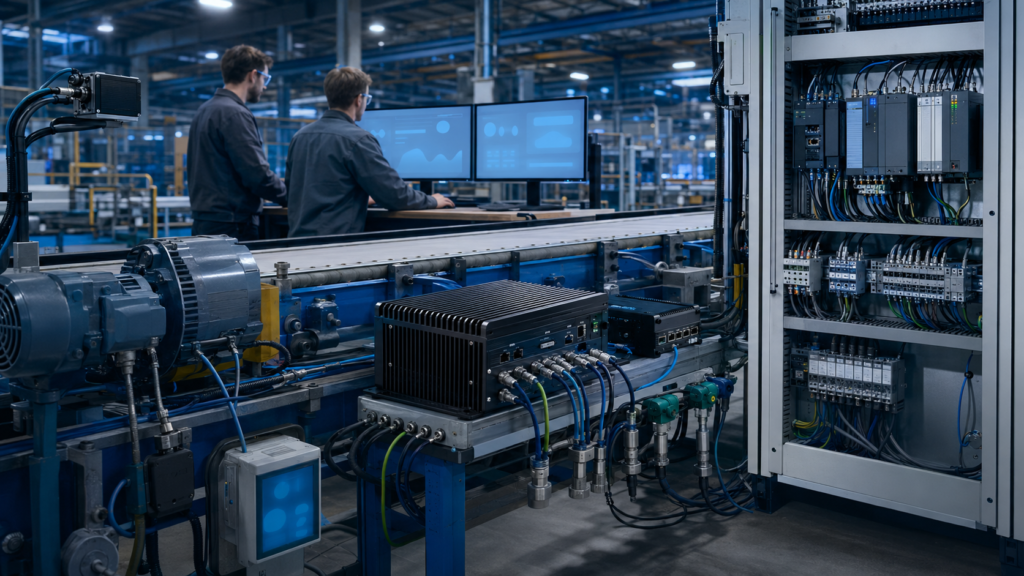
Industrielle Bereitstellung von KI-Analysen in der Fabrik
Branchenüberblick
Fabriken benötigen vorausschauende Erkenntnisse
Bei der klassischen Fabriküberwachung steht häufig der aktuelle Status im Mittelpunkt.
Bediener sehen möglicherweise Alarme, Maschinenzustände, Produktion zählt, und Wartungsaufzeichnungen. Diese Signale sind nützlich, aber sie verraten möglicherweise nicht, was als nächstes passieren wird.
Predictive Analytics fügt eine weitere Ebene der Intelligenz hinzu.
Es hilft Fabriken, historische Daten und Echtzeitdaten zu analysieren, um Frühwarnzeichen zu erkennen, versteckte Zusammenhänge, und abnormale Trends.
Industrielle KI-Analysen können dabei helfen:
- Vorausschauende Wartung
- Überwachung des Gerätezustands
- Qualitätstrendanalyse
- Erkennung von Prozessanomalien
- Optimierung des Energieverbrauchs
- Analyse von Produktionsengpässen
- Analyse der Maschinenauslastung
- Ertragsverbesserung
- Erkennung von Fehlermustern
- Wartungsplanung
Das Ziel besteht darin, den Teams dabei zu helfen, von einer reaktiven Reaktion zu einer früheren Reaktion überzugehen, datengestütztes Handeln.
KI-Analysen bewegen sich an den Rand
Cloud-Plattformen können die Speicherung großer Datenmengen unterstützen, Dashboards, und Analysen auf Unternehmensebene.
Jedoch, Viele industrielle Analyseaufgaben profitieren von der lokalen Edge-Verarbeitung. Maschinendaten müssen möglicherweise schnell analysiert werden, bei Netzwerkunterbrechungen gepuffert, oder vor dem Hochladen gefiltert.
Ein Industriecomputer, der in der Nähe von Produktionsanlagen eingesetzt wird, kann Daten lokal verarbeiten.
Dies hilft, die Latenz zu reduzieren, geringere Bandbreitennutzung, Schützen Sie sensible Produktionsdaten, und den lokalen Betrieb aufrechtzuerhalten, wenn das Netzwerk instabil ist.
Edge-basierte industrielle KI-Analysen sind besonders nützlich, wenn Fabriken schnelle Warnungen benötigen, lokale Dashboards, oder kontinuierliche Datenerfassung von verteilten Maschinen.
Industrial Computing ist die Hardware-Grundlage
Predictive Analytics erfordert mehr als nur Softwaremodelle.
Es benötigt zuverlässige Computerhardware, die Daten von Industriegeräten sammeln kann, Führen Sie Analyse-Workloads aus, Speichern Sie lokale Datensätze, und mit Fabriksystemen kommunizieren.
Industriecomputer und eingebettete Computer bilden diese Grundlage.
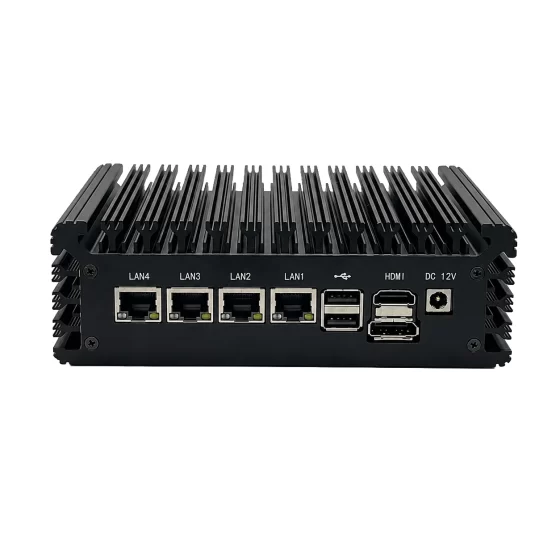
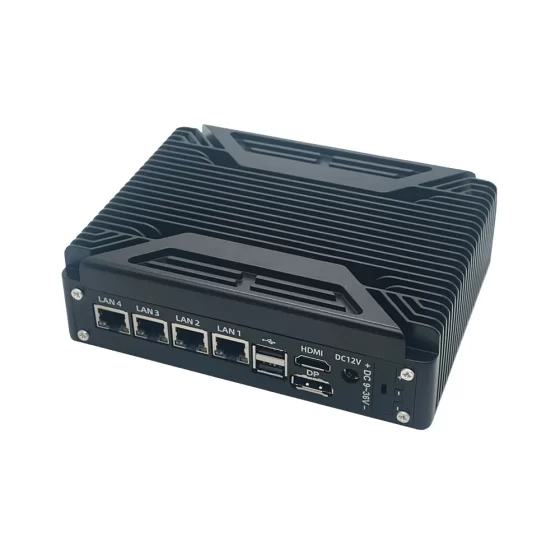
Sie können mehrere LAN-Ports unterstützen, serielle Kommunikation, GPIO, digitale I/O, USB-Geräte, SSD-Speicher, Ausgabe anzeigen, und Erweiterungsmodule.
Dadurch eignen sie sich für maschinenseitige Analysen, Industrielle IoT-Gateways, Predictive-Maintenance-Knoten, Energieüberwachungssysteme, und Smart-Factory-Plattformen.

Herausforderungen bei der Bereitstellung industrieller KI-Analysen
Wichtigste Herausforderungen
Daten von verschiedenen Maschinen und Systemen
Industriedaten sind oft fragmentiert.
Eine einzelne Fabrik kann ältere Maschinen umfassen, moderne SPS, Sensoren, Energiezähler, Roboter, Kameras, Inspektionssysteme, und Softwareplattformen verschiedener Anbieter.
Jedes System kann unterschiedliche Schnittstellen verwenden, Datenformate, Aktualisierungsraten, und Kommunikationsmethoden.
Zu den gängigen Datenquellen gehören::
- SPS
- Sensoren
- Maschinensteuerungen
- Roboter
- Motoren und Antriebe
- Energiezähler
- Vision-Systeme
- Testausrüstung
- Industrielle Gateways
- MES- und SCADA-Systeme
Eine industrielle KI-Analyseplattform muss diese Daten zuverlässig sammeln und organisieren, bevor nützliche Vorhersagen getroffen werden können.
Datenqualität und -konsistenz
Predictive Analytics hängt von der Datenqualität ab.
Wenn Sensorwerte fehlen, Zeitstempel sind inkonsistent, Maschinenzustände sind unklar, oder Daten werden nur gelegentlich erhoben, KI-Modelle können zu schwachen Ergebnissen führen.
Wichtige Datenqualitätsfaktoren sind::
- Abtastfrequenz
- Zeitstempelgenauigkeit
- Sensorkalibrierung
- Maschinenzustandskontext
- Datenvollständigkeit
- Rauschfilterung
- Kennzeichnung von Ereignissen
- Informationen zur Produktionscharge
- Wartungshistorie
- Qualitätsaufzeichnungen
Der Industriecomputer muss eine stabile Datenerfassung und lokale Pufferung unterstützen, um Datenlücken zu reduzieren.
Anforderungen an Echtzeitwarnungen
Prädiktive Analysen werden dann wertvoll, wenn sie zeitnahes Handeln unterstützen können.
Wenn eine Maschine erste Anzeichen ungewöhnlicher Vibrationen zeigt, Überhitzung, aktuelle Schwankung, Qualitätsdrift, oder Energieverschwendung, Das System sollte das Muster frühzeitig erkennen und eine nützliche Warnung generieren.
Eine verzögerte Analyse kann den Wert des Systems mindern.
Echtzeit- oder nahezu Echtzeit-Anforderungen können auftreten:
- Vorausschauende Wartung
- Erkennung von Prozessabweichungen
- Qualitätstrendüberwachung
- Warnungen zu Energieanomalien
- Analyse von Produktionsengpässen
- Überwachung der Gerätenutzung
- Unterstützung bei der sicherheitstechnischen Überwachung
Die Computerplattform muss im Dauerbetrieb eine stabile und dauerhafte Leistung bieten.
Modellbereitstellung und -wartung
Industrielle KI-Analysemodelle müssen möglicherweise fortlaufend angepasst werden.
Maschinen verschleißen mit der Zeit, Produktionsrezepte ändern sich, Sensorverhalten verändert sich, und neue Produktmodelle gehen in Produktion. Ein Vorhersagemodell, das während eines Pilotprojekts funktioniert, muss während der Langzeitnutzung möglicherweise gewartet werden.
Systemdesigner müssen darüber nachdenken:
- Workflow zur Modellaktualisierung
- Lokale Modellspeicherung
- Versionskontrolle
- Datenprotokollierung
- Alarmüberprüfung
- Umgang mit Fehlalarmen
- Wartungsfeedback
- Langzeitvalidierung
Der industrielle KI-Computer sollte eine praktische Softwareumgebung für die Modellbereitstellung und -wartung unterstützen.
Zuverlässigkeit der Fabrikumgebung
Prädiktive Analysesysteme werden häufig in der Nähe von Maschinen oder in Schaltschränken eingesetzt.
An diesen Stellen kann es zu Vibrationen kommen, Staub, Hitze, elektrisches Rauschen, begrenzter Luftstrom, Kabelbewegung, und kontinuierliche Betriebspläne.
Wenn der Analyserechner ausfällt, Die Datenerfassung wird möglicherweise eingestellt und Vorhersagedatensätze werden möglicherweise unvollständig.
Industrietaugliche Hardware trägt dazu bei, dieses Risiko zu reduzieren, indem sie eine robuste Installation unterstützt, stabiles thermisches Design, zuverlässige Lagerung, und eine lange Lebenszyklusplanung.

Industrielle KI-Predictive-Analytics-Architektur
Architektur der industriellen KI-Analyselösung
Geräte- und Sensorschicht
Die Geräte- und Sensorschicht umfasst die überwachten Maschinen und Datenquellen.
Diese Schicht kann SPS umfassen, Sensoren, Motoren, Laufwerke, Kameras, Roboter, Energiezähler, Testinstrumente, und Produktionsanlagen.
Typische Daten können sein::
- Vibrationswerte
- Temperaturdaten
- Motorstrom
- Druckwerte
- Geschwindigkeit und Zykluszeit
- Maschinenstatus
- Alarmverlauf
- Energieverbrauch
- Aufzeichnungen zur Produktqualität
- Inspektionsergebnisse
- Wartungsereignisse
Diese Rohdaten liefern den Input für die industrielle KI-Analyse.
Industrielle Edge-Computing-Schicht
In der industriellen Edge-Computing-Schicht sammelt sich der Industriecomputer oder eingebettete Computer, Prozesse, und speichert Daten lokal.
Auf dieser Ebene, Das System kann:
- Sammeln Sie Sensordaten
- SPS-Datensätze lesen
- Maschinenereignisse verarbeiten
- Speichern Sie die lokale Geschichte
- Führen Sie Analysemodelle aus
- Erkennen Sie abnormale Muster
- Generieren Sie vorausschauende Warnungen
- Pufferdaten bei Netzwerkproblemen
- Zeigen Sie lokale Dashboards an
- Laden Sie ausgewählte Daten in Fabriksysteme hoch
Diese Ebene trägt dazu bei, prädiktive Intelligenz näher an die Produktionsausrüstung zu bringen.
AI Analytics-Ebene
Die KI-Analyseschicht enthält die Modelle und die Logik, die zur Umwandlung von Daten in Erkenntnisse verwendet werden.
Abhängig von der Anwendung, es kann beinhalten:
- Anomalieerkennung
- Predictive-Maintenance-Modelle
- Trendanalyse
- Erkennung von Fehlermustern
- Qualitätsvorhersage
- Analyse des Energieverbrauchs
- Erkennung von Produktionsengpässen
- Regelbasierte Alarmfilterung
- Sensorfusionslogik
Der Industrierechner muss das erforderliche Betriebssystem unterstützen, Analysetools, KI-Laufzeit, Datenbanksoftware, und industrielle Kommunikationssoftware.
Factory-Software-Integrationsschicht
Prädiktive Analysen werden nützlicher, wenn sie mit Fabriksystemen verbunden werden.
Der Industriecomputer kann ausgewählte Daten an senden:
- MES
- SCADA
- ERP
- Wartungsplattformen
- Qualitätsdatenbanken
- Industrielle IoT-Dashboards
- Cloud-Analyseplattformen
- Lokalhistorische Systeme
- Dashboards zur Produktionsüberwachung
Anstatt alle Rohdaten hochzuladen, Das System kann Alarme senden, Trends, Zusammenfassungen, ungewöhnliche Ereignisse, und ausgewählte Datensätze.
Dies reduziert den Bandbreitendruck und verbessert die Datenorganisation.
Bediener- und Wartungsschnittstellenschicht
Betreiber und Wartungsteams benötigen eine praktische Schnittstelle.
Der industrielle KI-Computer kann an einen Monitor angeschlossen werden, Touch-Screen, HMI-Panel, oder lokale Dashboard-Workstation.
Die Schnittstelle kann angezeigt werden:
- Maschinengesundheitsstatus
- Vorausschauende Warnungen
- Sensortrends
- Energieverbrauch
- Qualitätstrends
- Alarmverlauf
- Gerätenutzung
- Modellstatus
- Netzwerkstatus
- Systemprotokolle
Eine klare Benutzeroberfläche hilft Teams, Vorhersagen zu verstehen und mit geeigneten Wartungs- oder Prozessmaßnahmen zu reagieren.
Hauptmerkmale
Stabile Analytics-Leistung
Industrielle KI-Analysesysteme müssen kontinuierlich funktionieren.
Die Hardware sollte entsprechend der Anzahl der Maschinen ausgewählt werden, Aktualisierungsrate des Sensors, Komplexität des KI-Modells, lokale Datenbankauslastung, und Dashboard-Anforderungen.
Die Auswahl sollte berücksichtigt werden:
- CPU-Leistung
- Speicherkapazität
- Speichergeschwindigkeit
- Netzwerkbandbreite
- Kompatibilität mit KI-Software
- Arbeitslast der lokalen Datenbank
- Betriebssystemunterstützung
- Thermisches Design
- Langzeitstabilität
Für leichte Sensoranalytik, ein eingebetteter Computer kann ausreichend sein. Für größere mehrzeilige Analysen, Möglicherweise ist ein leistungsstärkerer Industrie-PC oder Edge-KI-Computer erforderlich.
Mehrere industrielle Schnittstellen
Predictive-Analytics-Plattformen müssen mit vielen Arten von Geräten verbunden werden.
Zu den nützlichen E/A-Optionen können gehören:
- Mehrere LAN-Ports
- RS232
- RS485
- USB
- GPIO
- Digitaler Eingang
- Digitaler Ausgang
- HDMI
- DisplayPort
- M.2
- PCIe
- SATA- oder NVMe-Speicher
Diese Schnittstellen können SPS unterstützen, Sensoren, Gateways, Energiezähler, Kameras, Barcode-Lesegeräte, lokale Anzeigen, und industrielle Netzwerke.
Flexible I/O reduzieren den Einsatz externer Konverter und verbessern die Bereitstellungszuverlässigkeit.
Zuverlässiger lokaler Speicher
Predictive Analytics basiert auf historischen Daten.
Der Industriecomputer muss möglicherweise Sensoraufzeichnungen speichern, Maschinenstatusverlauf, Alarmprotokolle, Modelldateien, lokale Datenbanken, Berichte, und temporäre Puffer.
SSD- oder NVMe-Speicher werden häufig bevorzugt, da sie einen schnelleren Zugriff und eine bessere Stoßfestigkeit als mechanische Laufwerke bieten.
Das Speicherdesign sollte berücksichtigt werden:
- Aufbewahrungsfrist der Daten
- Größe der lokalen Datenbank
- Schreiben Sie Ausdauer
- Backup-Strategie
- Verhalten bei Netzwerkunterbrechungen
- Upload-Häufigkeit
- Anforderungen an die Aufzeichnung von Ereignissen
Zuverlässiger lokaler Speicher trägt zum Schutz von Analysedaten bei und unterstützt die langfristige Rückverfolgbarkeit.
Netzwerktrennung und Konnektivität
Industrielle KI-Analysesysteme verbinden häufig sowohl Maschinennetzwerke als auch Fabrik-IT-Systeme.
Mehrere LAN-Ports können dabei helfen, den Datenverkehr zu trennen.
Zum Beispiel:
- Ein LAN-Port für SPS
- Ein LAN-Port für Sensoren oder Gateways
- Ein LAN-Port für MES oder SCADA
- Ein LAN-Port für Cloud-Upload
- Ein LAN-Port für Fernwartung
Dies verbessert die Netzwerkorganisation, reduziert Verkehrskonflikte, und unterstützt eine bessere Cybersicherheitsplanung.
Robustes und lüfterloses Design
Industrielle Analysecomputer werden häufig in Produktionsumgebungen eingesetzt.
Das lüfterlose Design kann die Staubansaugung reduzieren und eine häufige mechanische Fehlerquelle beseitigen. Robuste Gehäuse schützen das System vor Vibrationen, Kabelspannung, und Schrankeinbaubedingungen.
Das thermische Design sollte dennoch sorgfältig überprüft werden.
Prozessorauslastung, Gehäusedesign, Umgebungstemperatur, Luftstrom, Speichergeräte, und Einbaulage wirken sich alle auf die Langzeitzuverlässigkeit aus.
Lange Lebensdauer und Wartbarkeit
Predictive-Analytics-Systeme bleiben möglicherweise viele Jahre in Produktion.
Häufige Hardwareänderungen können zu Problemen bei der Softwarevalidierung führen, Probleme mit der Treiberkompatibilität, und Wartungsherausforderungen.
Industrielle Computerplattformen mit Lebenszyklusplanung helfen Herstellern und Systemintegratoren dabei, konsistente Analysebereitstellungen auf mehreren Maschinen aufrechtzuerhalten, Linien, und Fabrikgelände.
Dies unterstützt eine skalierbare Smart-Factory-Implementierung.
Bereitstellungsszenarien
Vorausschauende Wartung
Predictive Maintenance ist eine der häufigsten industriellen KI-Analyseanwendungen.
Das System erfasst Vibrationen, Temperatur, aktuell, Druck, und Maschinenstatusdaten.
KI-Modelle können abnormale Muster erkennen und Warnungen generieren, bevor Geräteausfälle schwerwiegend werden.
Dies hilft Wartungsteams, den Service effektiver zu planen.
Qualitätstrendanalyse
Industrielle KI-Analysen können dabei helfen, Qualitätstrends über Produktionslinien hinweg zu erkennen.
Das System kann Inspektionsergebnisse kombinieren, Maschinenparameter, Sensordaten, und Chargeninformationen.
Dies hilft Ingenieuren, wiederkehrende Fehler zu verstehen, Prozessdrift, und Qualitätsschwankungen.
Energieanalytik
Energieüberwachungssysteme können mithilfe von KI-Analysen ungewöhnliche Verbrauchsmuster erkennen.
Die Plattform kann Daten von Stromzählern sammeln, Kompressoren, HVAC-Ausrüstung, Motoren, und Produktionslinien.
KI-Analysen können dabei helfen, Energieverschwendung zu erkennen, ungewöhnliches Betriebsverhalten, und Ineffizienz der Ausrüstung.
Analyse von Produktionsengpässen
Fabriken können KI-Analysen nutzen, um Zykluszeiten zu untersuchen, Maschinenzustände, Ausfallereignisse, und Linienfluss.
Der Industriecomputer kann Produktionsdaten lokal verarbeiten und Trendzusammenfassungen an Dashboards senden.
Dies hilft Teams, Engpässe zu erkennen und die Geräteauslastung zu verbessern.
Überwachung des Maschinenzustands
Die Überwachung des Maschinenzustands konzentriert sich auf den Gerätezustand.
Das System kann Sensordaten analysieren, Alarmverlauf, und Betriebsmuster zur Einschätzung des Gerätezustands.
Dies unterstützt die Wartungsplanung und reduziert die Abhängigkeit allein von der manuellen Inspektion.
Erkennung von Prozessanomalien
Die Prozessbedingungen können sich langsam ändern, bevor sichtbare Probleme auftreten.
KI-Analysen können abnormale Kombinationen von Sensorwerten erkennen, Maschinenzustände, Produktionsgeschwindigkeit, oder qualitativ hochwertige Ergebnisse.
Dies hilft Ingenieuren, früher auf Prozessinstabilitäten zu reagieren.
Gateway für industrielle IoT-Analysen
Ein eingebetteter Computer kann als Analyse-Gateway für verteilte IIoT-Systeme fungieren.
Es kann Maschinendaten sammeln, Führen Sie eine lokale Analyse durch, Pufferdatensätze, und laden Sie ausgewählte Ergebnisse in Cloud- oder Fabriksysteme hoch.
Dies unterstützt eine skalierbare digitale Transformation über Maschinen und Linien hinweg.
Integration von OEM-Maschinenanalysen
Maschinenbauer können industrielle KI-Analysen in ihre Ausrüstung integrieren.
Die Computerplattform kann eine lokale Datenerfassung ermöglichen, vorausschauende Wartungslogik, Dashboard-Anzeige, Alarmausgang, und Fernüberwachungskonnektivität.
Dies hilft OEMs, intelligentere Maschinen mit integrierten Analysefunktionen bereitzustellen.
Geschäftsvorteile
Frühere Problemerkennung
Industrielle KI-Analysen helfen dabei, abnormale Trends zu erkennen, bevor sie zu schwerwiegenden Ausfällen führen.
Durch die Analyse von Maschinendaten, Sensorwerte, Qualitätsaufzeichnungen, und Betriebsmuster, Fabriken können früher auf Geräte- oder Prozessprobleme reagieren.
Dies unterstützt eine proaktivere Wartung und Produktionskontrolle.
Reduziertes Ausfallrisiko
Prädiktive Analysen können Wartungsteams dabei helfen, unerwartete Geräteausfälle zu vermeiden.
Wenn das System Frühwarnzeichen erkennt, Teams können Inspektionen oder Wartungsarbeiten während geplanter Wartungsfenster planen.
Zuverlässige industrielle Computerhardware trägt dazu bei, dass die Datenerfassung und -analyse kontinuierlich läuft.
Verbesserte Qualitätskontrolle
KI-Analysen können Qualitätsergebnisse mit Maschinenbedingungen und Prozessparametern verknüpfen.
Dies hilft Ingenieuren zu verstehen, warum Fehler auftreten und welche Betriebsbedingungen mit Qualitätsschwankungen verbunden sind.
Bessere Einblicke in die Qualität unterstützen Prozessverbesserungen und Ertragsoptimierungen.
Bessere Energieeffizienz
Durch Energieanalysen können ungewöhnliche Stromverbrauchswerte erkannt werden, ineffizientes Geräteverhalten, und abnormale Gebrauchsmuster.
Fabriken können diese Erkenntnisse nutzen, um Abfall zu reduzieren und das Energiemanagement zu verbessern.
Dies ist besonders nützlich für Anlagen mit vielen Maschinen, Kompressoren, Motoren, und Versorgungssysteme.
Stärkere Datenrückverfolgbarkeit
Predictive-Analytics-Daten können mit Maschinen-IDs verknüpft werden, Zeitstempel, Sensorwerte, Alarm, Qualitätsergebnisse, Wartungsaufzeichnungen, und Produktionschargen.
Dies schafft eine bessere Rückverfolgbarkeit für technische Analysen, Prüfungen, Ursachenforschung, und kontinuierliche Verbesserung.
Eine zuverlässige lokale Speicherung trägt dazu bei, den Verlust wichtiger Datensätze zu verhindern.
Skalierbare Smart Factory Analytics
Eine standardisierte industrielle KI-Analyseplattform erleichtert die Bereitstellung prädiktiver Analysen auf mehreren Maschinen, Produktionslinien, und Fabrikgelände.
Konsistente Hardware vereinfacht Software-Images, Fahrerverwaltung, Ersatzteilplanung, Wartungsschulung, und langfristigen technischen Support.
Dies hilft Herstellern bei der Skalierung von Pilotanalyseprojekten bis hin zur umfassenderen Smart-Factory-Implementierung.
Warum CoreIPC
CoreIPC bietet industrielle Computerplattformen für Edge-KI, Industrielles IoT, Maschinenüberwachung, vorausschauende Wartung, Fabrikautomation, und eingebettete Systemintegration. Für industrielle KI-Analyseanwendungen, CoreIPC konzentriert sich auf zuverlässige industrielle Computerhardware, Embedded-Computer-Lösungen, flexible I/O-Konfigurationen, kompaktes Systemdesign, lokale Speicherfähigkeit, und OEM/ODM-Anpassungsunterstützung. CoreIPC hilft Systemintegratoren, Maschinenbauer, und Hersteller wählen Computerplattformen aus, die den tatsächlichen Bereitstellungsanforderungen entsprechen, inklusive Sensorschnittstellen, KI-Arbeitsbelastung, Netzwerkdesign, Protokollintegration, Speicherbedarf, Montagemethoden, Leistungsaufnahme, thermische Bedingungen, und Lebenszyklusplanung.
Häufig gestellte Fragen
1. Was ist industrielle KI-Analyse??
Industrielle KI-Analysen nutzen Maschinendaten, Sensorwerte, Produktionsaufzeichnungen, und KI-Modelle zur Erkennung von Mustern, mögliche Probleme vorhersagen, und unterstützen die Entscheidungsfindung in der Fabrik.
Es kann die vorausschauende Wartung unterstützen, Qualitätstrendanalyse, Energieüberwachung, Erkennung von Prozessanomalien, Überwachung des Maschinenzustands, und Produktionsoptimierung.
2. Warum einen Industriecomputer für prädiktive Analysen verwenden??
Ein Industriecomputer bietet die lokale Verarbeitung und Konnektivität, die für die Bereitstellung von Fabrikanalysen erforderlich sind.
Es kann Daten von SPSen sammeln, Sensoren, Maschinen, Meter, Kameras, und Tore. Es kann Analysemodelle ausführen, Speichern Sie lokale Datensätze, Benachrichtigungen generieren, und laden Sie ausgewählte Daten in das MES hoch, SCADA, Cloud-Plattformen, oder Dashboards.
3. Wie wird ein eingebetteter Computer in der industriellen KI-Analyse eingesetzt??
Ein eingebetteter Computer kann als kompakter Analyseknoten in der Nähe von Maschinen oder in Schaltschränken fungieren.
Es kann Sensordaten sammeln, Maschinenaufzeichnungen verarbeiten, Führen Sie lokale KI-Modelle aus, Alarme speichern, und Ergebnisse an Fabriksysteme senden. Sein kompaktes Design eignet sich für die verteilte Überwachung und OEM-Maschinenintegration.
4. Welche Daten werden für Predictive Analytics benötigt??
Prädiktive Analysen können Vibrationen nutzen, Temperatur, aktuell, Druck, Maschinenstatus, Alarmverlauf, Energieverbrauch, Zykluszeit, Inspektionsergebnisse, Wartungsaufzeichnungen, und Produktionschargendaten.
Die besten Daten hängen von der jeweiligen Maschine ab, Fehlermodus, Verfahren, und Geschäftsziel.
5. Erfordert die industrielle KI-Analyse eine GPU??
Nicht immer. Viele auf Sensordaten basierende Predictive-Analytics-Workloads können auf CPU-basierten Industriecomputern ausgeführt werden.
Die Unterstützung von GPUs oder KI-Beschleunigern kann für Videoanalysen nützlich sein, Bildbasierte Analyse, große Modelle, oder komplexere Arbeitslasten. Die Hardware sollte nach dem Testen realer Daten und Modellanforderungen ausgewählt werden.
6. Welche Schnittstellen sind für Analyserechner wichtig??
Wichtige Schnittstellen können mehrere LAN-Ports sein, RS232, RS485, USB, GPIO, digitaler Eingang, digitaler Ausgang, HDMI, DisplayPort, M.2, PCIe, SATA, und NVMe-Speicherunterstützung.
Diese Schnittstellen helfen beim Anschluss von SPSen, Sensoren, Meter, Gateways, Kameras, lokale Anzeigen, und Fabriknetzwerke.
7. Kann industrielle KI-Analyse mit MES- oder SCADA-Systemen verbunden werden??
Ja. Industriecomputer können Analyseergebnisse senden, Warnungen, Trends, Maschinenstatus, und Produktionsaufzeichnungen an MES, SCADA, Qualitätssysteme, Wartungsplattformen, und Cloud-Dashboards.
Dies verbindet maschinenseitige Analysen mit übergeordneten Fertigungsabläufen.
8. Wie unterstützt industrielle KI-Analyse die vorausschauende Wartung??
Das System erfasst Maschinendaten wie Vibrationen, Temperatur, aktuell, Druck, und Betriebszustand.
KI-Modelle analysieren Muster und erkennen abnormales Verhalten, bevor Fehler schwerwiegend werden. Der Industriecomputer kann lokale Warnungen generieren und Wartungsaufzeichnungen auf Dashboards oder Wartungssysteme hochladen.
9. Warum ist lokaler Speicher für prädiktive Analysen wichtig??
Predictive Analytics basiert auf historischen Daten.
Die lokale Speicherung trägt dazu bei, Sensordatensätze aufzubewahren, Maschinenstatus, Alarm, Modelldateien, und Ereignisprotokolle. Dadurch kann das System auch bei vorübergehenden Netzwerkunterbrechungen weiterhin Daten sammeln.
Zuverlässige Speicherung verbessert die Datenkontinuität und Rückverfolgbarkeit.
10. Was sollte vor der Bereitstellung getestet werden??
Vor der Bereitstellung, Das System sollte mit echten SPS getestet werden, Sensoren, Maschinendaten, KI-Modelle, Netzwerkarchitektur, Speicherauslastung, Dashboard-Software, und langlebigen Betrieb.
Thermische Stabilität, Datenpufferung, Alarmzeitpunkt, Upload-Verhalten, Der Wartungszugang sollte ebenfalls validiert werden, um das Produktionsrisiko zu verringern.
Abschluss
Industrielle KI-Analysen sind eine praktische Grundlage für die vorausschauende Wartung, Erkennung von Prozessanomalien, Qualitätsverbesserung, Energieoptimierung, Überwachung des Maschinenzustands, und intelligente Fabrikentscheidungen.
Indem Sie einen Industriecomputer oder einen eingebetteten Computer in der Nähe von SPS platzieren, Sensoren, Meter, Maschinen, Kameras, und Produktionssysteme, Hersteller können Daten lokal verarbeiten, Erkennen Sie abnormale Trends früher, Reduzieren Sie die Netzwerkabhängigkeit, und die betriebliche Sichtbarkeit verbessern.
Die richtige industrielle KI-Analyseplattform sollte entsprechend den tatsächlichen Bereitstellungsanforderungen ausgewählt werden, inklusive Sensorschnittstellen, KI-Arbeitsbelastung, Netzwerkarchitektur, Protokollintegration, I/O-Konfiguration, lokalen Speicherbedarf, Montagemethode, Leistungsaufnahme, thermische Bedingungen, Betriebssystemunterstützung, und Lebenszyklusplanung.
CoreIPC unterstützt industrielle KI-Analyseprojekte mit industriellen Computerplattformen, die für den praktischen Einsatz in Fabriken und Geräten konzipiert sind. Mit der richtigen Hardware-Grundlage, Hersteller und Maschinenbauer können zuverlässig bauen, skalierbar, und datengesteuerte prädiktive Analysesysteme für die intelligente Fertigung.
Kontaktieren Sie uns
Auf der Suche nach einem Industriecomputer, eingebetteter Computer, oder Edge-KI-Plattform für industrielle KI-Analysen?
Kontaktieren Sie CoreIPC, um Ihre Projektanforderungen zu besprechen, inklusive Sensorschnittstelle, KI-Arbeitsbelastung, Datenerfassungsmethode, Netzwerkarchitektur, Speicherdesign, Montagemethode, Leistungsaufnahme, Betriebsumgebung, Lebenszyklusanforderungen, und OEM/ODM-Anpassungsoptionen.