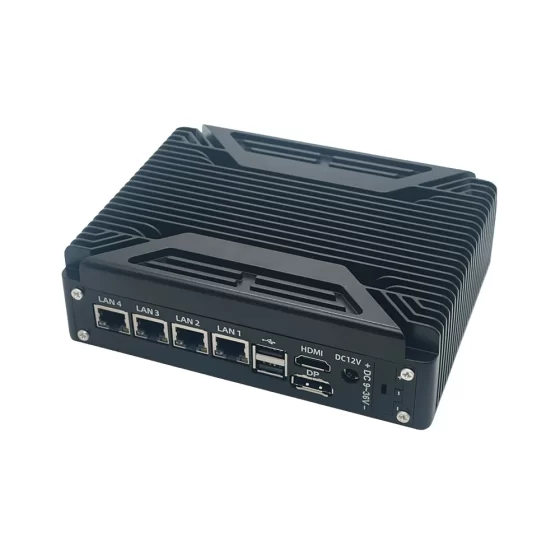
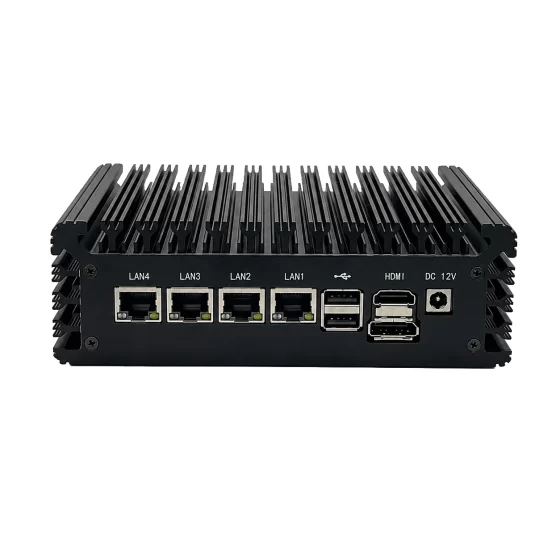
CoreIPC Industrial Computing-Lösungen

Edge-KI-Plattform für intelligente Fertigung
Zusammenfassung
Die Fertigungsindustrie durchläuft derzeit einen bedeutenden digitalen Wandel, der von der Industrie vorangetrieben wird 4.0 Initiativen, Industrielles Internet der Dinge (IIoT) Annahme, Bildverarbeitungssysteme, Industrielle Automatisierung, und Technologien der künstlichen Intelligenz. Moderne Fertigungsanlagen erzeugen enorme Mengen an Betriebsdaten von Maschinen, Sensoren, Roboter, Produktionslinien, und Qualitätskontrollsysteme. Das Extrahieren umsetzbarer Erkenntnisse aus diesen Daten in Echtzeit ist für die Verbesserung der Produktivität unerlässlich geworden, Qualität, Effizienz, und Wettbewerbsfähigkeit.
Ein Edge-KI-Plattform für intelligente Fertigung stellt die erforderliche Computerinfrastruktur bereit, um Fertigungsdaten direkt an der Quelle zu verarbeiten und zu analysieren. Im Gegensatz zu herkömmlichen Cloud-zentrierten Architekturen, Edge-KI-Plattformen führen künstliche Intelligenz-Inferenzen und -Analysen in der Nähe von Industrieanlagen durch, enabling real-time decision-making with minimal latency. This capability is critical for applications such as machine vision inspection, vorausschauende Wartung, Robotiksteuerung, Prozessoptimierung, and intelligent quality assurance.
Industrial computers and embedded computers serve as the foundation of edge AI deployments in manufacturing environments. These rugged platforms combine industrial reliability with advanced computing performance, enabling factories to deploy AI-powered applications in demanding industrial conditions. By supporting local data processing, Edge-Analyse, and AI inference, edge AI platforms help manufacturers reduce downtime, Verbesserung der Produktionseffizienz, enhance product quality, and accelerate digital transformation initiatives.
As smart factories continue to evolve, edge AI platforms are becoming key technologies that enable intelligent manufacturing operations, autonomous decision-making, and scalable industrial innovation.
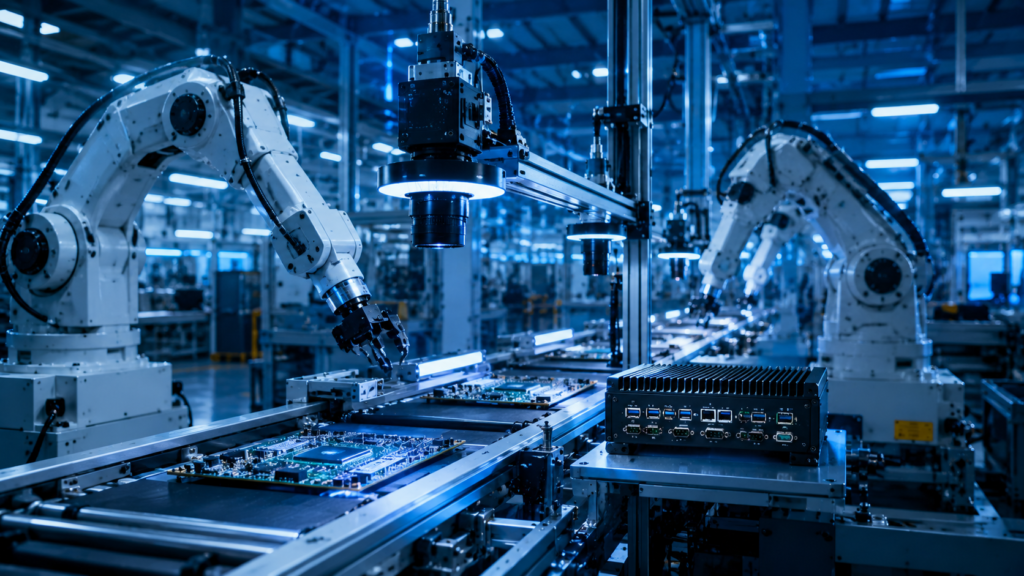
Edge AI platforms enable real-time machine vision inspection, Intelligente Automatisierung, and industrial analytics in smart factories.
Branchenüberblick
Manufacturing organizations face increasing pressure to improve operational efficiency, Produktqualität, equipment utilization, and production flexibility while reducing costs and minimizing downtime.
To achieve these objectives, manufacturers are investing in technologies such as:
- Industrial automation
- Bildverarbeitungssysteme
- Industrierobotik
- Industrielles IoT
- Vorausschauende Wartung
- Digitale Zwillinge
- Smart sensors
- KI-gestützte Analyse
- Edge-Computing
- Intelligente Qualitätskontrolle
Modern production environments generate data from numerous sources, einschließlich:
- Industriekameras
- SPS-Steuerungen
- Industrielle Sensoren
- Roboter
- CNC-Maschinen
- Automated production lines
- Umweltüberwachungssysteme
- Qualitätsprüfgeräte
Traditionell, Ein Großteil dieser Daten wurde zur Analyse an zentrale Server oder Cloud-Plattformen übertragen. Jedoch, Dieser Ansatz bringt Herausforderungen im Zusammenhang mit der Latenz mit sich, Bandbreitenverbrauch, Netzwerkabhängigkeit, und Skalierbarkeit.
Edge-KI-Plattformen begegnen diesen Herausforderungen, indem sie lokale Verarbeitung und intelligente Entscheidungsfindung direkt in Fertigungsumgebungen ermöglichen.
Zu den gängigen Smart Manufacturing-Anwendungen gehören::
- Automatisierte optische Inspektion (AOI)
- Erkennung von Oberflächenfehlern
- Bildverarbeitungsinspektion
- Vorausschauende Wartung
- Produktionsüberwachung
- Robotik-Anleitung
- Prozessoptimierung
- Energiemanagement
- Sicherheitsüberwachung
- Autonome Fertigungssysteme
Industriecomputer, die als Edge-KI-Plattformen eingesetzt werden, bieten die erforderliche Leistung und Zuverlässigkeit, um diese Arbeitslasten zu unterstützen und gleichzeitig in rauen Fabrikumgebungen kontinuierlich zu arbeiten.
As manufacturers continue implementing Industry 4.0 Strategien, edge AI platforms are expected to play an increasingly important role in intelligent production systems.
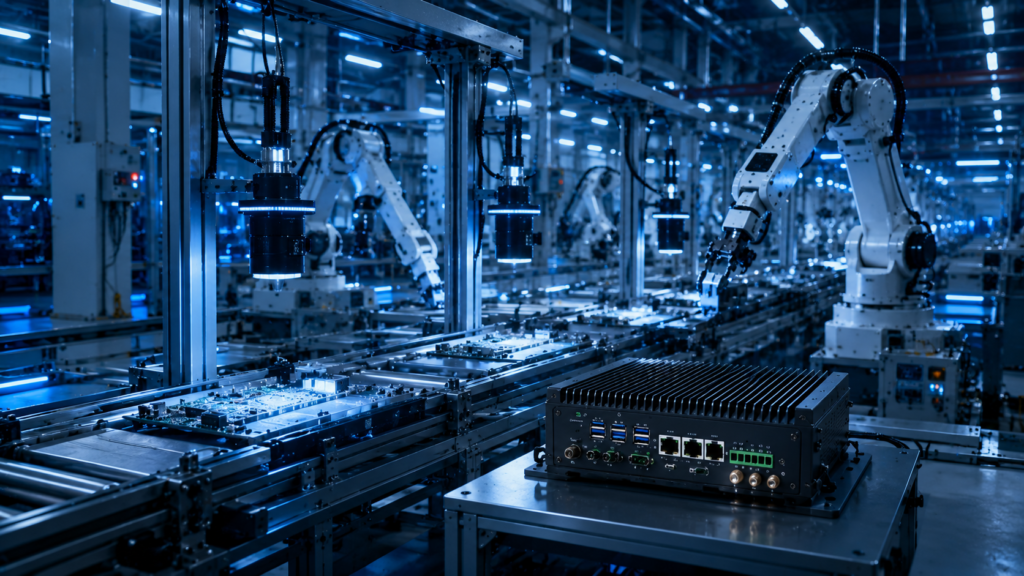
Edge AI platforms process machine vision data and industrial sensor information in real time to support intelligent manufacturing operatio
Wichtigste Herausforderungen
Managing Large Volumes of Industrial Data
Modern manufacturing facilities generate significant amounts of operational data.
Sources include:
- Bildverarbeitungskameras
- Industrielle Sensoren
- Produktionsausrüstung
- Robotiksysteme
- SPS-Netzwerke
- Quality control systems
Processing this information efficiently is critical for maintaining production performance.
Achieving Real-Time Decision Making
Many manufacturing applications require immediate responses.
Beispiele hierfür sind:
- Fehlererkennung
- Robotik-Anleitung
- Geräteüberwachung
- Process control
- Sicherheitssysteme
Cloud-based processing may introduce delays that affect operational performance.
Edge AI platforms reduce latency by processing data locally.
Maintaining Product Quality
Manufacturers must identify defects quickly to prevent quality issues from impacting production output.
Zu den Herausforderungen gehören:
- High production speeds
- Complex products
- Increasing quality standards
- Limited inspection windows
AI-powered inspection systems help improve quality assurance capabilities.
Minimizing Equipment Downtime
Unexpected equipment failures can result in:
- Production interruptions
- Increased maintenance costs
- Lost revenue
- Reduced productivity
Manufacturers increasingly rely on predictive maintenance technologies to identify potential issues before failures occur.
Deploying AI in Industrial Environments
Factory environments expose computing systems to:
- Staub
- Vibration
- Temperaturschwankungen
- Elektrisches Rauschen
- Continuous operation requirements
Industrial computing platforms must support AI workloads while maintaining reliability.
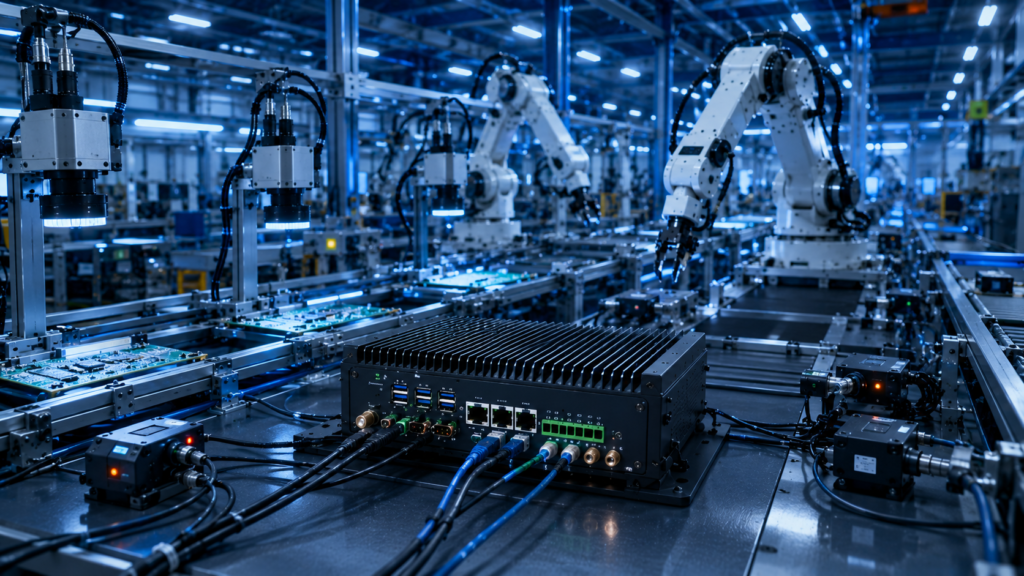
Edge AI platforms connect machine vision systems, Industriesensoren, and robotics equipment for real-time manufacturing intelligence.
Lösungsarchitektur
A typical Edge AI Platform for Smart Manufacturing consists of multiple interconnected layers.
Schicht 1: Datenerfassungsschicht
Diese Ebene umfasst:
- Industriekameras
- Sensoren
- SPS-Steuerungen
- Robotiksysteme
- Produktionsausrüstung
- Environmental monitoring devices
Diese Geräte erzeugen Betriebsdaten.
Schicht 2: Konnektivitätsschicht
Industrial communication infrastructure may include:
- Industrielles Ethernet
- Gigabit-Ethernet
- Fieldbus networks
- Industrielle IoT-Gateways
- Drahtlose Kommunikation
This layer enables data exchange across the factory environment.
Schicht 3: Edge AI Computing-Schicht
The industrial computer serves as the edge AI platform.
Zu den wichtigsten Funktionen gehören:
- KI-Schlussfolgerung
- Verarbeitung maschineller Bildverarbeitung
- Edge-Analyse
- Datenaggregation
- Ereignisverarbeitung
- Protokollkonvertierung
- Lokaler Speicher
This layer provides real-time intelligence at the edge.
Schicht 4: Anwendungsschicht
Bewerbungen können Folgendes umfassen::
- Bildverarbeitungssysteme
- Predictive maintenance software
- Robotics control systems
- Produktionsanalytik
- Quality inspection platforms
- Fertigungsausführungssysteme
These applications leverage edge AI capabilities to improve operations.
Schicht 5: Unternehmensintegrationsschicht
Unternehmenskonnektivität ermöglicht die Integration mit:
- MES-Plattformen
- ERP-Systeme
- Cloud-Analyse
- Meldesysteme
- Business-Intelligence-Plattformen
This layer transforms operational data into actionable business insights.
Hauptmerkmale
Zuverlässigkeit auf Industrieniveau
Manufacturing systems operate continuously.
Industriecomputer bieten:
- Robuste Konstruktion
- Komponenten in Industriequalität
- Langfristige Zuverlässigkeit
- Kontinuierliche Betriebsunterstützung
- Erweiterte Lebenszyklusverfügbarkeit
These characteristics improve system uptime.
Edge-KI-Verarbeitung
Edge AI platforms support local execution of AI models.
Zu den Anwendungen gehören:
- Objekterkennung
- Fehlererkennung
- Bildklassifizierung
- Prädiktive Analysen
- Anomalieerkennung
Local processing enables real-time decision-making.
Hochleistungsrechnen
Smart manufacturing applications often require significant processing resources.
Industrial AI platforms may support:
- Mehrkernprozessoren
- GPU-Beschleunigung
- KI-Beschleuniger
- Hochgeschwindigkeitsspeicher
- Schnelle Speichersysteme
Diese Funktionen unterstützen anspruchsvolle KI-Workloads.
Integration maschineller Bildverarbeitung
Bildverarbeitungssysteme spielen in vielen Fertigungsanwendungen eine zentrale Rolle.
Unterstützung für Industriecomputer:
- Hochauflösende Kameras
- Bildbearbeitung
- Echtzeitanalysen
- Automatisierte Inspektion
Dies ermöglicht eine intelligente Qualitätskontrolle.
Umfangreiche industrielle Konnektivität
Industrielle Umgebungen erfordern umfassende Konnektivität.
Zu den gängigen Schnittstellen gehören:
- Ethernet
- USB
- RS232
- RS485
- CAN-Bus
- Digitale I/O
Diese Schnittstellen unterstützen die Integration mit Fertigungsanlagen.
Lüfterloses Design
Viele industrielle KI-Plattformen nutzen lüfterlose Architekturen.
Zu den Vorteilen gehören::
- Verbesserte Zuverlässigkeit
- Reduzierter Wartungsaufwand
- Staubbeständigkeit
- Leiser Betrieb
Lüfterlose Systeme eignen sich ideal für den Werkseinsatz.
Langer Produktlebenszyklus
Fertigungsanlagen bleiben oft über viele Jahre hinweg betriebsbereit.
Industrielle Plattformen bieten:
- Langfristige Verfügbarkeit
- Stabile Hardwarekonfigurationen
- Erweiterte Supportprogramme
Diese Eigenschaften vereinfachen das Lebenszyklusmanagement.
Bereitstellungsszenarien
Bildverarbeitungsinspektion
Unterstützung für Edge-KI-Plattformen:
- Erkennung von Oberflächenfehlern
- Maßprüfung
- Überprüfung der Montage
- Produktidentifikation
Real-time AI processing improves inspection accuracy and efficiency.
Vorausschauende Wartung
Industrial computers analyze equipment data to identify:
- Abnormal behavior
- Performance degradation
- Wartungsanforderungen
- Potential failures
Predictive maintenance helps reduce downtime.
Robotics and Automation
AI-enabled industrial computers support:
- Robotik-Anleitung
- Bewegungssteuerung
- Objekterkennung
- Autonomer Betrieb
These capabilities improve production flexibility.
Intelligent Quality Control
Manufacturers deploy edge AI platforms to automate quality assurance processes.
Zu den Anwendungen gehören:
- Product inspection
- Fehlerklassifizierung
- Prozessüberwachung
- Compliance-Überprüfung
This improves consistency and product quality.
Production Monitoring
Edge AI platforms provide real-time visibility into:
- Production performance
- Gerätenutzung
- Prozesseffizienz
- Operational trends
This information supports continuous improvement initiatives.
Industrial Safety Monitoring
AI-powered systems can monitor:
- Personnel safety
- Restricted zones
- Equipment operation
- Workplace compliance
These capabilities help improve workplace safety.
Geschäftsvorteile
Verbesserte Produktqualität
AI-powered inspection systems identify defects more accurately and consistently than manual inspection methods.
Erhöhte Produktionseffizienz
Real-time analytics enable manufacturers to optimize operations and improve throughput.
Reduzierte Ausfallzeiten
Predictive maintenance capabilities help prevent unexpected equipment failures.
Lower Operational Costs
Automation and intelligent analytics reduce labor requirements and improve resource utilization.
Faster Decision Making
Edge processing enables immediate responses to operational events.
Enhanced Manufacturing Flexibility
AI-enabled systems adapt more easily to changing production requirements.
Unterstützung für die Industrie 4.0 Initiativen
Edge AI platforms provide a foundation for digital transformation and smart manufacturing strategies.
Warum CoreIPC
CoreIPC provides industrial computing platforms designed for Edge AI, maschinelles Sehen, Industrielle Automatisierung, Robotik, and smart manufacturing applications. Unsere Industriecomputer und Embedded Computer vereinen Zuverlässigkeit auf Industrieniveau, Hochleistungsverarbeitung, flexible I/O-Konnektivität, and long lifecycle availability to support demanding AI workloads in factory environments. Mit OEM/ODM-Anpassungsfunktionen und umfassender Erfahrung im Embedded Computing, CoreIPC helps manufacturers deploy scalable edge AI solutions that improve efficiency, Qualität, and operational intelligence.
Häufig gestellte Fragen
1. What is an Edge AI Platform for Smart Manufacturing?
An Edge AI Platform is a computing system that performs artificial intelligence processing directly within manufacturing environments, enabling real-time analytics and decision-making close to industrial equipment.
2. Why is edge AI important in manufacturing?
Edge AI reduces latency, minimizes bandwidth requirements, verbessert die Zuverlässigkeit, and enables real-time responses to manufacturing events.
3. What applications use edge AI in factories?
Common applications include machine vision inspection, vorausschauende Wartung, robotics guidance, Qualitätskontrolle, Sicherheitsüberwachung, and production analytics.
4. Why are industrial computers used for edge AI?
Industrial computers provide rugged reliability, Industrielle Konnektivität, Unterstützung für einen langen Lebenszyklus, and the performance required for AI workloads.
5. Can edge AI platforms support machine vision systems?
Ja. Many edge AI platforms are specifically designed to process high-resolution camera data for inspection and quality control applications.
6. What hardware is commonly used for edge AI?
Plattformen können Multi-Core-CPUs umfassen, GPUs, KI-Beschleuniger, Hochgeschwindigkeitsspeicher, und Speichersysteme in Industriequalität.
7. Wie verbessert Edge AI die Qualitätskontrolle??
KI-Modelle können Fehler automatisch erkennen, Anomalien klassifizieren, und führen Sie Inspektionen in Echtzeit mit hoher Genauigkeit durch.
8. Kann Edge-KI die Ausfallzeiten von Geräten reduzieren?
Ja. Anwendungen zur vorausschauenden Wartung analysieren Betriebsdaten, um potenzielle Probleme zu erkennen, bevor es zu Ausfällen kommt.
9. Welche Branchen nutzen Edge-KI-Fertigungsplattformen??
Zu den Branchen gehört die Elektronikfertigung, Automobilproduktion, Lebensmittelverarbeitung, Arzneimittel, Logistik, und industrielle Automatisierung.
10. Was sollte bei der Auswahl einer Edge-KI-Plattform beachtet werden??
Wichtige Überlegungen umfassen die Verarbeitungsleistung, KI-Fähigkeiten, Konnektivität, Umweltspezifikationen, Lebenszyklusunterstützung, und Anwendungskompatibilität.
Abschluss
Ein Edge-KI-Plattform für intelligente Fertigung stellt die für den intelligenten Fabrikbetrieb erforderliche Rechengrundlage bereit. Durch die Aktivierung von Echtzeitanalysen, Bildverarbeitungsinspektion, vorausschauende Wartung, Robotiksteuerung, und automatisierte Entscheidungsfindung, edge AI platforms help manufacturers improve efficiency, Qualität, Zuverlässigkeit, und Wettbewerbsfähigkeit. Als Industrie 4.0 Initiativen nehmen weiter zu, industrial computers and embedded computers will remain essential technologies supporting the future of smart manufacturing.
Kontaktieren Sie uns
Looking for a reliable Edge AI Platform for Smart Manufacturing applications?
CoreIPC bietet Industriecomputer an, eingebettete Computer, Industrie-Motherboards, und maßgeschneiderte Computerlösungen für die maschinelle Bildverarbeitung, Industrielle Automatisierung, Robotik, vorausschauende Wartung, and intelligent manufacturing deployments.
Contact our engineering team today to discuss your project requirements and discover the ideal edge AI computing platform for your application.