CoreIPC Industrial Computing-Lösungen

Eingebetteter GPU-Computer: Industrielle Computerplattform für KI, Vision, und Kantenbeschleunigung
Zusammenfassung
Ein eingebetteter GPU-Computer ist eine industrielle Computerplattform zur Verarbeitung von Grafiken, Vision, KI-Schlussfolgerung, und parallele Computing-Workloads am Edge. Es kombiniert den kompakten Formfaktor eines eingebetteten Computers mit GPU-Beschleunigung für Anwendungen, die eine schnellere Bildverarbeitung erfordern, Deep-Learning-Inferenz, Videoanalyse, 3D Datenverarbeitung, oder Multi-Display-Visualisierung.
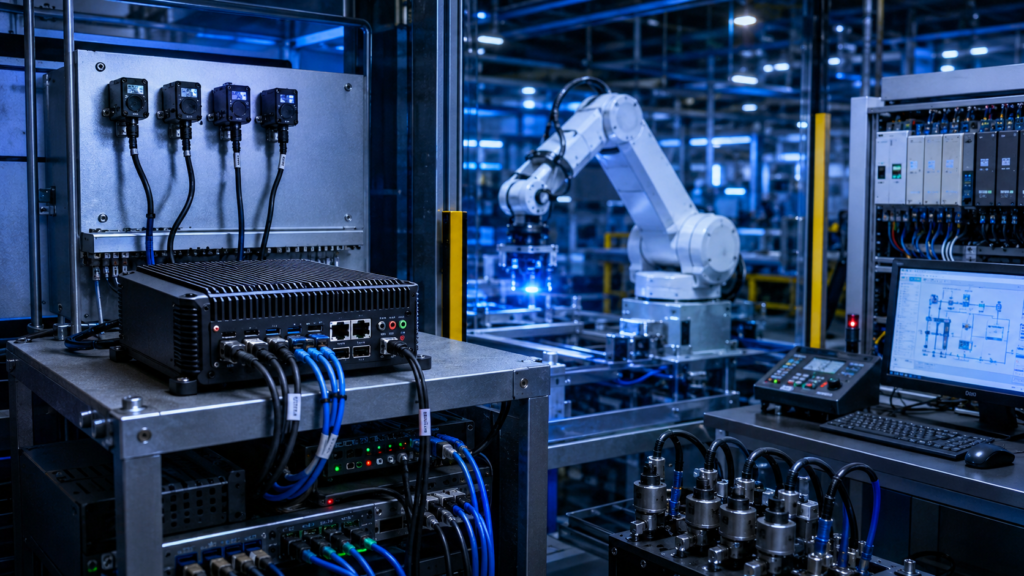
In industriellen Umgebungen, Ein Computer mit eingebetteter GPU wird häufig in der Nähe von Maschinen installiert, Kameras, Roboter, Fahrzeuge, Inspektionsstationen, oder Automatisierungsgeräte. Dadurch können Daten lokal verarbeitet werden, anstatt jedes Bild zu senden, Videostream, oder Sensorsignal an einen Remote-Server.
Für Systemintegratoren und OEMs, Diese Architektur kann die Latenz reduzieren, geringere Netzwerklast, Verbesserung der lokalen Entscheidungsfindung, und unterstützen flexiblere industrielle Automatisierungssysteme.
Ein geeigneter Industriecomputer für eingebettete GPU-Anwendungen sollte vorhanden sein:
- GPU-Beschleunigung für KI-Inferenz und visuelles Computing
- Zuverlässige CPU, Erinnerung, und Speicherleistung
- Stabile Kamera, Sensor, und Netzwerkkonnektivität
- Kompaktes und robustes mechanisches Design
- Lüfterlose oder optimierte thermische Architektur
- Langfristige Verfügbarkeit für Maschinen- und Anlagenintegration
- Flexible I/O für industrielle Steuerung und Edge-Bereitstellung
CoreIPC bietet Industriecomputer- und eingebettete Computerplattformen für die maschinelle Bildverarbeitung, Kanten-KI, Robotik, intelligenter Transport, Automatisierung, und OEM-Hardware-Integration. Für GPU-basierte Workloads, Die richtige Hardwareplattform hilft dabei, visuelle und sensorische Daten in praktische Echtzeitentscheidungen umzuwandeln.
 Branchenüberblick
Industrial Computing entwickelt sich von zentraler Verarbeitung hin zu verteilter Edge-Intelligenz. In vielen Anwendungen, Kameras, Sensoren, Und Maschinen erzeugen große Datenmengen, die schnell und zuverlässig analysiert werden müssen.
Das Senden aller Daten an einen Cloud-Server oder ein zentrales Rechenzentrum ist nicht immer praktikabel. Die Netzwerkbandbreite ist möglicherweise begrenzt. Die Latenz ist möglicherweise zu hoch. Datenschutz kann ein Problem sein. Einige Systeme müssen den Betrieb auch dann fortsetzen, wenn die externe Verbindung instabil ist.
Hier wird ein Computer mit eingebetteter GPU wertvoll.
Im Gegensatz zu einem standardmäßigen eingebetteten Computer, der hauptsächlich auf die CPU-Verarbeitung angewiesen ist, Ein eingebettetes GPU-System kann Arbeitslasten beschleunigen, die parallele Berechnungen erfordern. Dies ist besonders nützlich für die Bildanalyse, Videoverarbeitung, KI-Schlussfolgerung, 3D-Vision, Objekterkennung, und Multikamera-Inspektion.
Zu den gängigen Anwendungsgebieten gehören::
- Bildverarbeitungsinspektion
- Edge-KI-Inferenz
- Roboterwahrnehmung
- Autonome mobile Roboter
- Intelligente Transportsysteme
- Medizinische Bildgebungsgeräte
- Sicherheits- und Überwachungsanalysen
- Automatisierte optische Inspektion
- Intelligente Fertigung
- Industrielle Visualisierung mit mehreren Displays
In diesen Anwendungen, Die GPU wird nicht nur für die Anzeigeausgabe verwendet. Es wird zu einer Rechenmaschine, die dabei hilft, komplexe visuelle und sensorische Daten näher an der Quelle zu verarbeiten.
Für den industriellen Einsatz, Jedoch, GPU-Leistung allein reicht nicht aus. Die Plattform muss außerdem zuverlässig sein, kompakt, brauchbar, thermisch stabil, und kompatibel mit den Anforderungen der industriellen Kommunikation.
Aus diesem Grund erfordern eingebettete GPU-Systeme eine sorgfältige Hardwareauswahl. Die beste Plattform ist nicht immer das leistungsstärkste System. Es ist der Computer, der zur Arbeitsbelastung passt, Installationsumgebung, Software-Stack, Strombudget, und langfristigen Einsatzplan.
 Wichtigste Herausforderungen
Der Einsatz eingebetteter GPUs bringt sowohl Herausforderungen für die Datenverarbeitung als auch für die industrielle Integration mit sich. Ein erfolgreiches Projekt muss die Leistung ausbalancieren, thermisches Design, E/A, Softwarekompatibilität, und langfristige Zuverlässigkeit.
| Herausforderung | Was passiert bei der realen Bereitstellung? | Hardware-Anforderung |
|---|---|---|
| KI- und Vision-Arbeitsbelastung | Kameras und Sensoren erzeugen große Datenströme, die eine schnelle Verarbeitung erfordern. | GPU-Beschleunigung, ausreichend CPU-Ressourcen, Speicherbandbreite, und stabile Lagerung. |
| Thermischer Druck | GPUs können mehr Wärme erzeugen als standardmäßige eingebettete Plattformen. | Effizientes thermisches Design, robustes Gehäuse, und passende Installationsplanung. |
| Kamerakonnektivität | Vision-Systeme können USB3 verwenden, Hacken, MIPI, GMSL, oder Framegrabber-Schnittstellen. | Hochgeschwindigkeits-I/O, stabile Bandbreite, und Erweiterungsfähigkeit. |
| Edge-Umgebung | Systeme können in der Nähe von Maschinen betrieben werden, Fahrzeuge, Roboter, oder Outdoor-Ausrüstung. | Industrietaugliches Design, Vibrationsfestigkeit, und zuverlässige Stromaufnahme. |
| Software-Stack | KI-Frameworks, GPU-Treiber, Vision-Bibliotheken, und Betriebssysteme müssen zusammenarbeiten. | Verifizierte Betriebssystemunterstützung, Stabilität des Fahrers, und langfristige Software-Image-Kontrolle. |
| Lebenszyklusmanagement | OEM- und Industrieprojekte laufen oft über Jahre. | Stabile Plattformversorgung, konsistentes I/O-Layout, und Dokumentationsunterstützung. |
Die GPU-Leistung ist nur ein Teil des Systems
Viele Projekte konzentrieren sich zunächst auf GPU-Spezifikationen. Das ist verständlich, aber es ist nicht genug.
Ein stabiler Embedded-GPU-Computer benötigt auch die richtige CPU, Erinnerung, Lagerung, Leistungsaufnahme, Kühldesign, und I/O-Schnittstellen. Wenn die Kameraschnittstelle instabil ist, Die GPU kann keine zuverlässigen Daten verarbeiten. Wenn das thermische Design schwach ist, Die Leistung kann inkonsistent werden. Wenn sich der Softwaretreiber-Stack unerwartet ändert, Eine langfristige Bereitstellung wird schwierig.
Industrielle Umgebungen schaffen echte Einschränkungen
Eingebettete GPU-Systeme können in Maschinen installiert werden, mobile Roboter, Straßenschränke, Inspektionsstationen, oder Industriegehäuse. In diesen Räumen kann es zu einer eingeschränkten Luftzirkulation und strengen Leistungsgrenzen kommen.
Im Vergleich zu Standard-Büro-GPU-Computern, Industrielle GPU-Plattformen müssen für kontinuierlichen Betrieb und vorhersehbare Wartung ausgelegt sein.
Edge AI erfordert einen stabilen Datenfluss
Die KI-Inferenz hängt von sauberen und konsistenten Eingabedaten ab. Ein Bildverarbeitungssystem kann mehrere Kameras umfassen, Beleuchtungssteuerungen, Sensoren, Encoder, und Triggersignale.
Der eingebettete GPU-Computer muss diese Daten zuverlässig erfassen, es schnell verarbeiten, und Ergebnisse an SPS zurückgeben, Roboter, HMIs, oder Fabriksysteme.
 Lösungsarchitektur für einen Computer mit eingebetteter GPU
Ein eingebetteter GPU-Computer wird normalerweise als Edge-Beschleunigungsknoten eingesetzt. Es verbindet Feldgeräte, führt lokale Berechnungen durch, und kommuniziert Ergebnisse an Automatisierungs- oder Unternehmenssysteme.
1. Datenerfassungsschicht
Diese Schicht sammelt Eingabedaten aus der physischen Umgebung.
Zu den typischen Geräten gehören::
- Industriekameras
- 3D-Tiefenkameras
- Zeilenkameras
- LiDAR-Sensoren
- Wärmebildkameras
- Barcode-Lesegeräte
- Encoder
- Bewegungssensoren
- Umweltsensoren
- Maschinensignale
Die Datenerfassungsschicht muss stabil sein, da schlechte Eingabedaten den Wert der GPU-Beschleunigung verringern. Kamerabandbreite, Beleuchtung, Trigger-Timing, und Sensorsynchronisation sollten beim Systemdesign berücksichtigt werden.
2. Edge-GPU-Computing-Schicht
Hier arbeitet der eingebettete GPU-Computer.
Die Plattform kann ausgeführt werden:
- KI-Inferenzmodelle
- Bildverarbeitungssoftware
- Videoanalyseanwendungen
- 3D Rekonstruktionswerkzeuge
- Sensorfusionsalgorithmen
- Bildvorverarbeitungspipelines
- Objekterkennungssysteme
- Lokale Datenbanken
- HMI-Software
- Fernwartungstools
Die GPU beschleunigt parallele Rechenaufgaben, während die CPU die Systemlogik verwaltet, Gerätekommunikation, Anwendungskontrolle, und Datenmanagement.
3. Industrielle Kontrollschicht
In industriellen Anwendungen, Der Computer funktioniert selten alleine.
Es kann mit kommunizieren:
- SPS
- Robotersteuerungen
- Motion-Controller
- I/O-Module
- Sicherheitssysteme
- Fördersysteme
- Maschinensteuerungen
- Industrielle Gateways
Der eingebettete GPU-Computer sendet möglicherweise Ergebnisse wie die Objektposition, Fehlerstatus, Klassifizierungsdaten, Alarmereignisse, Messwerte, oder Bewegungsanweisungen.
4. Netzwerk- und Systemintegrationsschicht
Die Plattform kann sich mit übergeordneten Systemen verbinden, einschließlich:
- MES-Plattformen
- SCADA-Systeme
- WMS-Systeme
- Qualitätsdatenbanken
- Cloud-Überwachungsplattformen
- Wartungs-Dashboards
- Fabriknetzwerke
Dadurch können Randergebnisse die Rückverfolgbarkeit der Produktion unterstützen, Qualitätsverbesserung, Ferndiagnose, und Prozessoptimierung.
5. Wartungs- und Lebenszyklusschicht
Eine langfristige Bereitstellung erfordert mehr als die anfängliche Leistung.
Ingenieure müssen Software-Images verwalten, GPU-Treiber, Betriebssystem-Updates, Protokolle, Modellversionen, Ersatzteile, und Austauschverfahren.
Eine konsistente eingebettete Computerplattform trägt dazu bei, die Wartungskomplexität über mehrere Maschinen oder Einsatzorte hinweg zu reduzieren.
Hauptmerkmale
Je nach Art der Arbeitslast sollte ein zuverlässiger Computer mit eingebetteter GPU ausgewählt werden, Umgebungsbedingungen, E/A-Anforderungen, Softwarekompatibilität, und Lebenszykluserwartungen.
GPU-Beschleunigung
Die GPU ist das Kernmerkmal der Plattform. Es hilft, Arbeitslasten zu beschleunigen, z:
- KI-Schlussfolgerung
- Objekterkennung
- Bildklassifizierung
- Videoanalyse
- 3D-Vision-Verarbeitung
- Punktwolkenanalyse
- Bildverarbeitung mit mehreren Kameras
- Grafische Visualisierung
Die erforderliche GPU-Stufe hängt von der Modellgröße ab, Anzahl der Kameras, Auflösung, Bildrate, und Latenzziel.
Ausgewogene CPU und Speicher
Die GPU ersetzt nicht die CPU. Die CPU übernimmt weiterhin die Systemsteuerung, Kommunikation, Terminplanung, Betriebssystemaufgaben, und Anwendungslogik.
Auch Speicherkapazität und Bandbreite spielen eine Rolle. KI- und Bildverarbeitungsanwendungen benötigen möglicherweise genügend RAM, um Bildpuffer zu verarbeiten, Modelldateien, temporäre Daten, und parallele Verarbeitungsabläufe.
Hochgeschwindigkeitskameraschnittstellen
Viele eingebettete GPU-Anwendungen sind auf Kameras angewiesen.
Gängige Kameraschnittstellen können Folgendes umfassen::
- USB3-Vision
- GigE-Vision
- PoE-Kameranetzwerke
- MIPI-Kameramodule
- GMSL-Kameralinks
- Framegrabber-Erweiterung
- HDMI- oder SDI-Erfassung über Zusatzmodule
Die Plattform sollte ausreichend Bandbreite und stabile Treiberunterstützung für die ausgewählte Kameraarchitektur bieten.
Multi-LAN-Konnektivität
Zur Trennung des Datenverkehrs sind mehrere LAN-Ports sinnvoll.
Ein LAN-Port kann mit Kameras verbunden werden. Ein anderer kann eine Verbindung zu SPS oder Robotern herstellen. Ein Dritter kann sich möglicherweise mit dem Fabriknetzwerk verbinden, Fernwartungssystem, oder Cloud-Gateway.
Dies trägt dazu bei, Verkehrskonflikte zu reduzieren und die Fehlerbehebung zu verbessern.
Industrielle I/O-Unterstützung
Computer mit eingebetteter GPU, die in der Automatisierung eingesetzt werden, erfordern möglicherweise mehr als nur Kamera- und Netzwerkanschlüsse.
Nützliche Schnittstellen können sein:
- RS-232
- RS-485
- DÜRFEN
- USB
- Digitale I/O
- GPIO
- Audio-E/A
- Ausgänge anzeigen
- Erweiterungsheader
Native industrielle I/O reduzieren die Abhängigkeit von externen Adaptern und tragen zur Vereinfachung der Schaltschrank- oder Geräteintegration bei.
Thermisches Design
GPU-Arbeitslasten können die Wärmeabgabe erhöhen. Daher ist das thermische Design von entscheidender Bedeutung.
Je nach Leistungsniveau, Systeme können passive Kühlung verwenden, Lüfterloses Kühlkörperdesign, kontrollierter Luftstrom, oder robuste aktive Kühlung. Der richtige Ansatz hängt vom Stromverbrauch ab, Gehäusedesign, Umgebungstemperatur, und Montageort.
Für Industrieprojekte, Vorhersehbares thermisches Verhalten ist wichtiger als Spitzenleistung.
Zuverlässige Lagerung
Eingebettete GPU-Systeme können speichern:
- KI-Modelldateien
- Bildaufzeichnungen
- Videoclips
- Inspektionsprotokolle
- Ereignisdaten
- Kalibrierungsdateien
- Anwendungssoftware
- Lokale Datenbanken
Industrielle SSDs, M.2 NVMe-Speicher, oder SATA-Speicher kann je nach Datenvolumen ausgewählt werden, Schreibhäufigkeit, Temperaturbedingungen, und Aufbewahrungspflichten.
Erweiterungsfähigkeit
Viele GPU-basierte Systeme erfordern eine Anpassung.
Für zusätzliche Kameraschnittstellen ist möglicherweise eine Erweiterung erforderlich, Funkmodule, Lagerung, CAN-Kommunikation, serielle Schnittstellen, I/O-Boards, oder dedizierte Beschleunigungsmodule.
M.2, Mini-PCIe, PCIe, und das benutzerdefinierte Embedded-Board-Design kann Systemintegratoren dabei helfen, eine Plattform an mehrere Anwendungstypen anzupassen.
Betriebssystem- und Softwarekompatibilität
Ein Computer mit eingebetteter GPU muss die ausgewählte Softwareumgebung unterstützen.
Dies kann Folgendes umfassen::
- Windows
- Linux
- GPU-Treiber
- KI-Frameworks
- Vision-Bibliotheken
- Kamera-SDKs
- Roboter-SDKs
- Industrielle Kommunikationswerkzeuge
- Containerisierte Bereitstellungsumgebungen
Vor dem Masseneinsatz, Integratoren sollten die Treiberstabilität überprüfen, Framework-Kompatibilität, Aktualisierungsrichtlinien für das Betriebssystem, und langfristige Software-Image-Kontrolle.
Bereitstellungsszenarien
Computer mit eingebetteter GPU können in vielen Industrie- und Edge-Computing-Umgebungen eingesetzt werden, in denen lokale Beschleunigung erforderlich ist.
Bildverarbeitungsinspektion
In automatisierten Inspektionssystemen, Kameras erfassen Bilder von Produkten, Oberflächen, Etiketten, Komponenten, oder Versammlungen.
Der eingebettete GPU-Computer kann Bilder lokal verarbeiten, um Fehler zu erkennen, Objekte klassifizieren, Codes lesen, Maße messen, oder Montagebedingungen prüfen. Die GPU-Beschleunigung ist bei der Bildauflösung nützlich, Bildrate, oder die Komplexität des Algorithmus ist hoch.
Edge-KI-Inferenz
KI-Modelle werden zunehmend zur industriellen Erkennung eingesetzt, Einstufung, Vorhersage, und Anomalieerkennung.
Ein eingebetteter GPU-Computer ermöglicht die Ausführung von KI-Inferenzen nahe der Produktionslinie, Maschine, Fahrzeug, oder Sensor. Dies trägt dazu bei, die Netzwerkabhängigkeit zu verringern und ermöglicht eine schnellere lokale Entscheidungsfindung.
Robotik und autonome Maschinen
Roboter und autonome Maschinen benötigen häufig Wahrnehmungssysteme.
Der GPU-Computer kann Daten von Kameras verarbeiten, Tiefensensoren, LiDAR, oder andere Sensoren. Es kann die Objekterkennung unterstützen, Navigationsunterstützung, Auswahlberatung, Hinderniserkennung, und Sensorfusion.
Intelligenter Transport
Transportsysteme können eingebettete GPU-Computer für die Wahrnehmung am Straßenrand nutzen, Verkehrsüberwachung, Fahrzeugerkennung, Kennzeichenerkennung, Tunnelüberwachung, oder Bahnsteiganalysen.
Diese Anwendungen erfordern häufig eine Verarbeitung mit mehreren Kameras und einen robusten Einsatz vor Ort.
Medizinische und Laborgeräte
Einige medizinische und Laborsysteme erfordern eine Bildverarbeitung, Multi-Display-Visualisierung, oder KI-gestützte Analyse.
Eine eingebettete GPU-Plattform kann lokalisiertes Computing in Diagnosegeräten unterstützen, Laborautomatisierungsgeräte, oder medizinische Bildgebungsunterstützungssysteme. Bei der Hardwareauswahl sollten behördliche Projektanforderungen und die langfristige Lieferplanung berücksichtigt werden.
Sicherheit und Videoanalyse
Videoanalysesysteme müssen möglicherweise mehrere Kamerastreams lokal verarbeiten.
Der eingebettete GPU-Computer kann die Bewegungserkennung unterstützen, Objektklassifizierung, Perimeterüberwachung, Verhaltensanalyse, und Ereignisfilterung, bevor ausgewählte Daten an eine zentrale Plattform gesendet werden.
Geschäftsvorteile
Ein geeigneter Embedded-GPU-Computer kann OEMs helfen, Systemintegratoren, und Industrieanwender bauen leistungsfähigere und wartbarere Edge-Systeme.
Geringere Latenz
Die lokale GPU-Verarbeitung reduziert die Notwendigkeit, Rohdaten an einen Remote-Server zu senden. Dadurch können Anwendungen schneller auf visuelle Elemente reagieren, Sensor, oder Maschinenereignisse.
Reduzierte Netzwerklast
Video, Bild, und Sensordaten können lokal verarbeitet werden. Nur Ergebnisse, Alarm, oder ausgewählte Datensätze müssen an übergeordnete Systeme übermittelt werden.
Bessere Systemautonomie
Edge-GPU-Computing ermöglicht es Maschinen und Feldsystemen, den Betrieb auch dann aufrechtzuerhalten, wenn externe Netzwerkverbindungen begrenzt oder vorübergehend nicht verfügbar sind.
Einfachere Integration
Ein Industriecomputer mit GPU-Beschleunigung, Kameraschnittstellen, LAN-Ports, serielle Kommunikation, Lagerung, und Erweiterungsoptionen können als eine integrierte Plattform für Edge-Anwendungen dienen.
Verbesserter Datenwert
Anstatt große Mengen Rohdaten ohne Kontext zu speichern, Das System kann nützliche Ergebnisse wie Fehlerkategorien generieren, Objekt zählt, Ereignisaufzeichnungen, oder KI-Inferenzausgaben.
Skalierbare Bereitstellung
Eine stabile eingebettete Computerplattform hilft OEMs und Integratoren, ähnliche Systeme maschinenübergreifend bereitzustellen, Fabriken, Fahrzeuge, oder Feldstandorte.
Langfristige Wartbarkeit
Konsistentes Hardware-Design, Fahrerunterstützung, thermisches Verhalten, und das E/A-Layout tragen dazu bei, den Neuentwurfsaufwand zu reduzieren und die Software-Image-Verwaltung während des Projektlebenszyklus zu vereinfachen.
Warum CoreIPC
CoreIPC bietet Industriecomputer an, eingebettete Computer, Edge-Computing-Plattformen, und maßgeschneiderte eingebettete Hardware für die industrielle Automatisierung, maschinelles Sehen, Kanten-KI, Transport, und OEM-Geräteintegration. Für eingebettete GPU-Computerprojekte, CoreIPC konzentriert sich auf eine stabile Rechenleistung, praktische I/O-Konfiguration, Robustes mechanisches Design, thermische Zuverlässigkeit, und langfristige Integrationsunterstützung. CoreIPC arbeitet mit Systemintegratoren zusammen, Gerätehersteller, und Lösungsanbieter, die zuverlässige Hardwareplattformen für GPU-beschleunigte Edge-Anwendungen benötigen. Mit ODM- und OEM-Fähigkeit, CoreIPC kann projektspezifische Schnittstellen unterstützen, Gehäuseanpassung, Branding-Anforderungen, und langfristige Versorgungsplanung.
Häufig gestellte Fragen
1. Was ist ein Computer mit eingebetteter GPU??
Ein eingebetteter GPU-Computer ist eine kompakte industrielle Computerplattform, die GPU-Beschleunigung für visuelle Zwecke bietet, KI, Grafik, oder Parallel-Computing-Workloads. Es ist darauf ausgelegt, Daten lokal am Edge zu verarbeiten, oft in der Nähe von Kameras, Roboter, Maschinen, Fahrzeuge, oder Industriesensoren. Im Vergleich zu einem Standard-Embedded-Computer, Es kann anspruchsvollere Aufgaben wie KI-Inferenz bewältigen, Videoanalyse, maschinelles Sehen, und 3D-Verarbeitung.
2. Warum einen eingebetteten GPU-Computer anstelle eines Standard-Industriecomputers verwenden??
Ein handelsüblicher Industrierechner kann viele Steuerungs- und Datenaufgaben übernehmen, Die GPU-Beschleunigung ist jedoch nützlich, wenn die Anwendung eine Bildverarbeitung erfordert, Videostreams, KI-Modelle, oder große parallele Arbeitslasten. Ein Computer mit eingebetteter GPU bietet mehr Rechenleistung für diese Aufgaben und behält gleichzeitig einen industriellen Formfaktor bei. Es eignet sich bei geringer Latenz, lokale Entscheidungsfindung, oder eine hohe visuelle Verarbeitungsleistung erforderlich ist.
3. Welche Anwendungen benötigen eine integrierte GPU-Beschleunigung??
Die integrierte GPU-Beschleunigung wird häufig bei der maschinellen Bildverarbeitung eingesetzt, Edge-KI-Inferenz, Robotik, intelligenter Transport, Sicherheitsanalysen, Unterstützung bei der medizinischen Bildgebung, und automatisierte optische Inspektion. Es ist auch in Systemen nützlich, die mehrere Kamerastreams verarbeiten, 3D-Daten, LiDAR-Informationen, oder Deep-Learning-Modelle. Der Bedarf hängt von der Komplexität des Algorithmus ab, Datenvolumen, Bildrate, und Reaktionszeitanforderungen.
4. Ist die GPU-Leistung der einzige Faktor bei der Auswahl des Systems??
NEIN. GPU-Leistung ist wichtig, Die komplette Plattform muss aber auch eine entsprechende CPU-Leistung bieten, Erinnerung, Lagerung, E/A, thermisches Design, Leistungsaufnahme, und Software-Support. Eine leistungsstarke GPU ist nicht sinnvoll, wenn dem System die Kamerabandbreite fehlt, Stabile Treiber, oder zuverlässige Kühlung. Für den industriellen Einsatz ist ein ausgewogenes System erforderlich, das zur tatsächlichen Betriebsumgebung und Anwendungsauslastung passt.
5. Kann ein Computer mit eingebetteter GPU KI-Modelle lokal ausführen??
Ja. Computer mit eingebetteter GPU werden häufig verwendet, um KI-Inferenzmodelle lokal am Rand auszuführen. Dadurch kann das System Bilder analysieren, Video, oder Sensordaten, ohne alle Rohdaten an einen Cloud-Server zu senden. Lokale KI-Inferenz kann die Latenz reduzieren, geringere Netzwerkbandbreitennutzung, und die Systemautonomie verbessern. Die Hardware muss zur Modellgröße passen, Rahmen, Eingangsdatenrate, und Leistungsanforderungen.
6. Welche Kameraschnittstellen sind für eingebettete GPU-Systeme wichtig??
Zu den gängigen Kameraschnittstellen gehört USB3, Hacken, PoE-Ethernet, MIPI, GMSL, und Framegrabber-Erweiterung. Die beste Schnittstelle hängt vom Kameratyp ab, Kabellänge, Auflösung, Bildrate, und Installationsumgebung. Systeme mit mehreren Kameras erfordern möglicherweise mehrere LAN-Ports, USB-Controller, oder Erweiterungssteckplätze, um eine stabile Bandbreite aufrechtzuerhalten. Auch die Treiber- und Softwarekompatibilität sollte vor der Bereitstellung überprüft werden.
7. Warum ist thermisches Design für Computer mit eingebetteter GPU wichtig??
GPU-Arbeitslasten können erhebliche Wärme erzeugen, insbesondere während der kontinuierlichen KI-Inferenz oder Bildverarbeitung. Wenn das thermische Design schwach ist, Die Leistung kann instabil werden oder das System erfordert möglicherweise mehr Wartung. Industrielle Embedded-GPU-Computer benötigen eine sorgfältig konzipierte Kühlung, robuste Gehäuse, und eine ordnungsgemäße Installationsplanung. Die richtige thermische Lösung hängt von der GPU-Leistung ab, Umgebungstemperatur, Luftstrom, und Montageart.
8. Können Computer mit eingebetteter GPU in lüfterlosen Systemen verwendet werden??
Ja, Einige Computer mit eingebetteter GPU können lüfterlose oder passive thermische Designs verwenden, insbesondere wenn die GPU-Leistung moderat ist. Leistungsstärkere Systeme erfordern möglicherweise einen kontrollierten Luftstrom oder eine robuste aktive Kühlung. Das lüfterlose Design ist nützlich in staubigen oder wartungsarmen Umgebungen, Die Wärmekapazität muss jedoch der tatsächlichen Arbeitsbelastung entsprechen. Integratoren sollten die Wärmeableitung bewerten, Gehäusedesign, und Umgebungstemperatur vor dem Einsatz.
9. Wie sollten OEMs einen Computer mit eingebetteter GPU auswählen??
OEMs sollten den Workload-Typ bewerten, GPU-Anforderung, Kameraschnittstellen, Software-Stack, Betriebssystem, thermische Grenzen, Strombudget, Montagedesign, E/A-Layout, und Lebenszykluserwartungen. Die ausgewählte Plattform sollte über Produktionschargen hinweg stabil und mit dem Software-Image des OEM kompatibel sein. Langfristige Verfügbarkeit, Dokumentation, und Anpassungsunterstützung sind für Gerätehersteller besonders wichtig.
10. Was ist der Unterschied zwischen einem Edge-KI-Computer und einem eingebetteten GPU-Computer??
Die Begriffe sind verwandt, aber nicht identisch. Ein Edge-KI-Computer konzentriert sich normalerweise auf die lokale Ausführung von KI-Inferenzen. Ein Computer mit eingebetteter GPU ist eine umfassendere Hardwarekategorie, die GPU-Beschleunigung für KI bietet, Vision, Video, Grafik, und paralleles Rechnen. Viele Edge-KI-Computer sind eingebettete GPU-Computer, Eine eingebettete GPU-Plattform kann jedoch auch für Nicht-KI-Workloads wie Visualisierung verwendet werden, Videoverarbeitung, oder 3D-Bildgebung.
Abschluss
Ein eingebetteter GPU-Computer ist eine wichtige Plattform für Industriesysteme, die eine lokale Beschleunigung für KI benötigen, Vision, Video, Grafik, und Sensorverarbeitung. Es ermöglicht die Analyse von Daten nahe an der Quelle, Reduzierung der Latenz, Reduzierung der Netzwerklast, und Unterstützung autonomerer Edge-Anwendungen.
Für maschinelles Sehen, Robotik, intelligenter Transport, Sicherheitsanalysen, medizinische Ausrüstung, und industrielle Automatisierung, Die Hardwareplattform muss mehr als nur GPU-Leistung bieten. Es muss außerdem stabile I/O liefern, zuverlässige Lagerung, thermische Kontrolle, Softwarekompatibilität, und langfristige Wartbarkeit.
Durch die Auswahl des richtigen Industriecomputers oder Embedded-Computers für GPU-beschleunigte Workloads, Systemintegratoren und OEMs können praktische Edge-Systeme bauen, skalierbar, und für den langfristigen industriellen Einsatz geeignet. CoreIPC bietet eingebettete GPU-Computerplattformen und Anpassungsunterstützung für Unternehmen, die fortschrittliche Edge-Computing- und intelligente Automatisierungslösungen entwickeln.
Kontaktieren Sie uns
Wenn Sie ein Embedded-GPU-Computerprojekt entwickeln oder eine industrielle Computerplattform für KI benötigen, maschinelles Sehen, Robotik, Videoanalyse, oder Kantenbeschleunigung, CoreIPC kann Ihnen bei der Bewertung Ihrer Hardwareanforderungen helfen. Kontaktieren Sie das CoreIPC-Team, um die GPU-Leistung zu besprechen, Kameraschnittstellen, I/O-Konfiguration, thermisches Design, Betriebssystemunterstützung, ODM/OEM-Anpassung, und langfristige Lieferplanung für Ihr nächstes Industrial Edge Computing-Projekt.