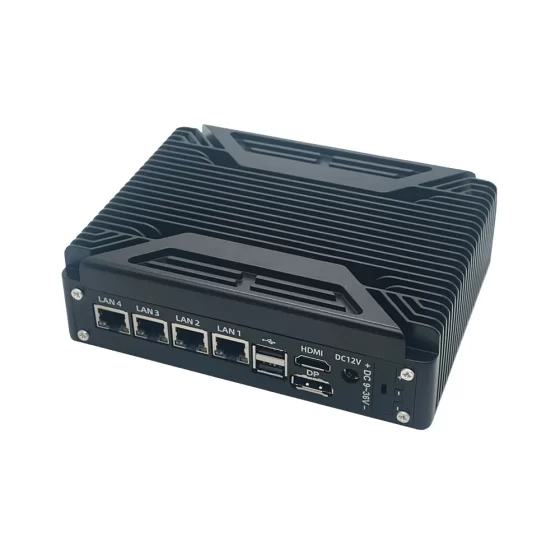
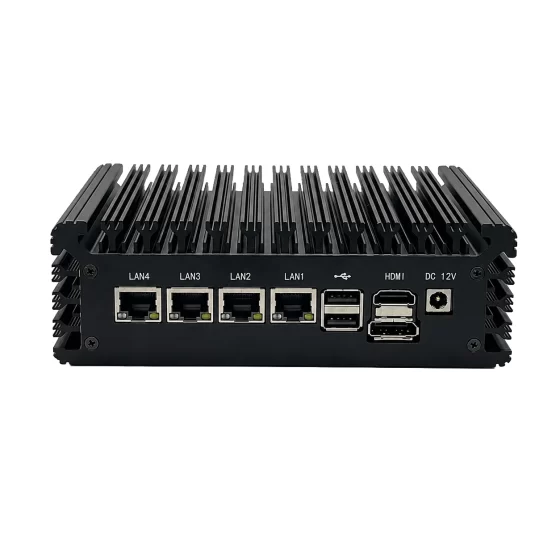
CoreIPC Industrial Computing-Lösungen

Industriecomputer für Videoanalyse
Zusammenfassung
Videoanalyse hat sich branchenübergreifend zu einer der am schnellsten wachsenden Technologien entwickelt, einschließlich der Sicherheitsüberwachung, Intelligente Städte, Transport, Herstellung, Einzelhandel, Logistik, Gesundheitspflege, und kritische Infrastruktur. Moderne Unternehmen verlassen sich zunehmend auf Videodaten, um die betriebliche Transparenz zu verbessern, Automatisieren Sie die Entscheidungsfindung, erhöhen die Sicherheit, Prozesse optimieren, und die Betriebskosten senken.
Herkömmliche Videoüberwachungssysteme konzentrieren sich hauptsächlich auf die Aufzeichnung und Speicherung von Videomaterial. Jedoch, die rasante Weiterentwicklung der künstlichen Intelligenz, maschinelles Sehen, tiefes Lernen, und Edge-Computing-Technologien haben Videosysteme in intelligente Plattformen verwandelt, die Echtzeitanalysen und automatisierte Reaktionen ermöglichen.
Ein Industriecomputer für Videoanalyse dient als Computerplattform für die Videoverarbeitung, KI-Schlussfolgerung, Objekterkennung, Gesichtserkennung, Verhaltensanalyse, Kennzeichenerkennung, Leute zählen, Anomalieerkennung, und intelligente Überwachungsanwendungen. Diese Plattformen verarbeiten Videostreams von mehreren Kameras gleichzeitig und liefern gleichzeitig zuverlässige Leistung in anspruchsvollen Umgebungen.
Im Gegensatz zu herkömmlichen kommerziellen Computern, Industriecomputer sind speziell für den Dauerbetrieb unter rauen Einsatzbedingungen konzipiert. Sie bieten Zuverlässigkeit auf Industrieniveau, umfangreiche Konnektivität, lüfterloser Betrieb, Unterstützung für einen langen Lebenszyklus, und skalierbare Rechenleistung, die für KI-gestützte Videoanalyse-Workloads geeignet ist.
Da Unternehmen weiterhin intelligente Videosysteme und Edge-KI-Anwendungen einsetzen, Industriecomputer werden zu unverzichtbaren Infrastrukturkomponenten, die Echtzeit-Videoanalysen ermöglichen, operative Intelligenz, und intelligente Automatisierung in einer Vielzahl von Branchen.
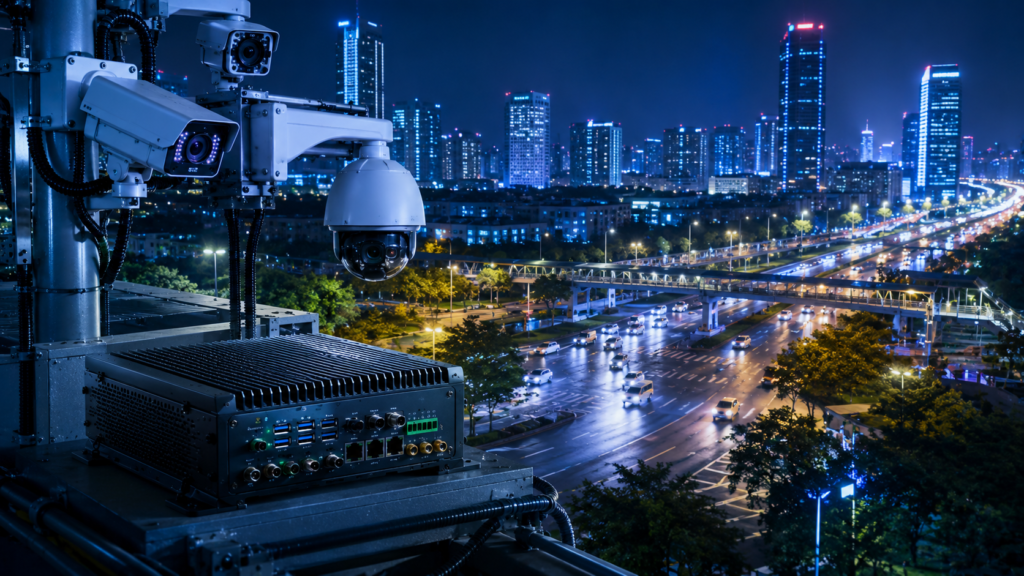
Industriecomputer ermöglichen Videoanalysen in Echtzeit, intelligent surveillance, and edge AI processing for smart monitoring applications.
Branchenüberblick
The global adoption of intelligent video analytics continues to accelerate as organizations seek more efficient ways to monitor environments, improve safety, and extract actionable insights from video data.
Modern video analytics deployments are commonly found in:
- Intelligente Städte
- Transportsysteme
- Produktionsanlagen
- Retail environments
- Warehouses
- Flughäfen
- Häfen
- Gesundheitseinrichtungen
- Educational campuses
- Critical infrastructure sites
Advances in AI and machine learning have expanded the capabilities of video analytics beyond traditional surveillance.
Modern systems support:
- Objekterkennung
- Object tracking
- Facial recognition
- People counting
- Crowd analysis
- License plate recognition
- Verhaltensanalyse
- Einbrucherkennung
- Sicherheitsüberwachung
- Prozessautomatisierung
The increasing use of high-resolution cameras has significantly increased computing requirements.
Modern deployments often include:
- 4K cameras
- Mehrkamerasysteme
- KI-gestützte Analyse
- Echtzeitverarbeitung
- Edge computing architectures
- Verteilte Überwachungsnetzwerke
Bei der Cloud-basierten Videoverarbeitung kann es zu Latenz kommen, Bandbreitenkosten, und Datenschutzbedenken.
Infolge, Unternehmen setzen zunehmend Industriecomputer am Edge ein, um Videostreams lokal zu verarbeiten und die Entscheidungsfindung in Echtzeit zu unterstützen.
Für die Leistung sorgen Industrierechner, Zuverlässigkeit, und Skalierbarkeit, die zur Unterstützung moderner Videoanalyseanwendungen bei kontinuierlichem Betrieb in anspruchsvollen Umgebungen erforderlich sind.
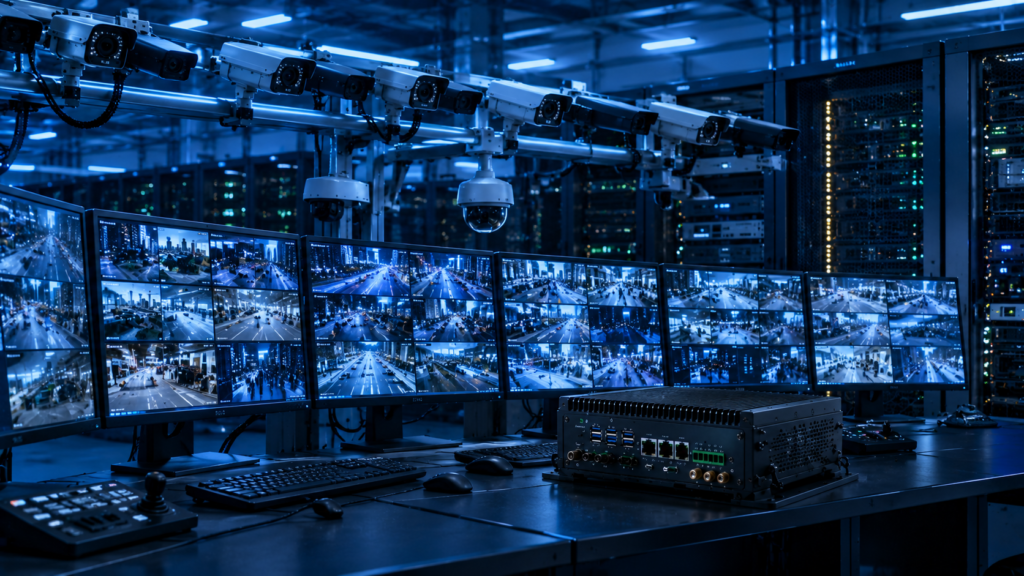
Moderne Videoanalysesysteme müssen mehrere Kamera-Feeds und KI-Workloads gleichzeitig in Echtzeit verarbeiten.
Wichtigste Herausforderungen
Verarbeitung hochauflösender Videostreams
Moderne Videoanalysesysteme nutzen häufig mehrere hochauflösende Kameras.
Zu den Herausforderungen gehören:
- Große Videodateigrößen
- Hohe Bandbreitenanforderungen
- Anforderungen an die Echtzeitverarbeitung
- Multi-Stream-Analyse
- Speicheranforderungen
Industriecomputer müssen über ausreichend Rechenleistung verfügen, um diese Arbeitslasten effizient bewältigen zu können.
Anforderungen an Echtzeitanalysen
Viele Videoanalyseanwendungen erfordern sofortige Reaktionen.
Beispiele hierfür sind:
- Sicherheitsvorfälle
- Verkehrsverstöße
- Sicherheitsrisiken
- Unbefugter Zugriff
- Anomalien der Ausrüstung
Verarbeitungsverzögerungen können die Systemeffektivität verringern.
Edge Computing ermöglicht lokale Verarbeitung und schnellere Reaktionszeiten.
Verwalten einer großen Anzahl von Kameras
Unternehmensbereitstellungen umfassen häufig Hunderte oder Tausende von Kameras.
Organisationen benötigen:
- Zentralisierte Sichtbarkeit
- Verteilte Verarbeitung
- Skalierbare Architekturen
- Effizientes Datenmanagement
Industrielle Computerplattformen unterstützen diese Anforderungen.
Umweltherausforderungen
Videoanalysesysteme können eingesetzt werden:
- Außenumgebungen
- Transportsysteme
- Produktionsanlagen
- Versorgungsinstallationen
- Entlegene Standorte
Computersysteme müssen standhalten:
- Staub
- Vibration
- Luftfeuchtigkeit
- Temperaturschwankungen
- Dauerbetrieb
Cybersicherheit und Datenschutz
Videosysteme sammeln oft sensible Informationen.
Organisationen müssen schützen:
- Videomaterial
- Benutzeridentitäten
- Zugangsdaten
- Netzwerkkommunikation
- Betriebsdaten
Cybersicherheit ist zu einer entscheidenden Anforderung für den Einsatz von Videoanalysen geworden.
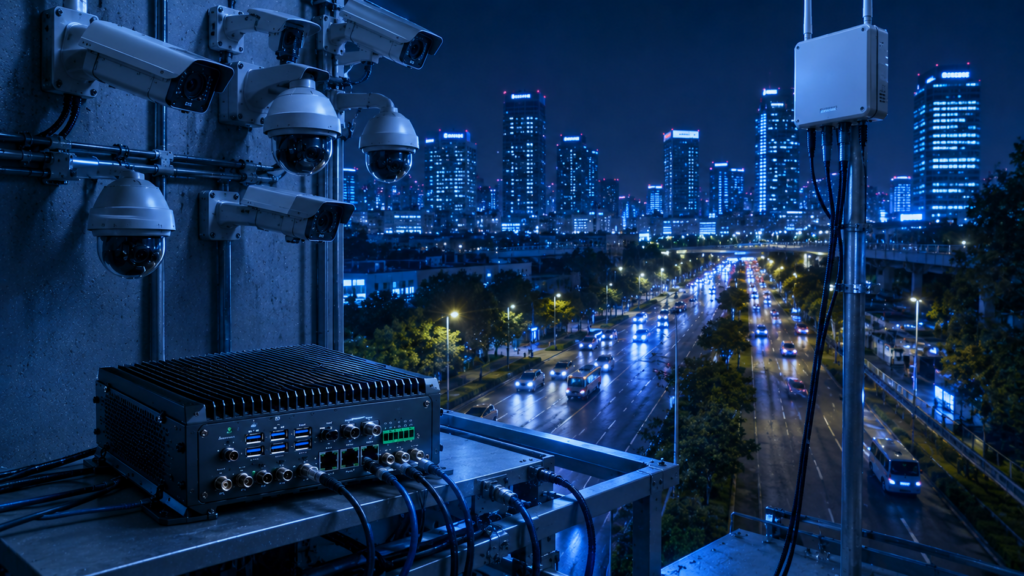
Industriecomputer verbinden Kameras, Netzwerke, und Edge-KI-Plattformen, um Echtzeit-Videoanalysen und intelligente Überwachung zu ermöglichen.
Lösungsarchitektur
Eine moderne Videoanalyse-Bereitstellung besteht aus mehreren integrierten Ebenen.
Schicht 1: Videoerfassungsebene
Diese Ebene umfasst:
- IP-Kameras
- Industriekameras
- Wärmebildkameras
- PTZ-Kameras
- Bildverarbeitungskameras
- Kantensensoren
Diese Geräte erfassen Video- und Umgebungsinformationen.
Schicht 2: Kommunikationsschicht
Die Kommunikationsinfrastruktur kann Folgendes umfassen::
- Gigabit-Ethernet
- Glasfasernetze
- Drahtlose Netzwerke
- Mobilfunkkonnektivität
- Industrielle Netzwerksysteme
Diese Schicht ermöglicht eine sichere Datenübertragung.
Schicht 3: Industrielle Computerschicht
Der Industriecomputer dient als Verarbeitungsplattform für die Videoanalyse.
Zu den Funktionen gehören:
- Videodekodierung
- KI-Schlussfolgerung
- Objekterkennung
- Ereignisverarbeitung
- Datenspeicherung
- Edge-Analyse
- Lokale Entscheidungsfindung
Diese Schicht stellt Echtzeitinformationen bereit.
Schicht 4: Videoanalyseebene
Bewerbungen können Folgendes umfassen::
- Videomanagementsysteme
- KI-Analyseplattformen
- Gesichtserkennungssysteme
- Software zur Kennzeichenerkennung
- Sicherheitsanalyse
- Business-Intelligence-Tools
Diese Anwendungen verwandeln Videos in umsetzbare Informationen.
Schicht 5: Unternehmensintegrationsschicht
Die Unternehmensintegration ermöglicht die Konnektivität mit:
- Kontrollzentren
- Cloud-Plattformen
- Sicherheitsmanagementsysteme
- Geschäftsanwendungen
- Meldesysteme
Diese Ebene bietet zentralisierte Sichtbarkeit und Verwaltung.
Hauptmerkmale
Zuverlässigkeit auf Industrieniveau
Videoanalysesysteme arbeiten häufig kontinuierlich.
Industriecomputer bieten:
- Robuste Konstruktion
- Komponenten in Industriequalität
- Kontinuierliche Betriebsunterstützung
- Langfristige Zuverlässigkeit
- Erweiterte Lebenszyklusverfügbarkeit
Diese Eigenschaften verbessern die Bereitstellungsstabilität.
Hochleistungs-Videoverarbeitung
Videoanalyse-Workloads erfordern erhebliche Rechenressourcen.
Unterstützung für Industriecomputer:
- Mehrkernprozessoren
- GPU-Beschleunigung
- KI-Beschleuniger
- Hochgeschwindigkeitsspeicher
- Schnelle Speicherlösungen
Diese Fähigkeiten ermöglichen eine effiziente Videoverarbeitung.
Edge-KI-Funktionen
Moderne Videoanalysen basieren zunehmend auf KI.
Zu den Anwendungen gehören:
- Objekterkennung
- Facial recognition
- Verhaltensanalyse
- Massenüberwachung
- Fahrzeugidentifikation
Industriecomputer bieten lokale KI-Verarbeitungsfunktionen.
Unterstützung mehrerer Kameras
Viele Einsätze erfordern die gleichzeitige Verarbeitung mehrerer Kamerastreams.
Unterstützung für Industriecomputer:
- Mehrkanal-Videoanalyse
- Echtzeitverarbeitung
- Skalierbare Kameraintegration
- Verteilte Architekturen
Diese Fähigkeiten verbessern die betriebliche Flexibilität.
Umfangreiche Konnektivität
Videoanalysesysteme erfordern umfangreiche Kommunikation.
Zu den gängigen Schnittstellen gehören:
- Ethernet
- USB
- Serielle Schnittstellen
- Digitale I/O
- Drahtlose Konnektivität
Diese Schnittstellen vereinfachen die Integration mit Kameras und Infrastruktur.
Lüfterloses Design
Viele Industriecomputer nutzen lüfterlose Architekturen.
Zu den Vorteilen gehören::
- Reduzierter Wartungsaufwand
- Verbesserte Zuverlässigkeit
- Bessere Staubbeständigkeit
- Leiser Betrieb
Diese Eigenschaften sind in Umgebungen mit kontinuierlichem Betrieb wertvoll.
Langer Produktlebenszyklus
Videoanalysebereitstellungen bleiben oft viele Jahre lang betriebsbereit.
Industrielle Plattformen bieten:
- Langfristige Verfügbarkeit
- Stabile Hardwareplattformen
- Erweiterte Supportprogramme
Diese Funktionen reduzieren die Kosten für das Lebenszyklusmanagement.
Bereitstellungsszenarien
Intelligente Stadtüberwachung
Unterstützung für Industriecomputer:
- Verkehrsüberwachung
- Öffentliche Sicherheitssysteme
- Crowd analysis
- Erkennung von Vorfällen
Diese Fähigkeiten verbessern das Stadtmanagement.
Transportüberwachung
Videoanalyseplattformen ermöglichen es:
- Verkehrsflussanalyse
- License plate recognition
- Fahrzeugklassifizierung
- Vorfallmanagement
Diese Anwendungen unterstützen intelligente Transportsysteme.
Fertigungsinspektion
Unterstützung für Industriecomputer:
- Sichtprüfung
- Fehlererkennung
- Prozessüberwachung
- Qualitätskontrolle
Diese Fähigkeiten verbessern die Fertigungseffizienz.
Einzelhandelsanalysen
Einzelhandelsumgebungen nutzen Videoanalysen für:
- Kundenzählung
- Warteschlangenverwaltung
- Wärmekartierung
- Schadensverhütung
Diese Erkenntnisse verbessern die Geschäftsleistung.
Lager- und Logistiküberwachung
Videoanalysen helfen Unternehmen, sich zu verbessern:
- Bestandstransparenz
- Anlagensicherheit
- Betriebseffizienz
- Einhaltung der Sicherheitsvorschriften
Diese Fähigkeiten unterstützen die Logistikoptimierung.
Schutz kritischer Infrastrukturen
Dienstprogramme, Energieanlagen, und Industriestandorte nutzen Videoanalysen, um sich zu verbessern:
- Sicherheitsüberwachung
- Perimeterschutz
- Vermögensschutz
- Betriebsbewusstsein
Diese Bereitstellungen verbessern die Widerstandsfähigkeit der Infrastruktur.
Geschäftsvorteile
Verbesserte operative Transparenz
Videoanalysen bieten Echtzeit-Einblicke in Einrichtungen, Vermögenswerte, Personal, und Operationen.
Schnellere Entscheidungsfindung
Automatisierte Analysen verkürzen Reaktionszeiten und verbessern das Situationsbewusstsein.
Erhöhte Sicherheit
Intelligente Überwachung verbessert die Erkennung von Bedrohungen und die Reaktionsfähigkeit auf Vorfälle.
Erhöhte betriebliche Effizienz
Die automatisierte Videoanalyse reduziert den manuellen Überwachungsaufwand und verbessert die Produktivität.
Reduzierte Kosten
Organisationen können Ressourcen optimieren, die Auslastung verbessern, und die Betriebskosten senken.
Verbesserte Sicherheit
Videoanalysen unterstützen die Sicherheit am Arbeitsplatz, Compliance-Überwachung, und Initiativen zur Risikominderung.
Skalierbare digitale Transformation
Industriecomputer bilden die Grundlage für die zukünftige KI, Edge-Computing, und intelligente Automatisierungsbereitstellungen.
Warum CoreIPC
CoreIPC bietet industrielle Computerplattformen für Videoanalysen, maschinelles Sehen, Kanten-KI, intelligent surveillance, und Echtzeitüberwachungsanwendungen. Unsere Industriecomputer und Embedded Computer vereinen Zuverlässigkeit auf Industrieniveau, Hochleistungsverarbeitung, flexible I/O-Konnektivität, und lange Lebenszyklusverfügbarkeit zur Unterstützung anspruchsvoller Video-Workloads. Mit OEM/ODM-Anpassungsfunktionen und umfassender Erfahrung im Embedded Computing, CoreIPC unterstützt Unternehmen bei der Bereitstellung skalierbarer Videoanalyselösungen, die die Sicherheit verbessern, operative Sichtbarkeit, und intelligente Entscheidungsfindung.
Häufig gestellte Fragen
1. Was ist ein Industriecomputer für Videoanalyse??
Ein Industriecomputer für Videoanalyse ist eine robuste Computerplattform zur Verarbeitung von Videostreams, KI-Inferenz durchführen, und unterstützen intelligente Überwachungsanwendungen in industriellen und kommerziellen Umgebungen.
2. Warum werden Industriecomputer für die Videoanalyse eingesetzt??
Industriecomputer sorgen für die Zuverlässigkeit, Leistung, Konnektivität, und Umweltbeständigkeit, die für kontinuierliche Videoverarbeitungsvorgänge erforderlich sind.
3. Welche Videoanalyseanwendungen werden häufig eingesetzt??
Zu den Anwendungen gehört die Gesichtserkennung, Objekterkennung, Leute zählen, Kennzeichenerkennung, Verkehrsüberwachung, Verhaltensanalyse, und Sicherheitsüberwachung.
4. Können Industriecomputer KI-gestützte Videoanalysen unterstützen??
Ja. Viele Industriecomputer unterstützen GPU-Beschleunigung und KI-Inferenz-Engines, die für moderne Videoanalyse-Workloads erforderlich sind.
5. Welche Branchen nutzen Videoanalysesysteme??
Zu den Branchen gehört der Transport, Herstellung, Einzelhandel, Logistik, Gesundheitspflege, Ausbildung, Dienstprogramme, und Smart-City-Infrastruktur.
6. Warum ist Edge Computing für die Videoanalyse wichtig??
Edge Computing reduziert die Latenz, senkt den Bandbreitenverbrauch, verbessert die Privatsphäre, und ermöglicht eine Echtzeitverarbeitung nahe der Videoquelle.
7. Können Industriecomputer mehrere Kamerastreams gleichzeitig verarbeiten??
Ja. Hochleistungs-Industriecomputer können mehrere Videostreams unterstützen und Echtzeitanalysen über zahlreiche Kameras hinweg durchführen.
8. Sind lüfterlose Industriecomputer für die Videoanalyse geeignet??
Ja. Lüfterlose Designs verbessern die Zuverlässigkeit und reduzieren den Wartungsaufwand in Umgebungen mit Dauerbetrieb.
9. Wie verbessern Industriecomputer den Sicherheitsbetrieb??
Sie ermöglichen eine automatisierte Überwachung, Intelligente Bedrohungserkennung, schnellere Reaktion auf Vorfälle, und verbessertes Situationsbewusstsein.
10. Was sollte bei der Auswahl einer Videoanalyseplattform beachtet werden??
Wichtige Überlegungen umfassen die Verarbeitungsleistung, KI-Fähigkeiten, Kameraunterstützung, Vernetzungsmöglichkeiten, Umweltspezifikationen, und Lebenszyklusverfügbarkeit.
Abschluss
Ein Industriecomputer für Videoanalyse stellt die notwendige Rechengrundlage für eine intelligente Videoverarbeitung bereit, KI-gestützte Analyse, und Echtzeitüberwachungsanwendungen. Durch die Aktivierung von Edge-KI, Multi-Kamera-Verarbeitung, intelligent surveillance, und automatisierte Entscheidungsfindung, Industriecomputer helfen Unternehmen dabei, die Sicherheit zu verbessern, betriebliche Effizienz, und Situationsbewusstsein. Da sich intelligente Videosysteme ständig weiterentwickeln, Industriecomputer bleiben wesentliche Technologien, die die Zukunft der Edge Analytics und der digitalen Transformation unterstützen.
Kontaktieren Sie uns
Auf der Suche nach einem zuverlässigen Industriecomputer für Videoanalyseanwendungen?
CoreIPC bietet Industriecomputer an, eingebettete Computer, Industrie-Motherboards, und maßgeschneiderte Computerlösungen für die intelligente Überwachung, maschinelles Sehen, Kanten-KI, Transportüberwachung, und Echtzeit-Videoanalysebereitstellungen.
Kontaktieren Sie noch heute unser Engineering-Team, um Ihre Projektanforderungen zu besprechen und die ideale Computerplattform für Ihre Videoanalyseanwendung zu entdecken.