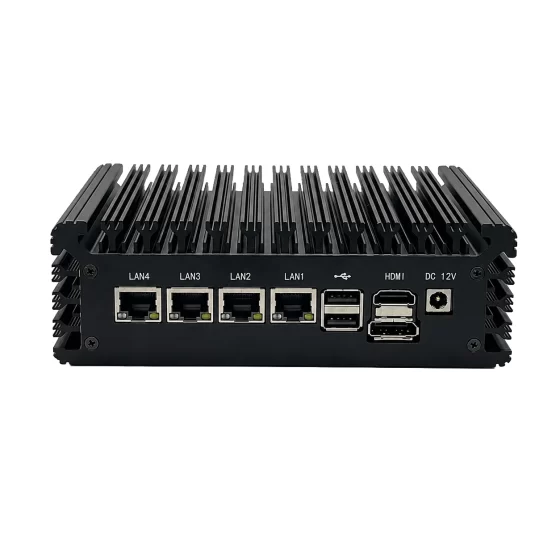
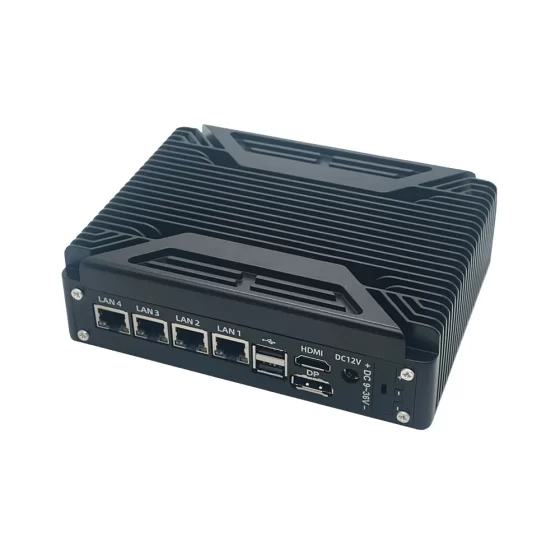
CoreIPC 産業用コンピューティング ソリューション

監視用エッジAIコンピューター: 産業監視とセキュリティのためのエッジ AI 監視
エグゼクティブサマリー
Edge AI surveillance is becoming an important technology foundation for industrial monitoring, facility security, safety awareness, equipment visibility, and real-time video analytics in modern industrial environments.
工場, 倉庫, エネルギー施設, 交通拠点, 物流センター, and smart infrastructure sites often operate with many cameras and continuous video streams. Sending all raw video to a remote cloud or central server can create high bandwidth usage, latency, storage pressure, and network dependency.
An edge AI computer for surveillance processes video data locally. It can connect to IP cameras, 産業用カメラ, センサー, access control systems, アラーム, PLC, network switches, および監視ダッシュボード. It can run AI models near the camera network to detect events, classify abnormal conditions, trigger alerts, and send selected results to security platforms or industrial systems.
産業用コンピュータまたは組み込みコンピュータは、これらのワークロードにローカル コンピューティング プラットフォームを提供します。. 標準的な商用 PC との比較, industrial computers are better suited for continuous operation in factory and infrastructure environments because they support rugged installation, 柔軟な I/O, multiple network interfaces, 信頼できるストレージ, ファンレスオプション, 長いライフサイクルの展開.
This article explains how edge AI surveillance systems work, 実際の導入ではどのような課題が発生するか, ソリューション アーキテクチャがどのように構成されているか, and which hardware features are important when selecting an industrial computer or embedded computer for AI-based surveillance and monitoring.
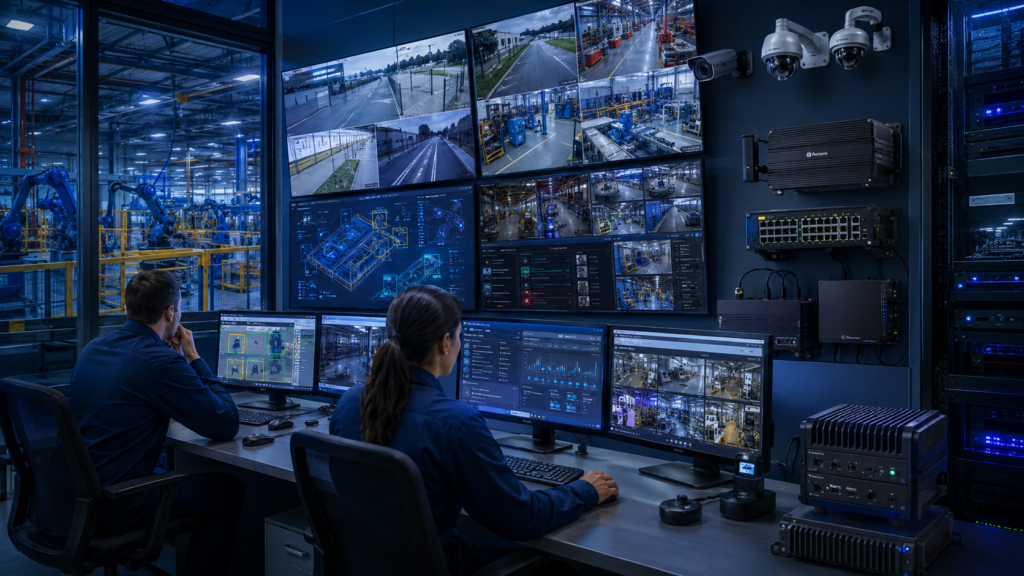
Edge AI computers process camera streams locally for industrial monitoring, facility visibility, and event alerts.
業界の概要
Surveillance Is Moving from Recording to Intelligence
Traditional surveillance systems mainly record video for later review.
This approach is useful, but it has limitations. Operators cannot manually watch every camera all the time, and important events may only be discovered after a problem has already occurred.
Edge AI surveillance adds local intelligence to camera systems.
Instead of only recording video, the system can analyze camera streams in real time and generate event-based alerts.
Industrial surveillance may support:
- Facility perimeter monitoring
- Restricted area detection
- Equipment area monitoring
- Production line visibility
- Warehouse and logistics monitoring
- Safety event awareness
- Vehicle and material flow monitoring
- Abnormal behavior or abnormal scene detection
- Fire, smoke, or spill detection support
- Remote site monitoring
The goal is to improve visibility and response without sending every video stream to the cloud.
Why Edge AI Matters for Surveillance
Surveillance video creates large amounts of data.
A site with many cameras can quickly generate heavy network traffic and storage requirements. If all video is processed centrally, the system may require high bandwidth and powerful centralized servers.
Edge AI computing helps reduce this pressure.
The edge AI computer can process video near the camera network and upload only selected information, such as alarms, イベントクリップ, メタデータ, or summary records.
This supports faster response and more efficient system design.
Industrial Computing Is Needed for Real Deployment
Industrial surveillance systems are often installed in practical field conditions.
The computing hardware may operate in control rooms, キャビネット, factory floors, 倉庫, 交通機関, 変電所, outdoor enclosures, または遠隔施設.
これらの環境には粉塵が含まれる可能性があります, 振動, 温度変化, 不安定な電力, 限られたメンテナンスアクセス, 継続的な運転スケジュール.
産業用コンピューターと組み込みコンピューターは、これらの条件に合わせて設計されています。.
安定した動作を提供します, 頑丈な筐体, 複数のLANポート, ストレージオプション, I/O接続, 長いライフサイクルの可用性.

カメラの帯域幅, ネットワークのセグメンテーション, ストレージの保持, alarm wiring, アクセス制御, and cabinet deployment affect surveillance reliability.
主要な課題
Multiple Video Streams
Edge AI surveillance often involves multiple cameras.
Each camera stream adds processing, ネットワーク, and storage load. The system may need to process several IP camera streams, industrial camera feeds, or high-resolution video channels at the same time.
主なワークロード要因には次のものがあります。:
- カメラ数
- ビデオ解像度
- フレームレート
- Compression format
- AI モデルの複雑さ
- Event detection requirements
- Storage duration
- Local display needs
- ネットワークアップロード頻度
The edge AI computer must be selected according to the actual number of cameras and analysis tasks.
Real-Time Event Detection
Surveillance systems are most valuable when they detect important events quickly.
If AI processing is delayed, the system may miss the correct response window.
リアルタイム要件が表示される場合があります。:
- Perimeter intrusion alerts
- Restricted zone monitoring
- Equipment abnormality detection
- Conveyor blockage detection
- Vehicle movement monitoring
- Warehouse aisle monitoring
- Fire or smoke event support
- Safety area awareness
- Remote site alarms
The computing platform must provide stable sustained performance during continuous video analysis.
Network Bandwidth and Segmentation
Video surveillance networks can create heavy traffic.
If camera streams share the same network as production systems, PLC, MES, or office IT traffic, network congestion may occur.
A practical edge AI surveillance computer may need multiple LAN ports for network separation.
例えば:
- One LAN port for IP cameras
- One LAN port for local monitoring systems
- One LAN port for factory IT connection
- One LAN port for remote access or cloud upload
Good network architecture improves stability and supports better cybersecurity planning.
Storage and Retention
Surveillance systems may need to store video clips, event images, AI metadata, ログ, およびローカルデータベース.
The storage requirement depends on camera count, recording method, event retention policy, 画像解像度, and upload strategy.
Some systems store only event clips. Others need continuous local recording for a defined retention period.
ストレージ計画で考慮すべきこと:
- Capacity
- 書き込み速度
- 書き込み耐久性
- Backup method
- ローカルデータベースのワークロード
- Video retention period
- Event clip storage
- ネットワーク中断動作
Reliable storage helps protect important surveillance records.
Privacy and Operational Policy
AI surveillance must be deployed carefully.
Industrial monitoring should focus on safety, 安全, equipment visibility, and operational awareness. It should follow site policy, local regulations, アクセス制御ルール, データ保持要件.
System design should consider:
- What events are monitored
- Who can access video data
- How long records are stored
- How alerts are reviewed
- Which areas are monitored
- How data is protected
- How remote access is controlled
The computing platform should support secure deployment and controlled data handling.

Edge AI computers connect cameras, アラーム, access control systems, VMS platforms, cloud monitoring, and security dashboards.
Edge AI Surveillance Solution Architecture
Camera and Sensor Layer
The camera and sensor layer captures raw visual and event data.
この層には以下が含まれる場合があります:
- IPカメラ
- 産業用カメラ
- サーマルカメラ
- Low-light cameras
- PTZカメラ
- ドアセンサー
- Access control signals
- モーションセンサー
- Alarm inputs
- 環境センサー
- Network video devices
These devices generate the video and event data required for AI analysis.
Stable camera connections and proper network design are essential for reliable edge AI surveillance.
エッジAIコンピューティング層
The edge AI computing layer is where the industrial computer or embedded computer processes video data locally.
この層では, コンピュータが:
- カメラストリームを受信する
- Decode video
- AI推論モデルを実行する
- Detect defined events
- Classify abnormal scenes
- Store event clips
- アラートの生成
- ローカルダッシュボードを表示する
- Send metadata to platforms
- Buffer records during network issues
This layer reduces latency and limits the need to upload all raw video.
AI Video Analytics Layer
The AI video analytics layer contains the software logic used to analyze surveillance streams.
アプリケーションに応じて, 含まれる可能性があります:
- 物体検出
- Area monitoring
- 車両検知
- Person detection for safety zones
- Abnormal scene detection
- Smoke or fire event support
- Equipment status recognition
- Production flow monitoring
- Video event classification
- Rule-based alarm logic
産業用コンピュータは必要なオペレーティング システムをサポートする必要があります, ドライバー, AI ランタイム, ビデオ管理ソフトウェア, and camera protocols.
Alert and Control Layer
The alert and control layer connects AI results with action.
When the system detects an event, it may trigger a local alarm, send a notification, mark a video clip, display an alert on a dashboard, or send data to a security platform.
産業環境において, it may also connect with:
- Alarm devices
- Access control systems
- PLC
- SCADAシステム
- Safety monitoring systems
- Facility management systems
- 遠隔監視プラットフォーム
This helps turn video analysis into operational response.
プラットフォーム統合層
Edge AI surveillance systems often connect with higher-level systems.
The edge AI computer may send selected data to:
- ビデオ管理システム
- Security operation platforms
- SCADAシステム
- 産業用IoTダッシュボード
- クラウド監視プラットフォーム
- ローカルデータベース
- Facility management systems
- メンテナンスプラットフォーム
Instead of sending every frame, the system can send events, メタデータ, アラート, snapshots, and selected clips.
This makes surveillance deployment more efficient and easier to manage.
主な特長
AI Video Processing Performance
Edge AI surveillance requires stable video analytics performance.
The right hardware depends on camera count, 解決, フレームレート, AI モデルの複雑さ, and event detection requirements.
選択は考慮すべきです:
- CPU性能
- GPU または AI アクセラレータのサポート
- メモリ容量
- Video decoding workload
- ネットワーク帯域幅
- ストレージ速度
- オペレーティング システムのサポート
- AI フレームワークの互換性
- 熱設計
A compact embedded computer may support a small camera group. A larger multi-camera surveillance system may require an edge AI computer or industrial PC with stronger acceleration.
複数のLANポート
Multiple LAN ports are valuable in surveillance systems.
They allow separation between camera networks, 管理ネットワーク, 工場ネットワーク, and remote access networks.
This can improve:
- Camera traffic stability
- ネットワークのセグメンテーション
- Security planning
- リモートメンテナンス
- Multi-site deployment
- Local recording reliability
- Factory network organization
For sites with many IP cameras, network design should be planned before hardware selection.
柔軟な産業用 I/O
Surveillance systems may need to connect with more than cameras.
重要な I/O オプションには次のものがあります。:
- LAN
- USB
- RS232
- RS485
- GPIO
- デジタル入力
- デジタル出力
- HDMI
- ディスプレイポート
- M.2
- PCIe
- SATA または NVMe ストレージ
これらのインターフェースはカメラをサポートできます, アラーム, センサー, アクセス制御デバイス, display screens, network switches, ストレージデバイス, and industrial systems.
柔軟な I/O により外部コンバータが削減され、導入の信頼性が向上します.
信頼性の高いローカルストレージ
Local storage is important for edge AI surveillance.
The computer may store video clips, event snapshots, メタデータ, アラームログ, AIモデルファイル, システムログ, およびローカルデータベース.
SSD または NVMe ストレージは、機械式ドライブよりも高速アクセスと優れた耐衝撃性を備えているため、一般的に好まれます。.
For video-heavy deployments, ストレージ容量, 書き込み耐久性, 保存ポリシー, バックアップ方法, and upload strategy should be reviewed carefully.
堅牢なファンレス設計
Edge AI surveillance computers may run continuously in challenging environments.
Fanless designs can reduce dust intake and remove one common mechanical failure point. 頑丈なエンクロージャがシステムを振動から保護します, ケーブルストレス, およびキャビネットの設置条件.
しかし, video analytics and AI inference may generate heat.
Thermal design should be reviewed based on CPU workload, アクセルの使用, 筐体設計, 周囲温度, 気流, そして取り付け位置.
長いライフサイクルと保守性
Surveillance infrastructure often stays in service for many years.
Frequent hardware changes can create issues with video software, camera compatibility, AIモデル, オペレーティングシステム, and driver validation.
Industrial computing platforms with lifecycle planning help system integrators and facility operators maintain consistent deployments across multiple sites and equipment generations.
This improves long-term support and reduces maintenance complexity.

Edge AI surveillance platforms improve event detection, 遠隔監視, facility visibility, data control, and operational response.
導入シナリオ
Factory Perimeter Monitoring
Factories can use edge AI surveillance for perimeter awareness.
The system can process video from cameras near gates, fences, loading areas, and restricted zones.
The edge AI computer can detect defined events, アラートを生成する, and send selected records to security systems or monitoring dashboards.
倉庫と物流の監視
Warehouses and logistics centers often need visibility across aisles, 積み込みドック, コンベアエリア, and sorting zones.
Edge AI surveillance can help monitor package movement, vehicle activity, blocked pathways, abnormal congestion, and operational exceptions.
The industrial computer processes video locally and sends event records to monitoring systems.
Production Line Video Monitoring
Production lines may use cameras to monitor machine areas, product flow, conveyor conditions, およびオペレータステーション.
AI video analytics can detect stoppages, missing product flow, abnormal movement, or visual events that need review.
This supports better operational visibility and faster response.
遠隔設備監視
Remote industrial facilities may include energy sites, ポンプ場, 変電所, ユーティリティルーム, and outdoor equipment areas.
An embedded computer can process camera streams locally, buffer events, and send selected alerts over limited network connections.
This reduces bandwidth usage and supports remote operation.
Transportation and Infrastructure Surveillance
Transportation sites may use edge AI surveillance for platforms, 駐車場, 物流ヤード, トンネル, 駅, and access zones.
The system can analyze video locally and send event-based alerts to monitoring centers.
Industrial computers are useful where deployment conditions require rugged hardware and continuous operation.
Equipment Area Monitoring
Some facilities use cameras to monitor equipment rooms, machine zones, conveyor transfer points, or utility systems.
AI surveillance can support abnormal scene detection, equipment status visibility, and alarm verification.
This helps operators confirm whether a machine or facility event needs immediate action.
Safety Zone Awareness
Industrial sites may use video analytics to support safety zone awareness.
The system can detect when defined areas become occupied or when abnormal movement appears near equipment.
Such systems should be deployed according to site safety policy and should support operators rather than replace formal safety systems.
OEM Surveillance System Integration
System integrators and OEM solution providers can integrate edge AI computers into surveillance appliances, video analytics boxes, smart monitoring gateways, or industrial security systems.
The computing platform can provide video processing, AI推論, ローカルストレージ, network interfaces, alarm I/O, およびリモート監視接続.
ビジネス上のメリット
Faster Local Event Detection
Edge AI surveillance processes video near the camera network.
This reduces the delay between event capture and alert generation.
Fast local detection is useful for restricted zones, facility security, production exceptions, リモートサイトの監視, and safety awareness.
帯域幅使用量の削減
Video data can create heavy network traffic.
Edge AI computers can analyze video locally and upload only selected events, snapshots, clips, or metadata.
This reduces bandwidth load and makes surveillance systems easier to scale across multiple cameras and sites.
運用上の可視性の向上
AI surveillance helps operators understand what is happening across factories, 倉庫, infrastructure sites, および遠隔施設.
Instead of relying only on manual camera review, the system can highlight events that need attention.
This improves monitoring efficiency and supports faster investigation.
Better Resilience During Network Issues
Local processing helps surveillance systems continue operating when network connections are unstable.
The edge AI computer can keep processing camera streams, storing event data, and buffering records.
接続が回復したら, selected data can be uploaded to higher-level systems.
Stronger Security and Data Control
Edge processing allows more video data to remain local.
This can support better data control when raw video does not need to leave the site.
System designers can define what information is stored, 何がアップロードされているのか, 誰がアクセスできるのか, 記録がどのくらいの期間保存されるか.
スケーラブルなマルチサイト展開
A standardized edge AI surveillance platform makes it easier to deploy similar systems across multiple factories, 倉庫, またはインフラストラクチャ サイト.
一貫したハードウェアによりソフトウェア イメージが簡素化されます, camera validation, スペアパーツの計画, リモートメンテナンス, およびライフサイクルサポート.
This helps system integrators and facility operators scale surveillance intelligence more efficiently.
CoreIPC を選ぶ理由
CoreIPC はエッジ AI 向けの産業用コンピューティング プラットフォームを提供します, ビデオ分析, 産業用IoT, ファクトリーオートメーション, および組み込みシステムの統合. For edge AI surveillance applications, CoreIPC は信頼性の高い産業用コンピューター ハードウェアに重点を置いています, 組み込みコンピュータソリューション, 柔軟な I/O 構成, マルチネットワーク展開, コンパクトなシステム設計, OEM/ODMカスタマイズサポート. CoreIPC はシステム インテグレーターを支援します, セキュリティソリューションプロバイダー, そして産業運営者は、実際の導入要件に適合するコンピューティング プラットフォームを選択します。, カメラ数を含む, AI ワークロード, ストレージデザイン, ネットワークのセグメンテーション, 取り付け方法, 電源入力, 熱条件, およびライフサイクル計画.
よくある質問
1. What is edge AI surveillance?
Edge AI surveillance uses local computing hardware to process camera streams near the surveillance site.
Instead of sending all raw video to a remote server, the edge AI computer analyzes video locally, detects defined events, stores selected records, and sends alerts or metadata to monitoring platforms. This improves response time and reduces bandwidth usage.
2. Why use an industrial computer for edge AI surveillance?
An industrial computer is better suited for surveillance systems deployed in factories, 倉庫, infrastructure sites, および遠隔施設.
連続運転をサポートします, 頑丈な設置, 複数のネットワークポート, 柔軟な I/O, 信頼できるストレージ, 長いライフサイクルの可用性. These features help the system operate reliably near cameras, キャビネット, 機械, および産業用ネットワーク.
3. How is an embedded computer used in surveillance systems?
An embedded computer can act as a compact video analytics node.
It can be installed near camera groups, inside control cabinets, in monitoring gateways, or inside OEM surveillance appliances. It can process video streams, AI モデルを実行する, store event records, and send selected alerts to monitoring systems.
4. What AI functions can edge surveillance support?
Edge AI surveillance can support object detection, area monitoring, 車両検知, restricted zone alerts, abnormal scene detection, production flow monitoring, equipment area monitoring, and event-based video review.
The exact functions depend on camera placement, AIモデル設計, 照明条件, system policy, and real deployment testing.
5. Does edge AI surveillance need a GPU?
Some surveillance systems need GPU or AI accelerator support, especially when processing multiple video streams, high-resolution cameras, or complex AI models.
Smaller systems with fewer streams may run on CPU-based industrial computers or embedded computers. Hardware selection should be based on real camera count, model performance, 応答時間の要件.
6. What interfaces are important for edge AI surveillance computers?
重要なインターフェイスには複数の LAN ポートが含まれる場合があります, USB, RS232, RS485, GPIO, デジタル入力, デジタル出力, HDMI, ディスプレイポート, M.2, PCIe, SATA, およびNVMeストレージのサポート.
複数の LAN ポートは、カメラ ネットワークを分離するのに特に役立ちます, 工場ネットワーク, リモートアクセス, および管理トラフィック.
7. Can fanless industrial computers support surveillance analytics?
Fanless industrial computers can support many edge AI surveillance applications, especially moderate camera workloads and cabinet-based deployments.
しかし, multi-camera video analytics may generate significant heat. CPUワークロード, アクセルの使用, 筐体設計, 周囲温度, 気流, and mounting location should be reviewed before deployment.
8. How does edge AI surveillance reduce bandwidth usage?
The edge AI computer processes video locally and uploads only selected information.
This may include event records, snapshots, short video clips, alarm metadata, or summary data. By avoiding continuous upload of all raw video, the system reduces bandwidth pressure and makes multi-camera deployment more efficient.
9. Can edge AI surveillance connect with industrial systems?
はい. Edge AI surveillance computers can connect with security platforms, video management systems, スカダ, 産業用IoTダッシュボード, 警報装置, access control systems, and facility management platforms.
In some industrial deployments, they may also communicate with PLCs or local monitoring systems for event coordination.
10. 導入前にテストすべきこと?
導入前, システムは実際のカメラでテストする必要があります, real lighting conditions, actual camera count, ネットワークアーキテクチャ, AIモデル, local storage workload, アラートのタイミング, 長時間にわたる運用.
熱安定性, network interruption behavior, event accuracy, アクセス制御, メンテナンスのワークフローも検証する必要があります.
結論
Edge AI surveillance is a practical foundation for industrial monitoring, facility security, ビデオ分析, remote site visibility, and event-based operational awareness.
By placing an industrial computer or embedded computer close to camera networks, センサー, アラーム, access systems, および監視プラットフォーム, organizations can process video locally, 帯域幅の使用量を減らす, 応答時間を改善する, and maintain better control over surveillance data.
The right edge AI surveillance platform should be selected according to real deployment requirements, カメラ数を含む, video resolution, AI ワークロード, ネットワークアーキテクチャ, ストレージの保持, I/O構成, 取付方法, 電源入力, 熱条件, オペレーティング システムのサポート, セキュリティポリシー, およびライフサイクル計画.
CoreIPC supports edge AI surveillance projects with industrial computing platforms designed for practical field deployment. 適切なハードウェア基盤があれば, system integrators and industrial operators can build reliable, スケーラブルな, and efficient AI video monitoring systems.
お問い合わせ
産業用コンピュータを探しています, 組み込みコンピュータ, or edge AI platform for edge AI surveillance?
プロジェクトの要件については、CoreIPC にお問い合わせください。, カメラ数を含む, AI ワークロード, ネットワークのセグメンテーション, ストレージデザイン, I/O構成, 取付方法, 電源入力, 動作環境, ライフサイクルのニーズ, および OEM/ODM カスタマイズ オプション.