CoreIPC 産業用コンピューティング ソリューション

監視用産業用AIコンピュータ: スマート工場運営のための産業用 AI モニタリング
エグゼクティブサマリー
Industrial AI monitoring is becoming an important foundation for smart factories, connected machines, 予知保全, 品質管理, リアルタイムの生産状況の可視化.
Manufacturing environments generate large volumes of data from cameras, センサー, PLC, ロボット, コンベア, モーター, メートル, および生産設備. If this data is only collected manually or sent to remote systems without local processing, factories may face delayed response, limited visibility, ネットワーク依存性, and incomplete operational insight.
An industrial AI computer for monitoring provides local computing power close to machines and production lines. It can collect data from industrial devices, AI推論モデルを実行する, analyze abnormal patterns, process camera streams, detect equipment issues, and send alerts to operators or factory systems.
An industrial computer or embedded computer can act as the edge monitoring platform. It may connect to machine vision cameras, 振動センサー, 温度センサー, PLC, 産業用ゲートウェイ, エネルギーメーター, ロボット, and MES or SCADA systems.
標準的な商用 PC との比較, industrial computers are better suited for factory deployment because they support rugged operation, 柔軟な I/O, 安定したネットワーク, ファンレス設計オプション, 信頼できるストレージ, 長いライフサイクルの可用性.
This article explains how industrial AI monitoring systems work, メーカーが直面している展開上の課題, ソリューション アーキテクチャがどのように構成されているか, and which hardware features are important when selecting an industrial computer or embedded computer for AI-based monitoring applications.
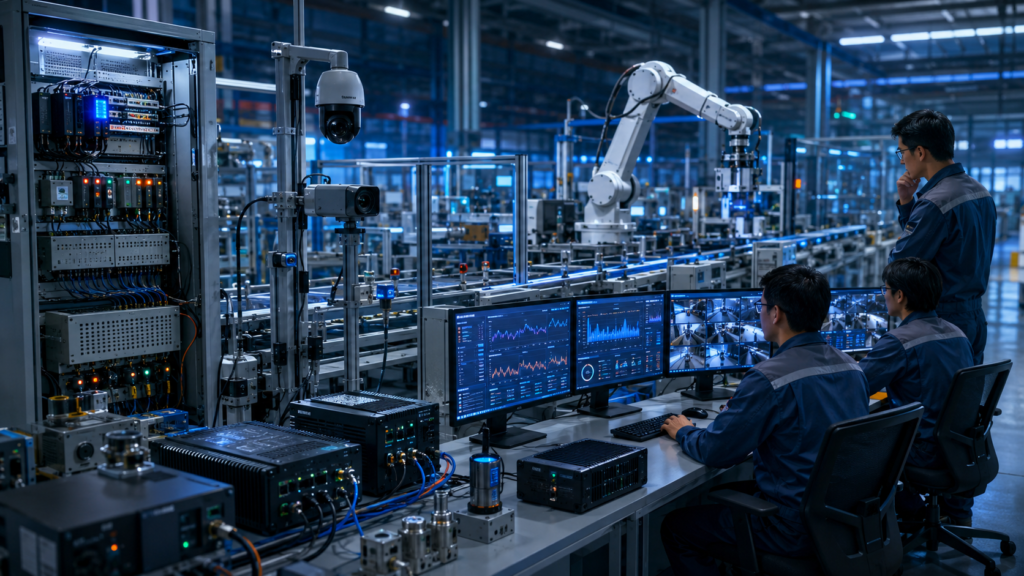
マシンのステータス, センサーデータ, ビデオストリーム, equipment health, and AI alerts near production equipment.
業界の概要
Factories Need Better Real-Time Visibility
Modern factories are becoming more complex.
Production lines may include multiple machines, ロボット細胞, 検査ステーション, コンベア, ユーティリティシステム, and connected software platforms. Operators and engineers need to understand what is happening across these systems in real time.
Traditional monitoring often depends on alarms, manual checks, PLC status signals, or periodic reports. These methods are useful, but they may not provide enough detail for advanced production optimization.
Industrial AI monitoring improves this situation by adding local intelligence near equipment.
It can help monitor:
- 機械の状態
- 機器の健全性
- Visual inspection results
- Process abnormalities
- Production flow
- エネルギー使用量
- 環境条件
- Safety events
- Predictive maintenance signals
- 品質の傾向
The goal is not only to collect data, but to convert data into timely operational decisions.
AI Monitoring Is Moving to the Edge
Cloud platforms can support historical analysis, centralized dashboards, and long-term data storage.
しかし, many monitoring tasks need local response. A machine abnormality, safety event, quality defect, or production blockage may require action within seconds.
すべての画像を送信する, vibration record, or sensor reading to a cloud server can create latency, 帯域幅のプレッシャー, and network dependency.
An industrial AI computer allows monitoring to happen close to the equipment.
データをローカルで処理できる, send alarms quickly, ネットワーク中断時のバッファレコード, and upload selected results to higher-level systems.
インダストリアル コンピューティングはハードウェアの基盤です
AI monitoring systems require more than software.
They need a stable industrial computing platform that can connect real factory devices, process data continuously, and operate in harsh environments.
産業用コンピュータと組み込みコンピュータがこの基盤を提供します.
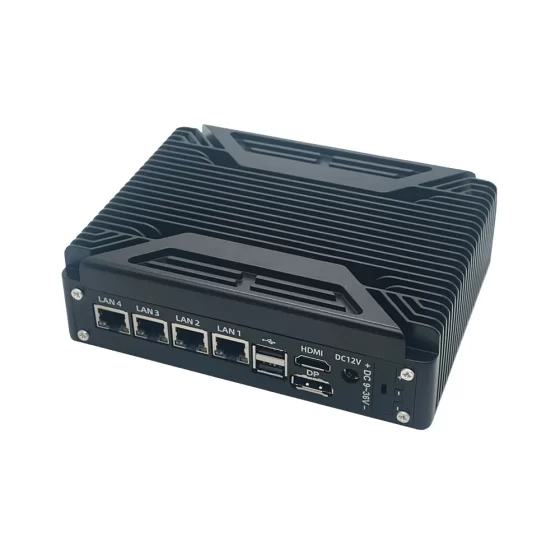
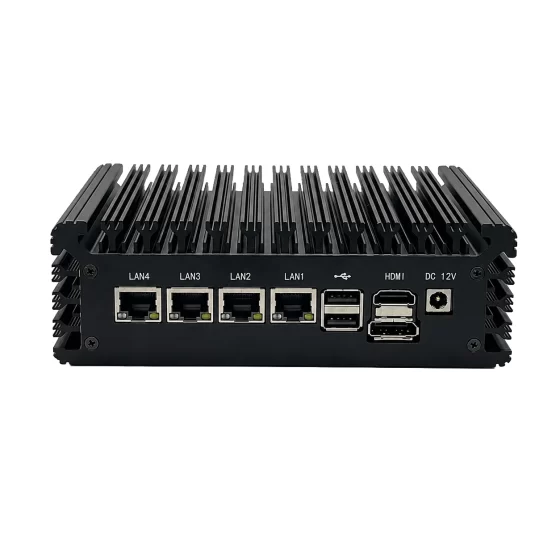
複数の LAN ポートをサポートできます, USBカメラ, シリアルデバイス, GPIO signals, SSDストレージ, 産業用電力入力, ディスプレイ出力, and cabinet or machine-side mounting.
This makes them suitable for monitoring machines, 生産ライン, 公共事業, 物流システム, and industrial IoT deployments.

Camera streams, センサーネットワーク, PLC通信, storage pressure, ネットワーク設計, and factory conditions affect AI monitoring reliability.
主要な課題
Diverse Data Sources
Industrial monitoring systems need to collect data from many different devices.
単一の導入にはカメラが含まれる場合があります, 振動センサー, 温度センサー, PLC, モーター, メートル, バーコードリーダー, ロボット, ゲートウェイ, および実稼働データベース.
Each data source may use different interfaces, プロトコル, 更新速度, and data formats.
Common sources include:
- マシンビジョンカメラ
- IPカメラ
- PLC status signals
- 振動センサー
- 温度センサー
- 圧力センサー
- 電流センサー
- エネルギーメーター
- バーコードリーダー
- ロボットコントローラー
- 産業用ゲートウェイ
The industrial AI computer must support flexible connectivity and stable data acquisition.
リアルタイム アラートの要件
Monitoring becomes valuable when abnormal conditions are detected early.
If the system detects equipment vibration, 過熱, production blockage, missing product flow, visual abnormality, or unsafe operation, it must send alerts quickly.
Delayed alerts reduce the value of AI monitoring.
リアルタイム要件が表示される場合があります。:
- 予知保全
- 安全監視
- Machine status monitoring
- Production line monitoring
- 品質検査
- Energy anomaly detection
- Robotic cell monitoring
- コンベアの流れの監視
The computing platform must provide stable sustained performance under continuous workload.
AI Workload Variation
Industrial AI monitoring can involve different workloads.
Some systems analyze simple sensor patterns. Others process video streams, machine vision images, or multi-source data from multiple machines.
Workloads may include:
- 異常検知
- 画像分類
- 物体検出
- ビデオ分析
- 予知保全モデル
- Sensor data analysis
- Equipment status classification
- Process trend detection
- OCR or barcode recognition
- Production flow analysis
The hardware should be selected according to real AI model performance and deployment requirements.
Network and Data Management
Monitoring systems often connect shop-floor equipment with MES, スカダ, クラウドプラットフォーム, データベース, ダッシュボード, および保守システム.
This creates network design challenges.
Some factories need to separate camera networks, マシンネットワーク, ITネットワーク, およびクラウド接続. Others need local buffering when the network is unstable.
A practical industrial AI monitoring computer may need multiple LAN ports, ローカルストレージ, 安全な通信, and reliable data upload functions.
工場での長期的な信頼性
Monitoring systems are often expected to run continuously.
制御盤内に設置可能, near machines, コンベアの横, inside utility rooms, or close to robotic cells.
これらの環境には粉塵が含まれる可能性があります, 振動, 温度変化, 電気ノイズ, 空気の流れが限られている.
Industrial-grade hardware is important because monitoring systems lose value if they fail during production.

Industrial AI computers connect sensors, カメラ, 機械, 工場出荷時のソフトウェア, クラウドプラットフォーム, および監視ダッシュボード.
Industrial AI Monitoring Solution Architecture
デバイスとセンサー層
The device and sensor layer includes the equipment being monitored.
This layer may include production machines, カメラ, PLC, センサー, モーター, ロボット, ユーティリティシステム, メートル, および産業用ゲートウェイ.
It generates the raw data used for monitoring and AI analysis.
典型的なデータには次のものがあります。:
- 画像
- ビデオストリーム
- 振動値
- 温度データ
- 機械の状態
- Alarm signals
- エネルギー消費量
- モーター電流
- 生産数
- 処理タイミング
- Equipment operating history
Consistent data acquisition is the foundation of reliable AI monitoring.
インダストリアルエッジコンピューティング層
The industrial edge computing layer is where the industrial AI computer performs local processing.
この層では, 産業用コンピュータまたは組み込みコンピュータは、:
- センサーデータを収集する
- Process video streams
- AI推論モデルを実行する
- 異常なパターンを検出
- ローカルレコードを保存する
- ネットワークの問題時のデータのバッファリング
- Trigger alarms
- ローカルダッシュボードを表示する
- Send selected results to MES or SCADA
- リモートメンテナンスをサポート
This local layer helps reduce latency and makes monitoring more resilient.
AI分析レイヤー
The AI analytics layer contains the software logic used to detect abnormal conditions.
アプリケーションに応じて, 含まれる可能性があります:
- 予知保全モデル
- Machine vision algorithms
- Video analytics tools
- Sensor anomaly detection
- Production flow analysis
- 品質傾向分析
- エネルギー使用量の分析
- Rule-based alarm logic
- AI推論ランタイム
産業用コンピュータは必要なオペレーティング システムをサポートする必要があります, ドライバー, AIフレームワーク, database tools, および産業用通信ソフトウェア.
Automation and Alert Layer
The automation and alert layer connects AI monitoring results with action.
When the system detects a problem, it may send an alert to operators, アラームをトリガーする, notify maintenance teams, or send a signal to a PLC or SCADA system.
例としては次のものが挙げられます。:
- Machine vibration warning
- Temperature abnormality alarm
- Conveyor blockage alert
- Missing product flow detection
- Camera-based safety event
- Energy usage anomaly
- Robot cell abnormal status
- Process deviation warning
This layer helps convert monitoring data into operational response.
ファクトリーソフトウェア統合レイヤー
Industrial AI monitoring systems usually connect to higher-level platforms.
The industrial AI computer may send selected data to:
- MES
- スカダ
- ERP
- 高品質のデータベース
- メンテナンスプラットフォーム
- クラウドダッシュボード
- 産業用IoTプラットフォーム
- 郷土史家制度
- 生産監視ダッシュボード
すべての生データをアップロードする代わりに, the system can upload alarms, 要約, イベント記録, 選択された画像, and trend data.
This reduces network load while keeping factory teams informed.
主な特長
Stable AI Processing Performance
An industrial AI computer for monitoring must provide stable performance during continuous operation.
The required configuration depends on the number of data sources, AI モデルの複雑さ, ビデオストリーム数, sensor frequency, and response time requirements.
選択は考慮すべきです:
- CPU性能
- GPU または AI アクセラレータのサポート
- メモリ容量
- ストレージ速度
- ネットワーク帯域幅
- AI フレームワークの互換性
- オペレーティング システムのサポート
- 熱設計
- 長時間にわたる安定性
For lightweight monitoring, 組み込みコンピュータで十分かもしれない. For multi-camera AI monitoring, a stronger edge AI computer or industrial PC may be required.
複数のネットワークインターフェース
AI monitoring systems often need multiple network connections.
1 つのネットワークでカメラを接続できる. Another may connect PLCs or machine devices. A separate network may connect MES, スカダ, クラウドシステム, or remote maintenance tools.
複数のLANポートをサポート可能:
- Camera network separation
- マシンネットワーク通信
- 工場IT接続
- Cloud data upload
- リモートメンテナンス
- Cybersecurity segmentation
- Multi-line monitoring
Good network planning improves system reliability and data organization.
柔軟な産業用 I/O
The monitoring computer must connect with real industrial equipment.
重要な I/O オプションには次のものがあります。:
- LAN
- USB
- RS232
- RS485
- GPIO
- デジタル入力
- デジタル出力
- HDMI
- ディスプレイポート
- M.2
- PCIe
- SATA または NVMe ストレージ
These interfaces can support sensors, カメラ, PLC, ゲートウェイ, メートル, バーコードリーダー, アラーム, およびローカルオペレータディスプレイ.
Flexible I/O reduces the need for external adapters and improves deployment reliability.
ローカルストレージとデータバッファリング
Monitoring systems may need to store data locally.
The computer may store sensor history, アラーム記録, ビデオクリップ, image evidence, AIモデルファイル, ダッシュボード, ローカルデータベース, および一時バッファ.
SSD または NVMe ストレージは、機械式ドライブよりも高速アクセスと優れた耐衝撃性を備えているため、一般的に好まれます。.
ストレージ設計で考慮すべきこと:
- データ保存期間
- ローカルデータベースのサイズ
- Image or video storage needs
- 書き込み耐久性
- バックアップ戦略
- ネットワーク中断動作
- アップロード頻度
Reliable storage helps protect monitoring data and supports traceability.
堅牢なファンレス設計
Industrial AI monitoring computers often operate near machines.
Fanless computers reduce dust intake and remove one common mechanical failure point. 頑丈なエンクロージャがシステムを振動から保護します, インストールの影響, とケーブルのストレス.
しかし, AI ワークロードは大量の熱を発生する可能性があります.
For high-performance monitoring systems, 熱設計は慎重に検討する必要があります. プロセッサーのワークロード, GPU またはアクセラレータの使用, キャビネットのエアフロー, 周囲温度, and mounting location all affect long-term stability.
長いライフサイクルと保守性
Monitoring platforms often become part of long-term factory infrastructure.
ハードウェアモデルの頻繁な変更, ドライバー, インターフェース, または拡張オプションにより検証やメンテナンスの問題が発生する可能性があります.
ライフサイクル プランニングを備えた産業用コンピューティング プラットフォームは、メーカーやシステム インテグレーターが複数のラインにわたって一貫した導入を維持するのに役立ちます, 機械, および工場敷地.
This is especially important for large-scale industrial AI monitoring rollouts.
導入シナリオ
Predictive Maintenance Monitoring
Predictive maintenance is one of the main industrial AI monitoring applications.
The system collects data from vibration sensors, 温度センサー, モーター, パンプス, コンプレッサー, およびマシンコントローラー.
The industrial AI computer analyzes patterns locally and generates alerts when abnormal behavior appears.
This helps maintenance teams identify potential equipment issues earlier.
Machine Vision Monitoring
Industrial AI monitoring can use cameras to observe production lines, machine areas, and product flow.
The computer may detect missing products, 表面欠陥, 間違った位置決め, パッケージダメージ, or abnormal process conditions.
This supports quality control and production visibility.
Video-Based Process Monitoring
Factories may use video analytics to monitor production flow, safety areas, machine operation, and conveyor movement.
The industrial computer processes video streams locally and sends only selected alerts or event records to higher-level systems.
This reduces bandwidth load and improves response time.
エネルギー監視
Industrial AI monitoring can help analyze energy usage.
The system may collect data from meters, パワーデバイス, コンプレッサー, HVAC システム, および生産設備.
AI models can detect unusual consumption patterns or equipment inefficiency.
This supports energy management and operational cost control.
Robotic Cell Monitoring
Robotic cells may need monitoring for motion status, object handling, cycle timing, 安全地帯, and abnormal operation.
An industrial AI computer can process camera data, robot status, and sensor signals.
This helps engineers detect abnormal robot behavior and improve automation reliability.
Conveyor and Logistics Monitoring
Conveyors and logistics systems can be monitored for blockages, package flow, barcode read failures, sorting errors, or abnormal movement.
The industrial computer can process camera and sensor data near the conveyor line.
This supports faster exception handling in warehouses and production logistics.
環境モニタリング
Industrial facilities may monitor temperature, 湿度, 空気の質, プレッシャー, 振動, or other environmental factors.
組み込みコンピューターはセンサーデータを収集できます, ローカル分析を実行する, and send alerts to facility or production systems.
This helps protect equipment, 材料, and production processes.
OEM Monitoring System Integration
Machine builders can integrate industrial AI computers into equipment monitoring systems.
The computing platform can provide data acquisition, AI analysis, ローカルストレージ, HMIディスプレイ, 警報出力, 工場システムの接続性.
This helps OEMs deliver smarter equipment with built-in monitoring capability.
ビジネス上のメリット
Earlier Detection of Abnormal Conditions
Industrial AI monitoring helps detect abnormal equipment or process behavior earlier.
By analyzing sensor data, 画像, ビデオストリーム, and machine signals locally, the system can identify issues before they become serious failures.
This supports faster response and better production control.
ダウンタイムのリスクの軽減
Monitoring systems can help maintenance teams act before equipment problems stop production.
予測アラート, 傾向分析, and local anomaly detection can support planned maintenance instead of reactive repair.
Reliable industrial computing hardware helps keep monitoring active during long production cycles.
生産の可視性の向上
AI monitoring gives operators and engineers better visibility into machine status, production flow, 品質条件, and utility performance.
This helps teams understand what is happening on the shop floor without relying only on manual checks or delayed reports.
Better visibility supports more informed decision-making.
Lower Network Dependency
Local processing reduces dependency on cloud or remote servers.
The industrial AI computer can process data near the equipment, ローカルアラートを生成する, and buffer records when network connections are unavailable.
This improves resilience and helps monitoring continue during temporary network issues.
より強力なデータトレーサビリティ
Monitoring data can be linked with machine IDs, タイムスタンプ, センサー値, アラーム記録, 画像, ビデオクリップ, そして制作イベントも.
This creates stronger traceability for maintenance investigation, 品質分析, プロセスレビュー, と業務改善.
Reliable local storage helps ensure that important records are not lost.
スケーラブルなスマートファクトリー導入
A standardized industrial AI monitoring platform can be deployed across multiple machines, 生産ライン, および工場敷地.
一貫したハードウェアによりソフトウェア イメージが簡素化されます, ドライバー管理, スペアパーツの計画, メンテナンストレーニング, そして長期的なサポート.
This helps manufacturers scale AI monitoring from pilot projects to broader smart factory deployments.
CoreIPC を選ぶ理由
CoreIPC はエッジ AI 向けの産業用コンピューティング プラットフォームを提供します, マシンビジョン, 産業用IoT, ファクトリーオートメーション, および組み込みシステムの統合. For industrial AI monitoring applications, CoreIPC は信頼性の高い産業用コンピューター ハードウェアに重点を置いています, 組み込みコンピュータソリューション, 柔軟な I/O 構成, コンパクトなシステム設計, OEM/ODMカスタマイズサポート. CoreIPC はシステム インテグレーターを支援します, 機械製造業者, 製造チームは実際の導入要件に適合するコンピューティング プラットフォームを選択します, AI ワークロードを含む, センサーインターフェース, カメラの接続, ネットワーク設計, ストレージのニーズ, 取り付け方法, 電源入力, 熱条件, およびライフサイクル計画.
よくある質問
1. What is industrial AI monitoring?
Industrial AI monitoring uses AI models, センサー, カメラ, industrial data, and edge computing hardware to monitor machines, 生産ライン, 公共事業, and factory processes.
It can detect abnormal patterns, アラートを生成する, support predictive maintenance, analyze video streams, monitor quality conditions, and connect results with MES, スカダ, または産業用IoTプラットフォーム.
2. Why use an industrial computer for AI monitoring?
An industrial computer provides the local processing and connectivity needed for monitoring systems deployed near machines.
It can collect data from sensors, カメラ, PLC, ゲートウェイ, and meters. AI推論を実行できる, ローカルレコードを保存する, send alerts, and upload selected data to factory systems. Industrial design makes it more reliable than office PCs in production environments.
3. How is an embedded computer used in industrial AI monitoring?
An embedded computer can be installed inside control cabinets, マシンエンクロージャ, スマートゲートウェイ, 検査システム, またはOEM機器.
マシンデータを収集できます, run local AI analysis, store alarm records, connect to sensors and PLCs, and send monitoring results to dashboards or maintenance systems. Its compact size is useful for distributed monitoring deployments.
4. What can industrial AI monitoring detect?
Industrial AI monitoring can detect vibration abnormalities, 過熱, unusual energy consumption, machine status changes, production blockage, missing product flow, visual defects, safety events, sensor anomalies, and process deviations.
The exact capability depends on the connected devices, AIモデル, データ品質, system design, そして実際の製品テスト.
5. What interfaces are important for industrial AI monitoring computers?
重要なインターフェイスには複数の LAN ポートが含まれる場合があります, USB 3.0, RS232, RS485, GPIO, デジタル入力, デジタル出力, HDMI, ディスプレイポート, M.2, PCIe, SATA, およびNVMeストレージのサポート.
これらのインターフェースはカメラをサポートしています, センサー, PLC, ゲートウェイ, メートル, アラーム, ローカルディスプレイ, および工場ネットワーク.
6. Does an AI monitoring computer need a GPU?
Some AI monitoring systems need GPU or AI accelerator support, especially for video analytics, マルチカメラ検査, and complex deep learning workloads.
Other systems may run on CPU-based industrial computers if the workload is sensor-based or uses lightweight models. Hardware should be selected after testing real AI models and data sources.
7. Can fanless industrial computers support AI monitoring?
Fanless industrial computers can support many AI monitoring applications, especially moderate sensor analytics, データ収集, and single-camera monitoring.
しかし, high-performance video analytics or multi-camera AI workloads may generate more heat. CPUワークロード, アクセルの使用, エンクロージャのエアフロー, 周囲温度, 導入前に取り付け方法を検討する必要があります.
8. How does industrial AI monitoring support predictive maintenance?
The system collects data such as vibration, 温度, 現在, プレッシャー, とマシンのステータス.
AI models can analyze patterns and detect abnormal behavior before failure occurs. The industrial computer can generate local alerts and upload records to maintenance platforms, helping teams plan service before downtime becomes serious.
9. Can industrial AI monitoring connect with MES or SCADA systems?
はい. Industrial computers can send monitoring data, アラーム, マシンのステータス, trend records, and event summaries to MES, スカダ, ダッシュボード, または産業用IoTプラットフォーム.
This helps connect machine-side monitoring with higher-level production and maintenance workflows.
10. 導入前にテストすべきこと?
導入前, the system should be tested with real sensors, カメラ, PLC, AIモデル, ネットワーク接続, ストレージのワークロード, ローカルダッシュボード, 長時間にわたる運用.
熱安定性, データバッファリング, alarm timing, network interruption behavior, and maintenance access should also be validated. これにより、運用展開時のリスクを軽減できます。.
結論
Industrial AI monitoring is a practical foundation for predictive maintenance, machine vision monitoring, ビデオ分析, energy analysis, 本番環境の可視性, and smart factory operations.
産業用コンピューターまたは組み込みコンピューターをカメラの近くに配置することによって, センサー, PLC, ロボット, メートル, および生産設備, メーカーはデータをローカルで処理できる, detect abnormal conditions earlier, ネットワーク依存性を軽減する, and improve operational response.
実際の導入要件に応じて適切なプラットフォームを選択する必要があります, AI ワークロードを含む, センサーインターフェース, カメラの接続, I/O構成, ネットワークアーキテクチャ, ストレージのニーズ, 取付方法, 電源入力, 熱条件, オペレーティング システムのサポート, およびライフサイクル計画.
CoreIPC supports industrial AI monitoring projects with industrial computing platforms designed for practical factory and equipment deployment. 適切なハードウェア基盤があれば, メーカーや機械製造業者は信頼性の高い製品を構築できます, スケーラブルな, and data-driven monitoring systems for smart industrial operations.
お問い合わせ
産業用コンピュータを探しています, 組み込みコンピュータ, or edge AI platform for industrial AI monitoring?
プロジェクトの要件については、CoreIPC にお問い合わせください。, AI ワークロードを含む, センサーインターフェース, camera connection, ネットワークアーキテクチャ, I/O構成, ストレージデザイン, オートメーションコミュニケーション, 取付方法, 電源入力, 動作環境, ライフサイクルのニーズ, および OEM/ODM カスタマイズ オプション.